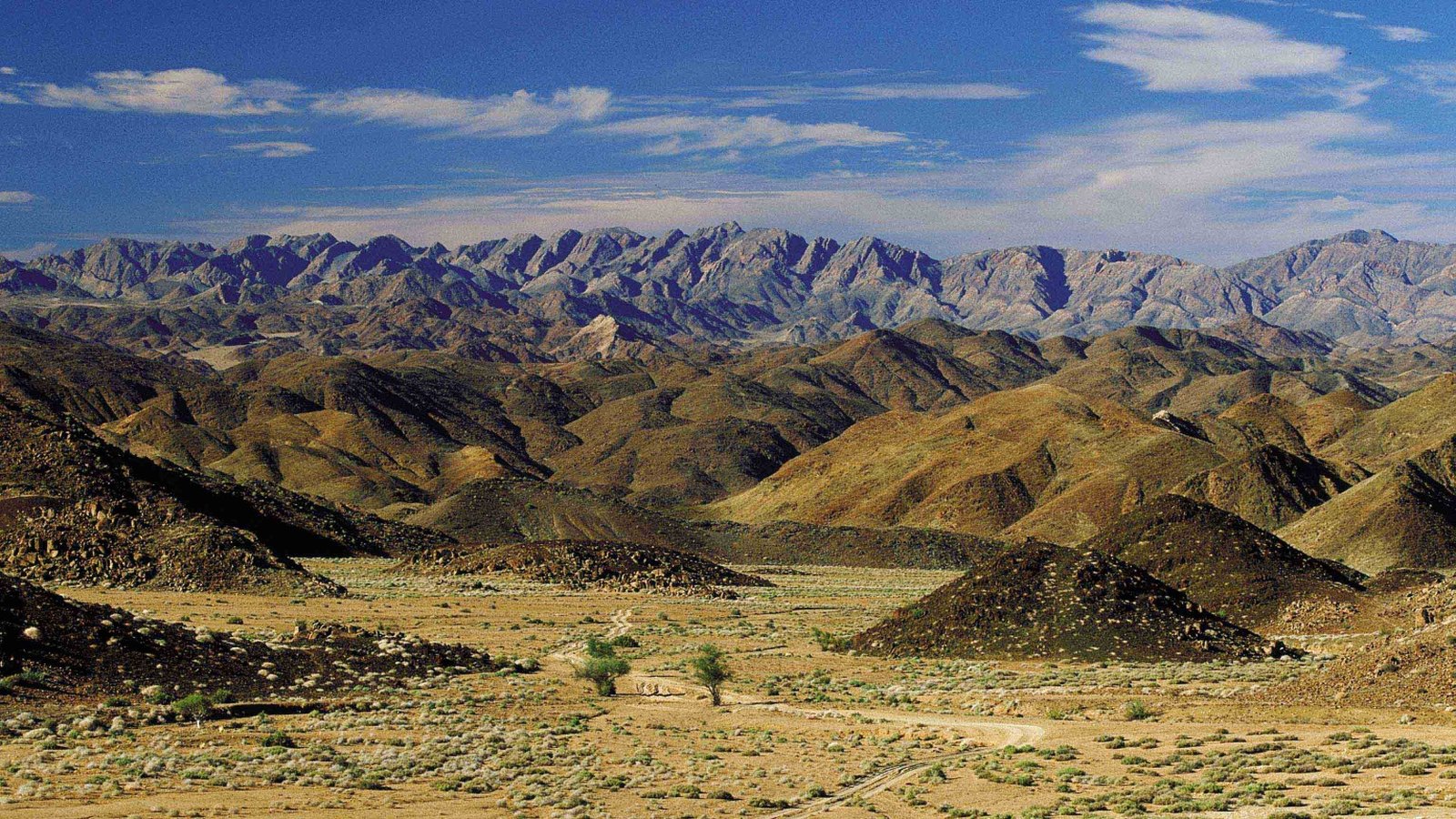
A rugged mountain desert in South Africa that is the only arid region on Earth classed as a global biodiversity hotspot.
Area
1,600 km²
Continent
Africa
Location
North-western South Africa, near the Atlantic
Temperature
Hot days, cool coastal fog
Rainfall
Under 100 mm a year
Climate
Arid, fog-watered
About the Richtersveld
The Richtersveld is a harsh land of jagged mountains and dry valleys near the mouth of the Orange River. Life survives on fog that rolls in from the cold Atlantic, nourishing an astonishing array of succulents, quiver trees and the strange “halfmens”. Its cultural landscape, still herded by the Nama people, is a UNESCO World Heritage Site.
Did you know?
Despite the dryness, it holds thousands of plant species — many found nowhere else in the world.
Highlights
- The only arid biodiversity hotspot on Earth
- Watered by fog off the cold Atlantic
- A UNESCO cultural landscape of the Nama people
Photo gallery
Life in the Richtersveld
Animals, birds and plants that have adapted to survive this landscape.
Animals
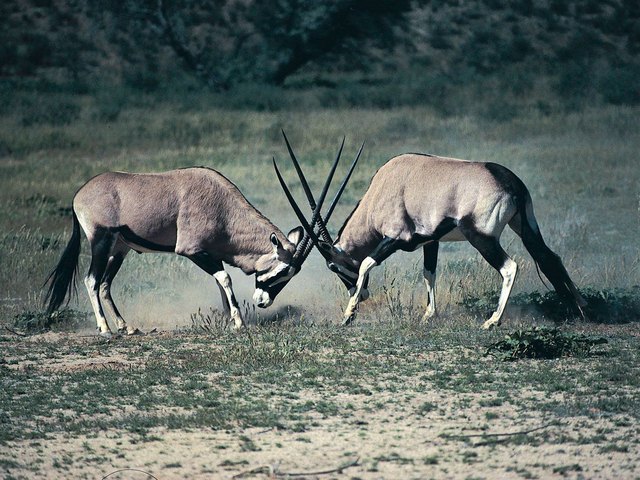
Gemsbok
A striking southern-African oryx with rapier horns and a black-and-white face.
Birds
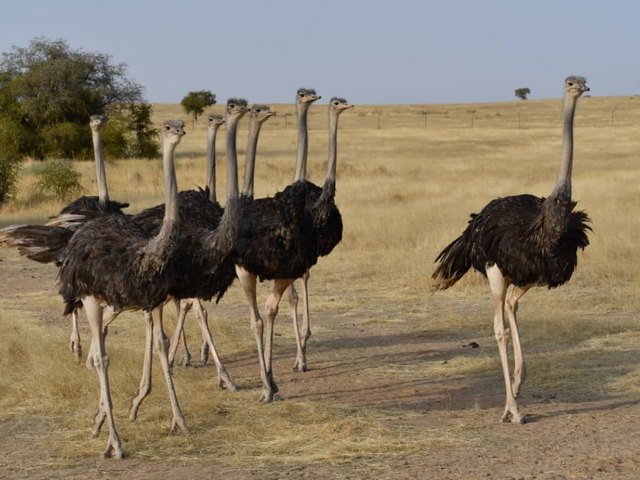
Ostrich
The world’s largest bird — flightless, but able to sprint at 70 km/h.
Trees & plants
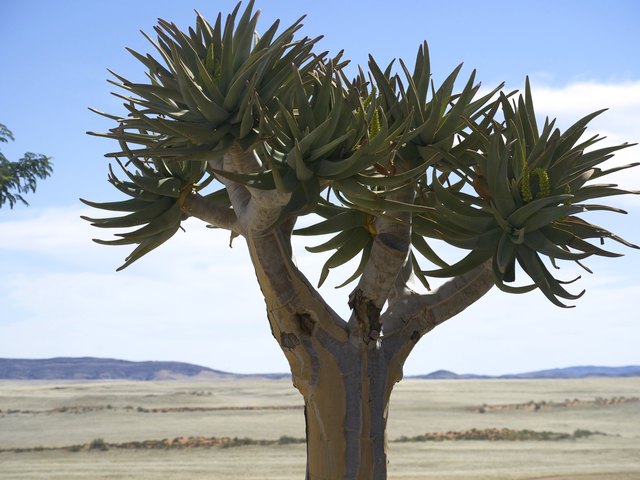
Quiver tree
A tree-sized aloe of southern Africa; the San made quivers from its branches.
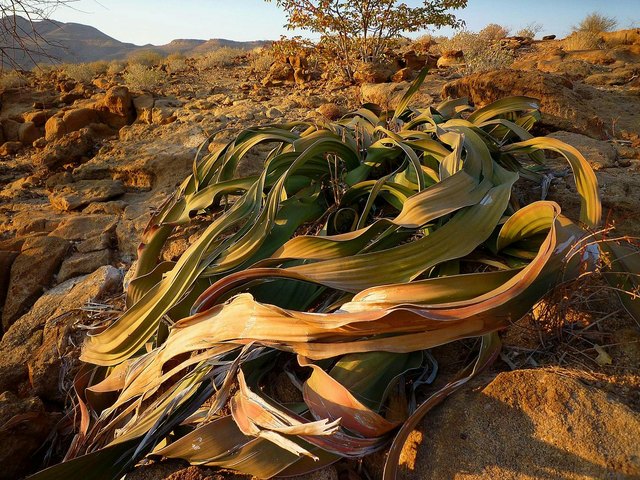
Welwitschia
A living fossil of the Namib with two leaves that grow for 1,000+ years.
Day & night in the Richtersveld
Deserts are famous for their extreme temperature swings. Flip between day and night to feel the difference — these are typical figures for a coastal desert.
Midday sun
+22°C
typical daytime high
Cool ocean currents and fog keep coastal deserts mild, so the gap between day and night is much smaller than in hot inland deserts.
Recorded range for the Richtersveld: Hot days, cool coastal fog