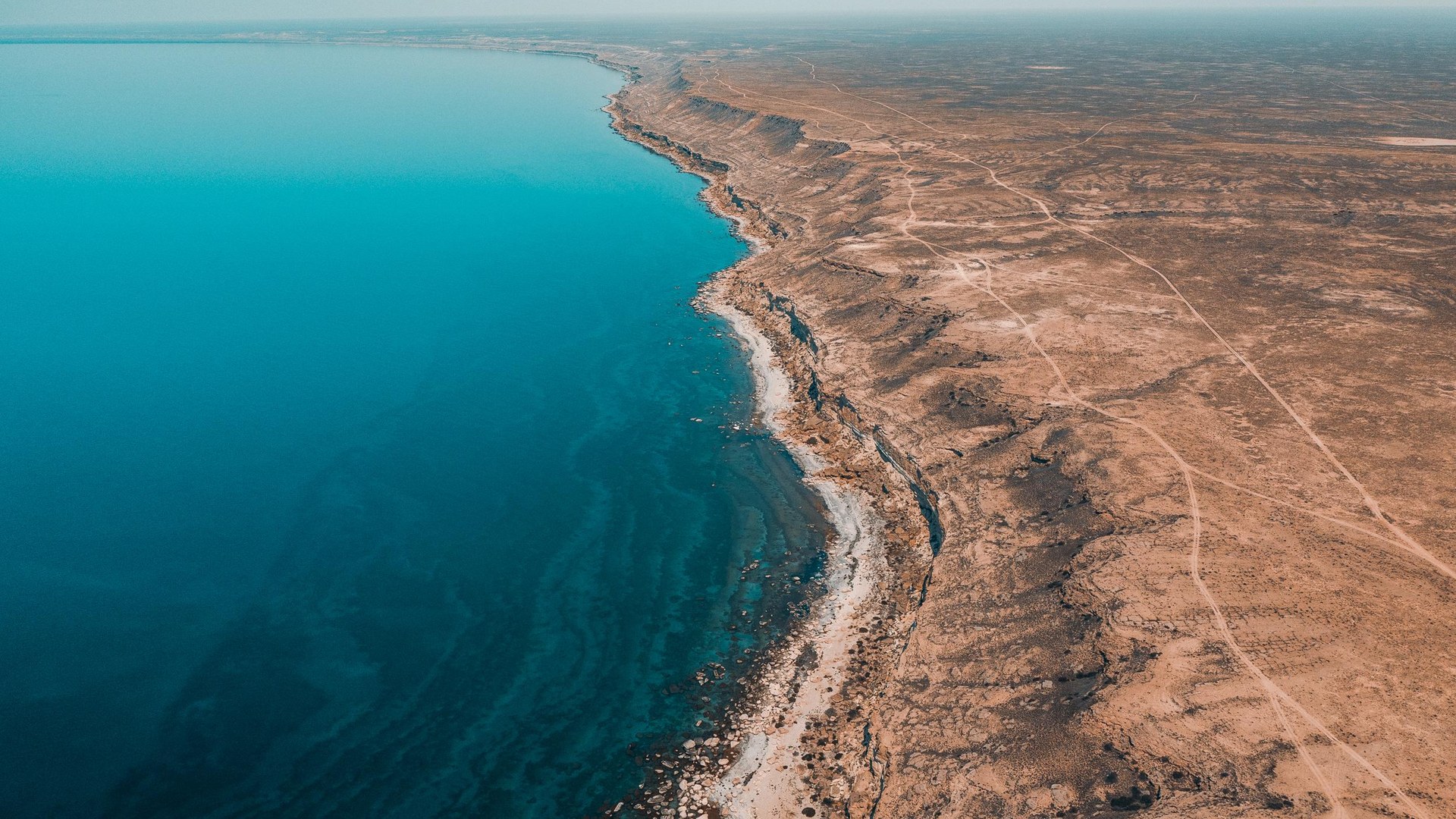
The largest lake — and largest fully enclosed body of water — on the planet, so big it has always been called a sea.
Area
371,000 km²
Ocean basin
Enclosed (Eurasia)
Location
The largest inland body of water on Earth
Average depth
about 211 m
Maximum depth
about 1,025 m
Salinity
~12 ppt (brackish)
Temperature
Freezes in the north; 24–28°C in summer south
Region
Between Europe & Asia
About the Caspian Sea
The Caspian Sea is bordered by Russia, Kazakhstan, Turkmenistan, Iran and Azerbaijan. Though completely landlocked, it is so vast and salty that it is considered the world’s largest inland sea. It has no outlet to the ocean, its level rises and falls on its own, and it is the historic source of beluga sturgeon caviar. Rich oil and gas fields lie beneath its floor.
Did you know?
It holds about 40% of all the lake water on Earth and is the original home of the sturgeon that produce the world’s finest caviar.
Highlights
- The largest inland body of water on Earth
- Holds ~40% of the world’s lake water
- Home of the finest sturgeon caviar
Photo gallery
Surface & deep in the Caspian Sea
The sea is warm where the Sun reaches it and cold far below. Flip between the sunlit surface and the deep water to feel the difference — these are typical figures for a enclosed sea.
Sunlit surface
24°C
typical surface temperature
Ringed by land, enclosed seas heat up more at the surface and, cut off from the open ocean, their trapped deep water often stays comparatively warm.
Recorded range for the Caspian Sea: Freezes in the north; 24–28°C in summer south