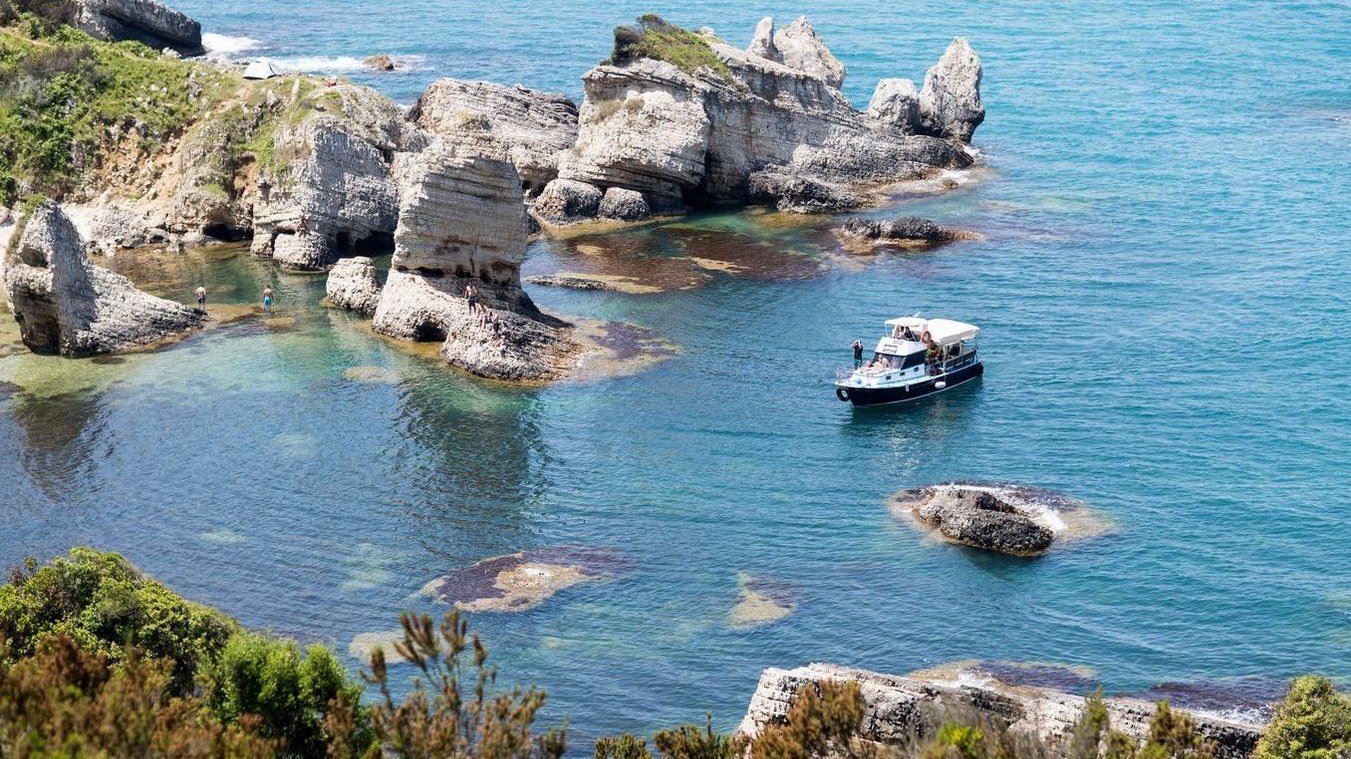
A large, nearly enclosed sea between Europe and Asia whose deep water holds no oxygen and no life at all.
Area
436,000 km²
Ocean basin
Atlantic
Location
The world’s largest body of “dead” deep water
Average depth
about 1,253 m
Maximum depth
about 2,212 m
Salinity
~18 ppt (half ocean salt)
Temperature
8°C in winter to 25°C in summer
Region
Between Europe & Asia
About the Black Sea
The Black Sea is ringed by Turkey, Bulgaria, Romania, Ukraine, Russia and Georgia, connected to the Mediterranean only through the narrow Bosphorus Strait. Fresh river water floats on top of denser salt water below, and because the two barely mix, its depths are completely without oxygen. That dead zone has preserved 2,000-year-old wooden shipwrecks in astonishing condition.
Did you know?
Below about 200 m it is the world’s largest mass of oxygen-free water — so lifeless that ancient shipwrecks are preserved almost perfectly.
Highlights
- Its deep water is entirely without oxygen
- Preserves ancient shipwrecks perfectly
- Linked to the sea only by the Bosphorus
Photo gallery
Life in the Black Sea
Creatures, seabirds and marine plants — including some of the rarest and strangest — that live in these waters.
Marine plants & algae
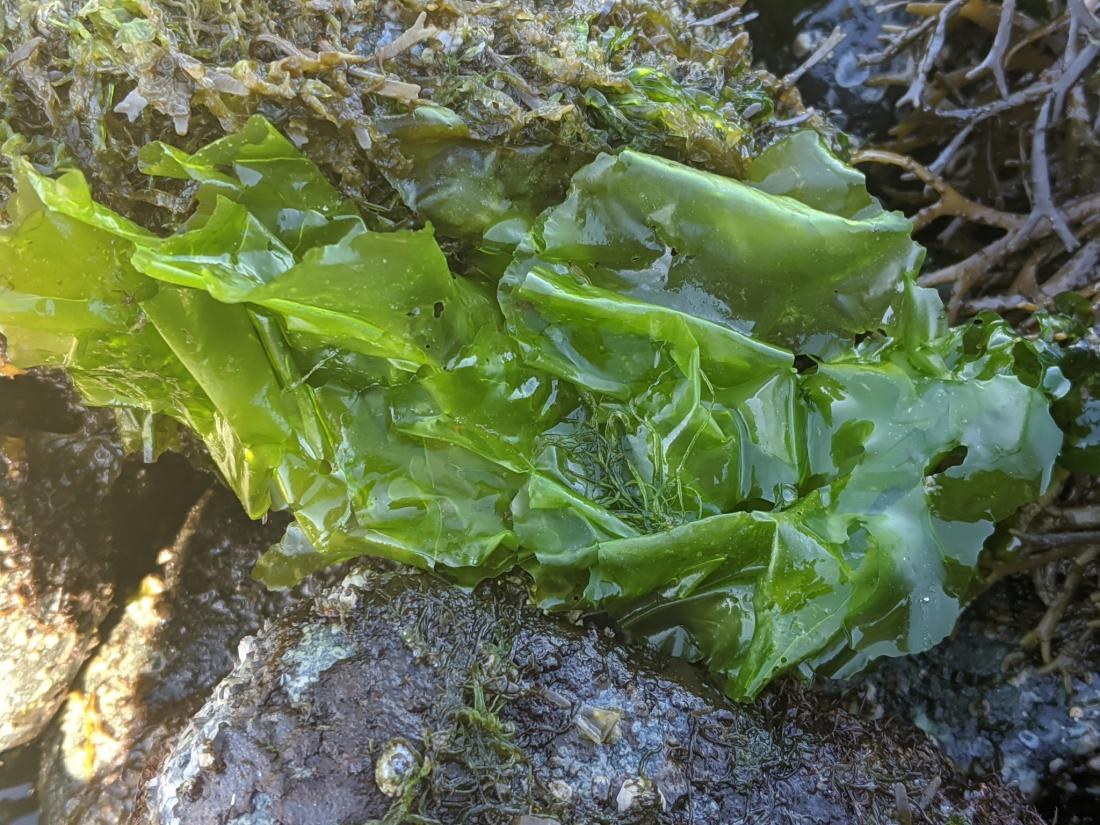
Sea lettuce
A bright-green, paper-thin edible seaweed that drapes rocky shores worldwide.
Surface & deep in the Black Sea
The sea is warm where the Sun reaches it and cold far below. Flip between the sunlit surface and the deep water to feel the difference — these are typical figures for a enclosed sea.
Sunlit surface
24°C
typical surface temperature
Ringed by land, enclosed seas heat up more at the surface and, cut off from the open ocean, their trapped deep water often stays comparatively warm.
Recorded range for the Black Sea: 8°C in winter to 25°C in summer