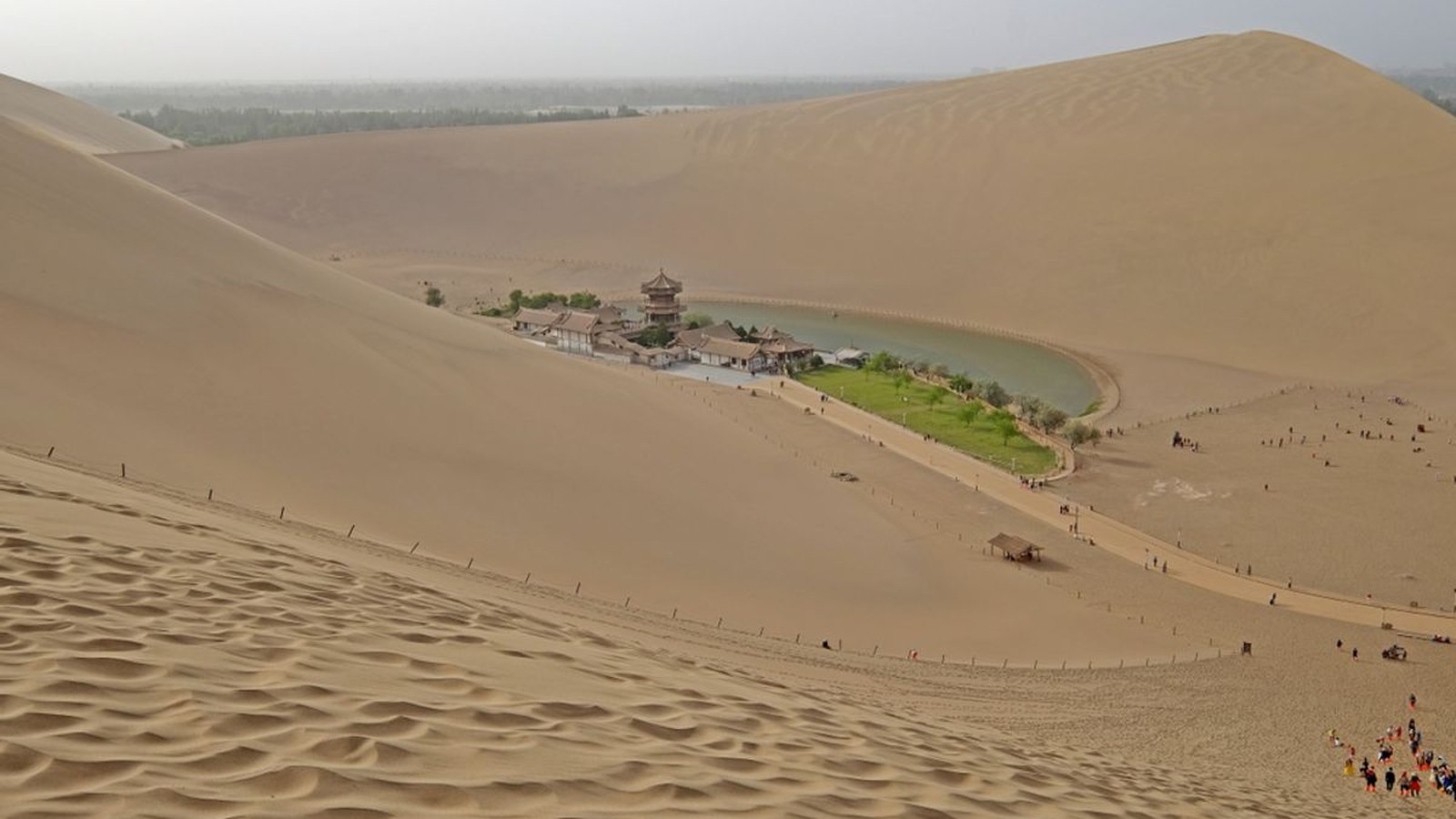
A sea of towering golden dunes in north-western China, famous for the eerie humming of its “singing sands”.
Area
22,900 km²
Continent
Asia
Location
Xinjiang & Gansu, north-western China, near Dunhuang
Temperature
Hot summers, freezing winters
Rainfall
Under 100 mm a year
Climate
Cold desert
About the Kumtag Desert
The Kumtag spreads across the borderlands of Xinjiang and Gansu, a classic cold desert of blistering summers and icy winters. Its name means “sand mountain”, and some of its dunes climb 300 metres. On the famous Mingsha Shan dunes near Dunhuang and the Crescent Moon Lake oasis, shifting sand produces a mysterious singing hum that has amazed travellers on the Silk Road for centuries.
Did you know?
Its dunes near Dunhuang can actually sing — sliding sand grains make a deep droning sound heard for miles.
Highlights
- Dunes that “sing” as the sand slides
- Towering sand mountains up to 300 m
- A Silk Road landscape near Dunhuang
Photo gallery
Life in the Kumtag Desert
Animals, birds and plants that have adapted to survive this landscape.
Animals
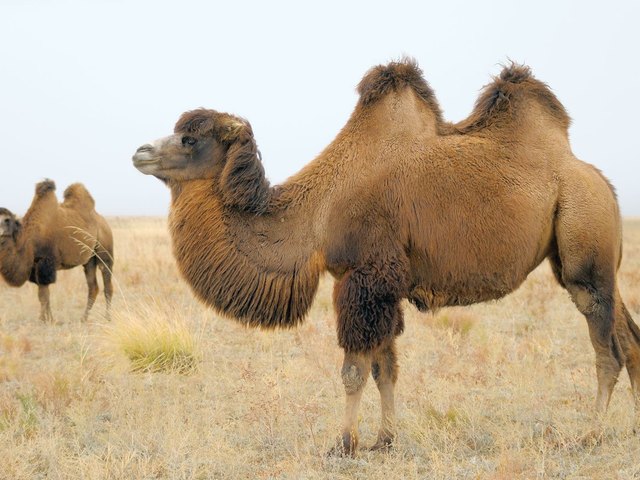
Bactrian camel
The two-humped camel of Central Asia, built for freezing cold-desert winters.
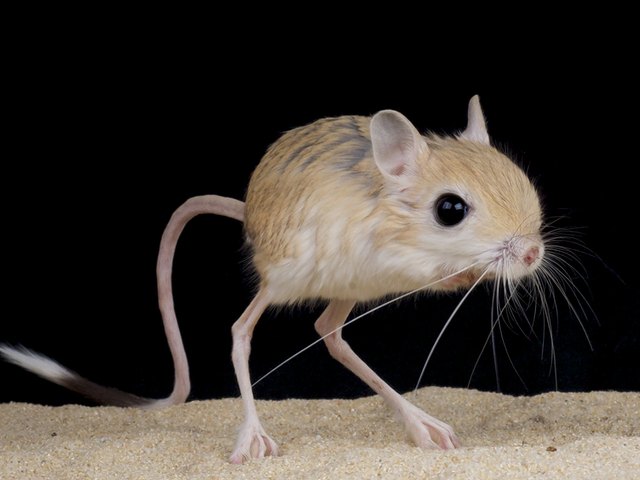
Jerboa
A tiny hopping rodent with long hind legs, bounding like a mini-kangaroo.
Birds

Houbara bustard
A well-camouflaged desert bird of Arabia and Central Asia.
Trees & plants
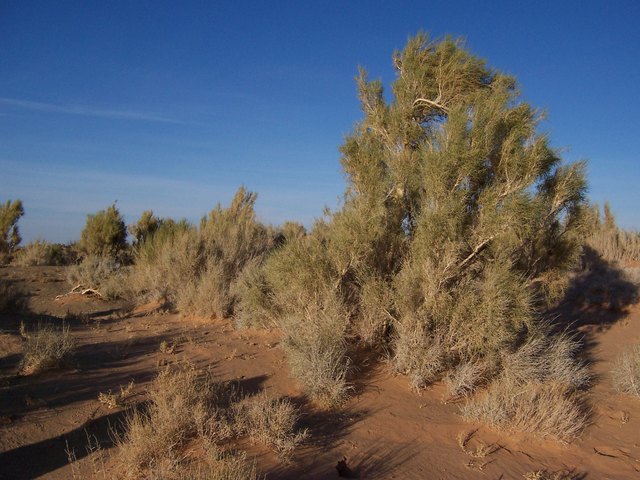
Saxaul
A gnarled Central-Asian tree that anchors shifting cold-desert sands.
Day & night in the Kumtag Desert
Deserts are famous for their extreme temperature swings. Flip between day and night to feel the difference — these are typical figures for a cold desert.
Midday sun
+32°C
typical daytime high
Hot or mild summer days swing to bitterly cold nights, and winters can stay far below freezing — these deserts see some of the biggest temperature ranges on Earth.
Recorded range for the Kumtag Desert: Hot summers, freezing winters