Past & Present
Wonders of the World
From the seven legendary marvels of the ancient world to the New 7 Wonders chosen by millions of voters — and the natural wonders that outshine them all.
Seven Wonders of the Ancient World
The original list, compiled by Greek travellers and poets over 2,000 years ago. Only the Great Pyramid survives today.
 Still standing
Great Pyramid of Giza
Built c. 2560 BC
The tomb of Pharaoh Khufu and the oldest of the ancient wonders — and the only one still standing today.
- Made from roughly 2.3 million stone blocks
- Originally about 146 m tall, now about 138 m
- Sides aligned almost perfectly with north, south, east and west
Did you know?
It was the tallest human-made structure on Earth for about 3,800 years.
 Lost
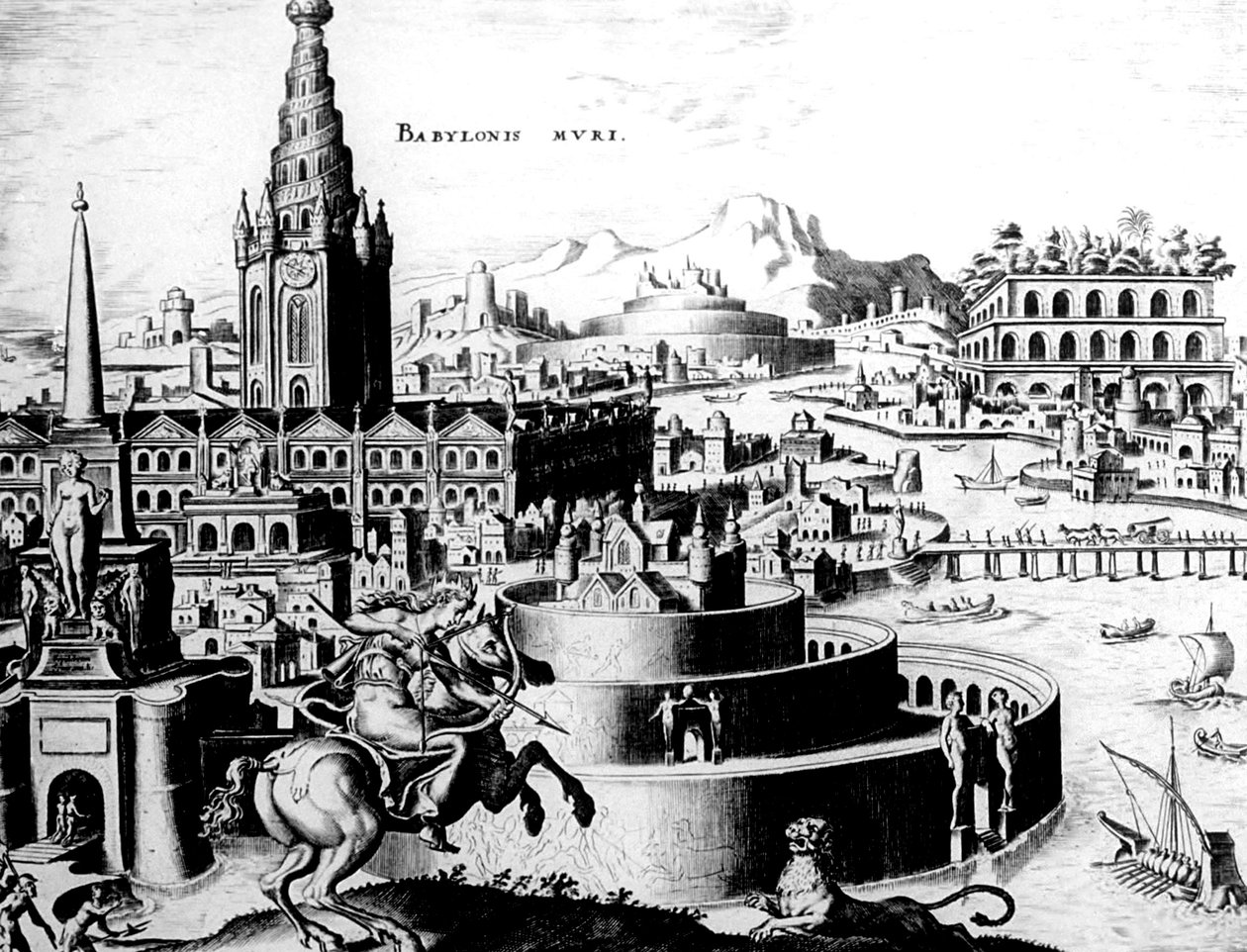
LostHanging Gardens of Babylon
Said to date from c. 600 BC
Terraced gardens said to have been built by King Nebuchadnezzar II for his homesick wife, Amytis, rising like a green mountain above the city.
- Described as stepped terraces of trees and plants
- Watered by a system that lifted water from the Euphrates
- Pictured: Babylon in a 16th-century engraving after Maarten van Heemskerck
Did you know?
No trace of the gardens has ever been found at Babylon — it is the only ancient wonder whose existence is still debated.
 Ruins
RuinsTemple of Artemis
Rebuilt c. 550 BC
A vast marble temple to the goddess Artemis, famous for its forest of towering columns. Today a single re-assembled column marks the spot.
- Funded in part by King Croesus of Lydia
- Burned in 356 BC and rebuilt even larger
- Finally destroyed during a Gothic raid in AD 268
Did you know?
The man who burned it in 356 BC, Herostratus, did it to become famous — so Ephesus banned anyone from saying his name.
 Lost
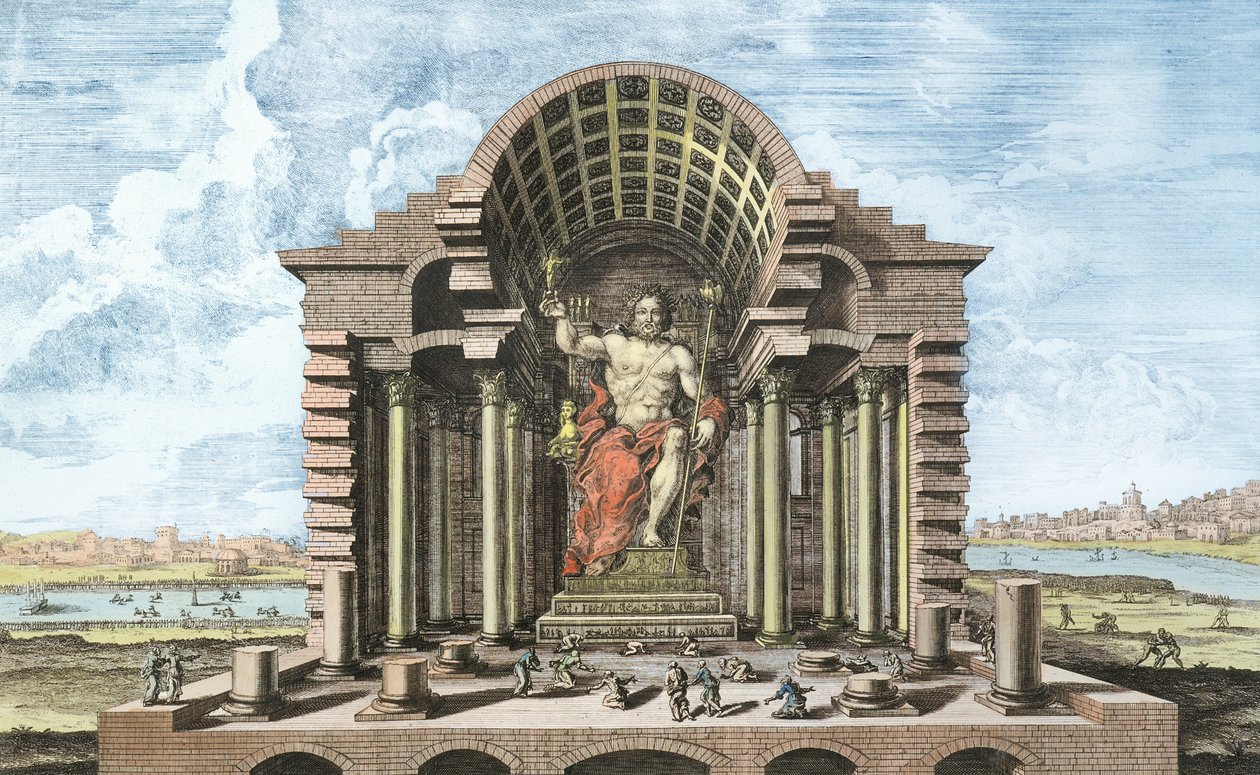
LostStatue of Zeus at Olympia
Made c. 435 BC
A giant seated figure of Zeus by the sculptor Phidias, made of ivory and gold over a wooden frame, filling the Temple of Zeus at Olympia.
- About 12 m tall — his head almost touched the roof
- Built from gold and ivory panels (chryselephantine)
- Home of the ancient Olympic Games
Did you know?
Archaeologists have found Phidias’s workshop at Olympia, including a cup inscribed “I belong to Phidias”.
 Ruins
RuinsMausoleum at Halicarnassus
Completed c. 350 BC
A towering marble tomb for Mausolus, a Persian governor, completed by his wife Artemisia and decorated by the best Greek sculptors of the day.
- Around 45 m tall with a stepped pyramid roof
- Topped by a marble four-horse chariot
- Brought down by earthquakes in the Middle Ages
Did you know?
Its fame gave us the word “mausoleum” — and many of its stones were reused to build Bodrum Castle.
_Nach_Maarten_van_Hee_-_(MeisterDrucke-803197).jpg) Lost
LostColossus of Rhodes
Completed c. 280 BC
A huge bronze statue of the sun god Helios, built to celebrate Rhodes surviving a long siege. It stood for only about 54 years.
- About 33 m tall — roughly the size of the Statue of Liberty without its pedestal
- Paid for by selling the enemy’s abandoned siege weapons
- Toppled by an earthquake in 226 BC
Did you know?
Despite famous paintings like this one, it almost certainly did not stand astride the harbour entrance.
 Lost
LostPharos
Lighthouse of Alexandria
Completed c. 280 BC
A soaring stone lighthouse that guided ships into Alexandria’s busy harbour for well over 1,000 years, with a fire burning at its summit.
- Probably over 100 m tall
- Designed by the architect Sostratus of Cnidus
- The Citadel of Qaitbay was built on its site from its stones
Did you know?
Its name lives on: the word for lighthouse is “phare” in French and “faro” in Italian and Spanish.
Seven Wonders of the Middle Ages
A later, informal list of great monuments that became popular with writers in the 19th and 20th centuries.
 Still standing
Stonehenge
Built c. 3000–2000 BC
A prehistoric ring of giant standing stones, carefully arranged to line up with the sunrise on the summer solstice and the sunset on the winter solstice.
- Large sarsen stones weigh around 25 tonnes
- Smaller bluestones came from Wales, about 240 km away
- A UNESCO World Heritage Site since 1986
Did you know?
Its central Altar Stone was traced in 2024 to north-east Scotland — more than 700 km away.
 Still standing
Colosseo
Colosseum
Completed AD 80
The largest amphitheatre ever built, where crowds gathered to watch gladiator fights, animal hunts and public spectacles.
- Held an estimated 50,000 or more spectators
- Begun under Emperor Vespasian, opened by Titus
- A maze of tunnels (the hypogeum) lay under the arena floor
Did you know?
Its opening games in AD 80 reportedly lasted 100 days.
 Still standing
كوم الشقافة
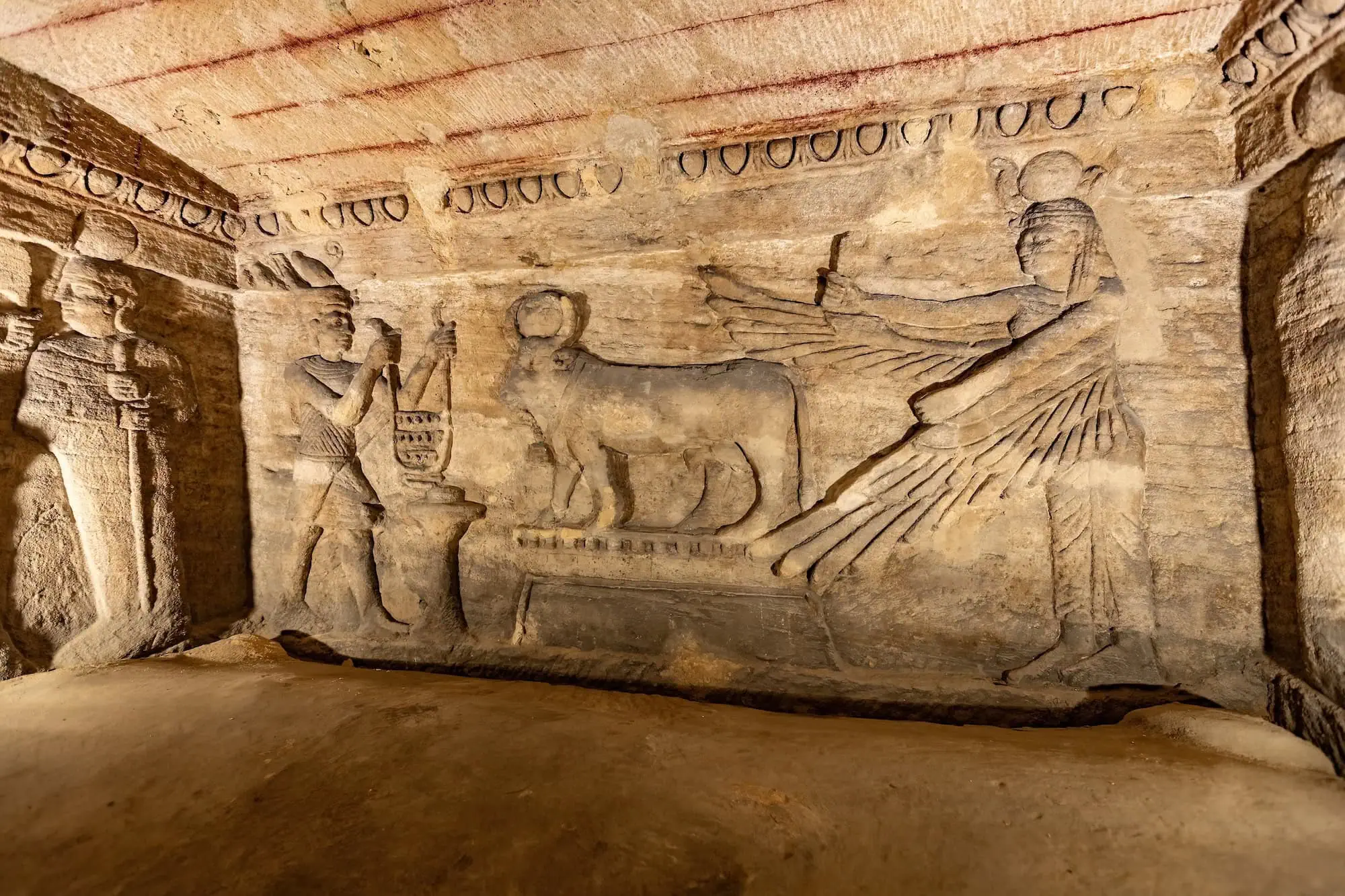
Catacombs of Kom El Shoqafa
Carved c. 2nd century AD
A multi-level underground tomb complex cut into the rock, blending Egyptian, Greek and Roman art in a way found almost nowhere else.
- A spiral staircase winds down around a central shaft
- Egyptian gods shown in Roman armour
- Includes a banquet hall for mourners
Did you know?
The name means “Mound of Shards”, and the catacombs were rediscovered in 1900 when a donkey fell through the ground.
 Still standing
长城
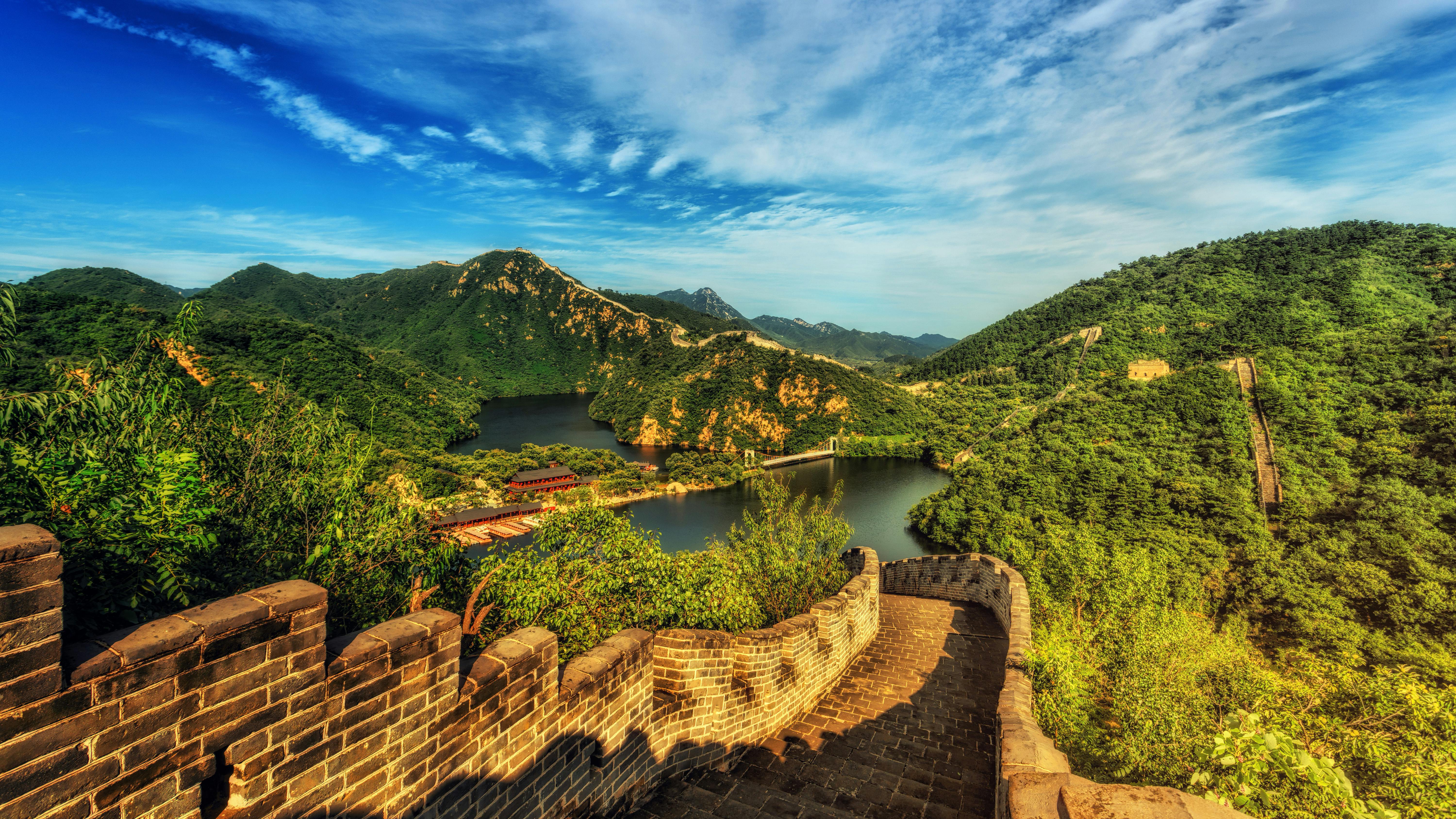
Great Wall of China
Built from 7th century BC to AD 1600s
A vast network of walls, watchtowers and forts built over many centuries to protect Chinese states and empires from northern invaders.
- All sections combined measure about 21,000 km
- The best-preserved parts were built by the Ming dynasty
- A UNESCO World Heritage Site since 1987
Did you know?
Contrary to popular belief, the wall is not visible to the naked eye from space.
 Lost
Lost大报恩寺琉璃塔
Porcelain Tower of Nanjing
Built 1412–c. 1431
A nine-storey pagoda faced with gleaming white glazed porcelain bricks, which amazed European travellers who saw it in the 1600s.
- About 79 m tall
- Built on the orders of the Yongle Emperor
- Shown here in a 1665 engraving by Johan Nieuhof
Did you know?
It was destroyed in 1856 during the Taiping Rebellion; a modern reconstruction opened on the site in 2015.
 Still standing
Ayasofya
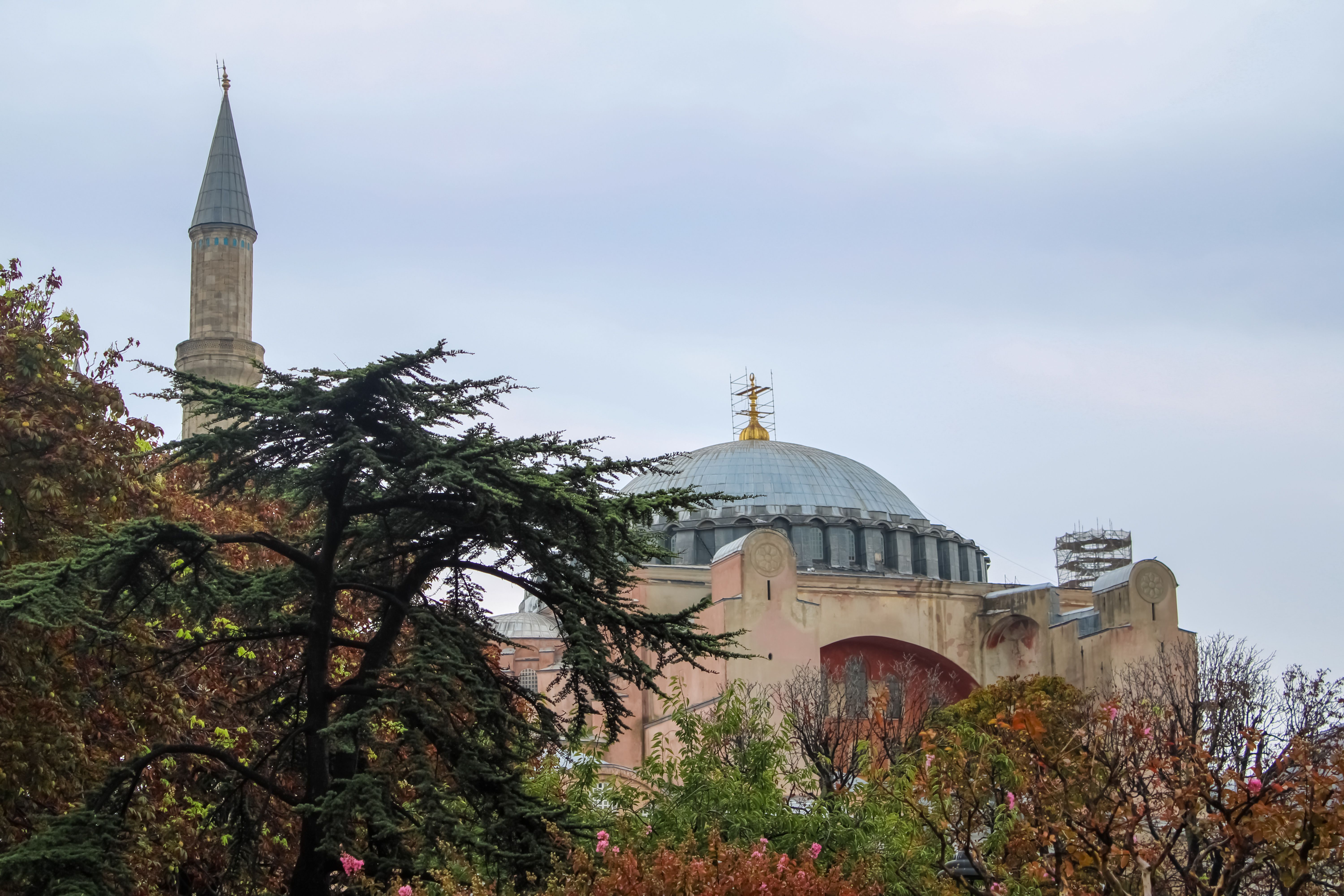
Hagia Sophia
Built AD 532–537
A breathtaking domed building commissioned by the Byzantine emperor Justinian, which has served as a cathedral, a mosque and a museum.
- Main dome is about 31 m across
- Built in under six years
- Became a mosque in 1453, a museum in 1934, and a mosque again in 2020
Did you know?
It was the largest cathedral in the world for nearly 1,000 years.
 Still standing
Torre di Pisa
Leaning Tower of Pisa
Built 1173–1372
The free-standing bell tower of Pisa Cathedral, which began to tilt during construction because it was built on soft ground.
- About 56 m tall with seven bells
- Took roughly 200 years to finish
- Straightened slightly by engineers between 1990 and 2001
Did you know?
At its worst the tower leaned about 5.5°; today it leans about 4°.
New Seven Wonders of the World
Chosen in a worldwide public vote and announced in Lisbon on 7 July 2007. The Great Pyramid was given honorary status.
 Still standing
البتراء
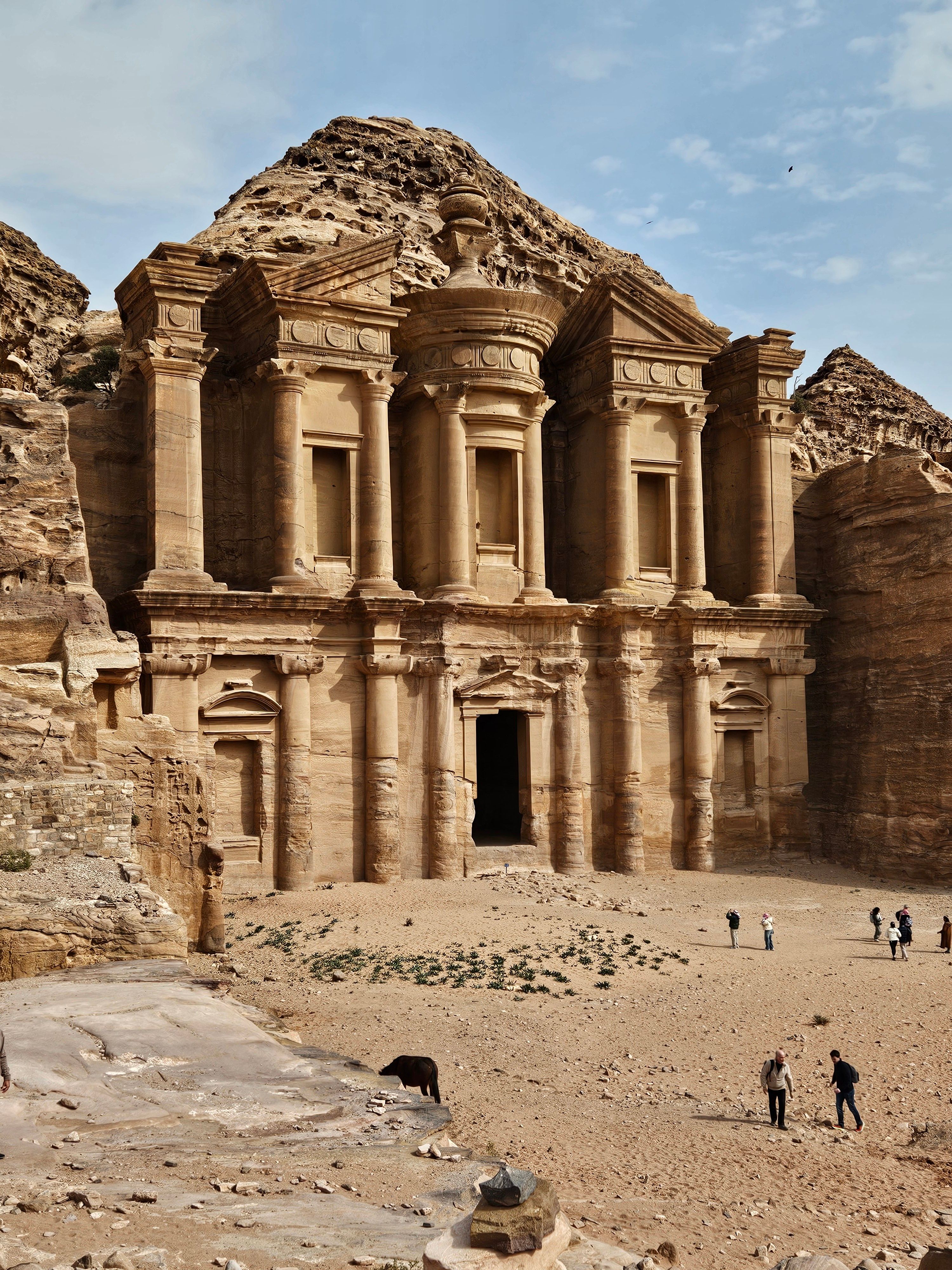
Petra
Carved c. 1st century AD
The rose-red capital of the Nabataeans, with temples and tombs carved straight into the sandstone cliffs.
- Reached through the Siq, a narrow gorge over 1 km long
- The Treasury (Al-Khazneh) is its most famous facade
- A UNESCO World Heritage Site since 1985
Did you know?
Petra was little known in Europe until the Swiss explorer Johann Ludwig Burckhardt visited in disguise in 1812.
 Still standing
Cristo Redentor
Christ the Redeemer
Completed 1931
A giant Art Deco statue of Jesus with outstretched arms, watching over Rio de Janeiro from a 700 m mountain peak.
- 30 m tall, standing on an 8 m pedestal
- Arms stretch about 28 m wide
- Made of reinforced concrete covered in soapstone tiles
Did you know?
It is struck by lightning several times every year.
 Still standing
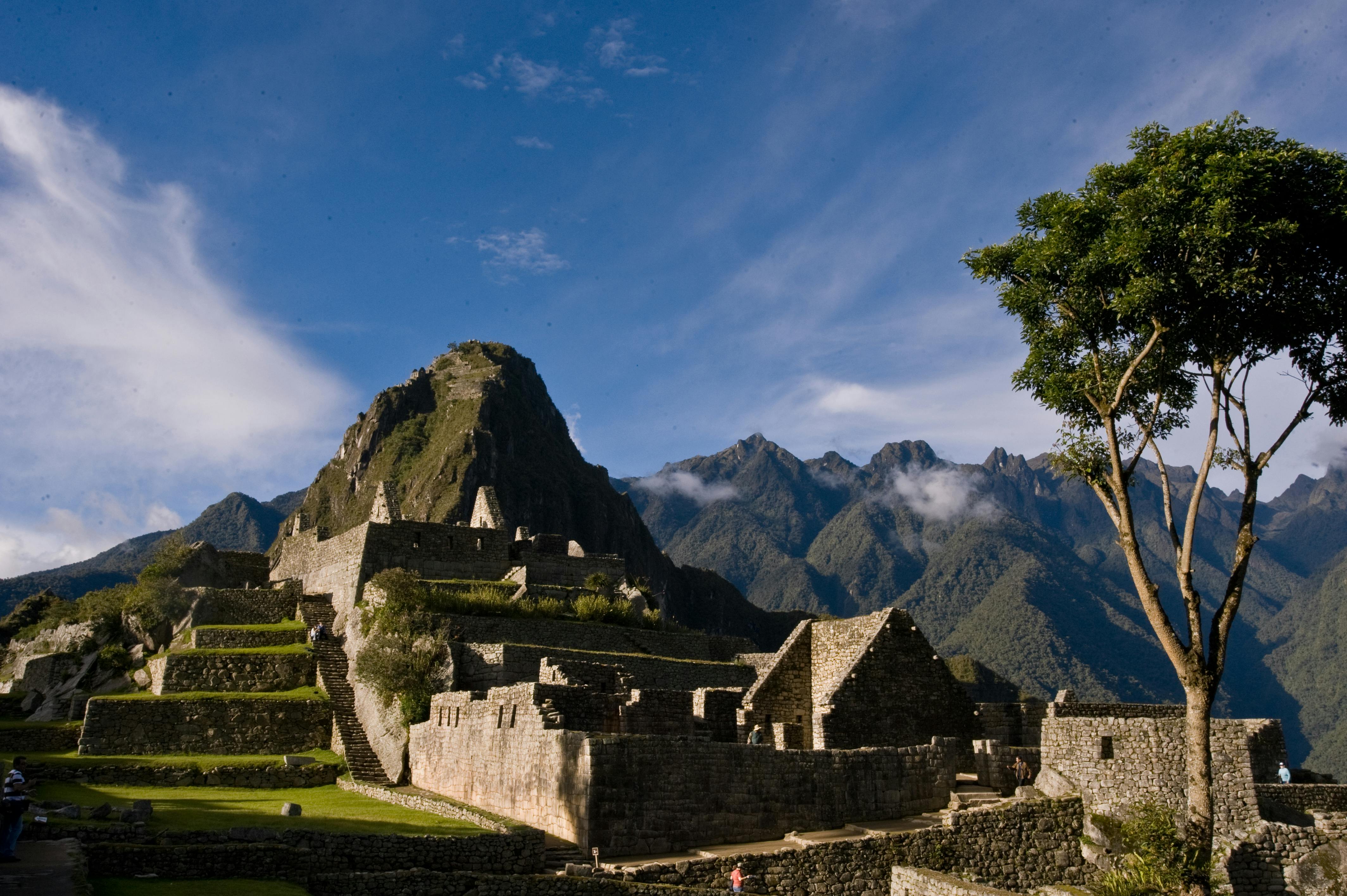
Machu Picchu
Built c. 1450
An Inca citadel perched on a mountain ridge high above the Urubamba Valley, built for the emperor Pachacuti.
- Sits about 2,430 m above sea level
- Stones fitted so tightly that no mortar was needed
- A UNESCO World Heritage Site since 1983
Did you know?
It was abandoned about a century after it was built and became world-famous after Hiram Bingham’s visit in 1911.
 Still standing
Chichén Itzá
Flourished c. AD 600–1200
A great Maya city whose step pyramid, El Castillo (the Temple of Kukulcán), works like a giant stone calendar.
- El Castillo has 365 steps — one for each day of the year
- Home to the largest ball court in ancient Mesoamerica
- A UNESCO World Heritage Site since 1988
Did you know?
At the spring and autumn equinoxes, shadows form a “serpent” that seems to slither down the pyramid’s stairs.
 Still standing
ताज महल
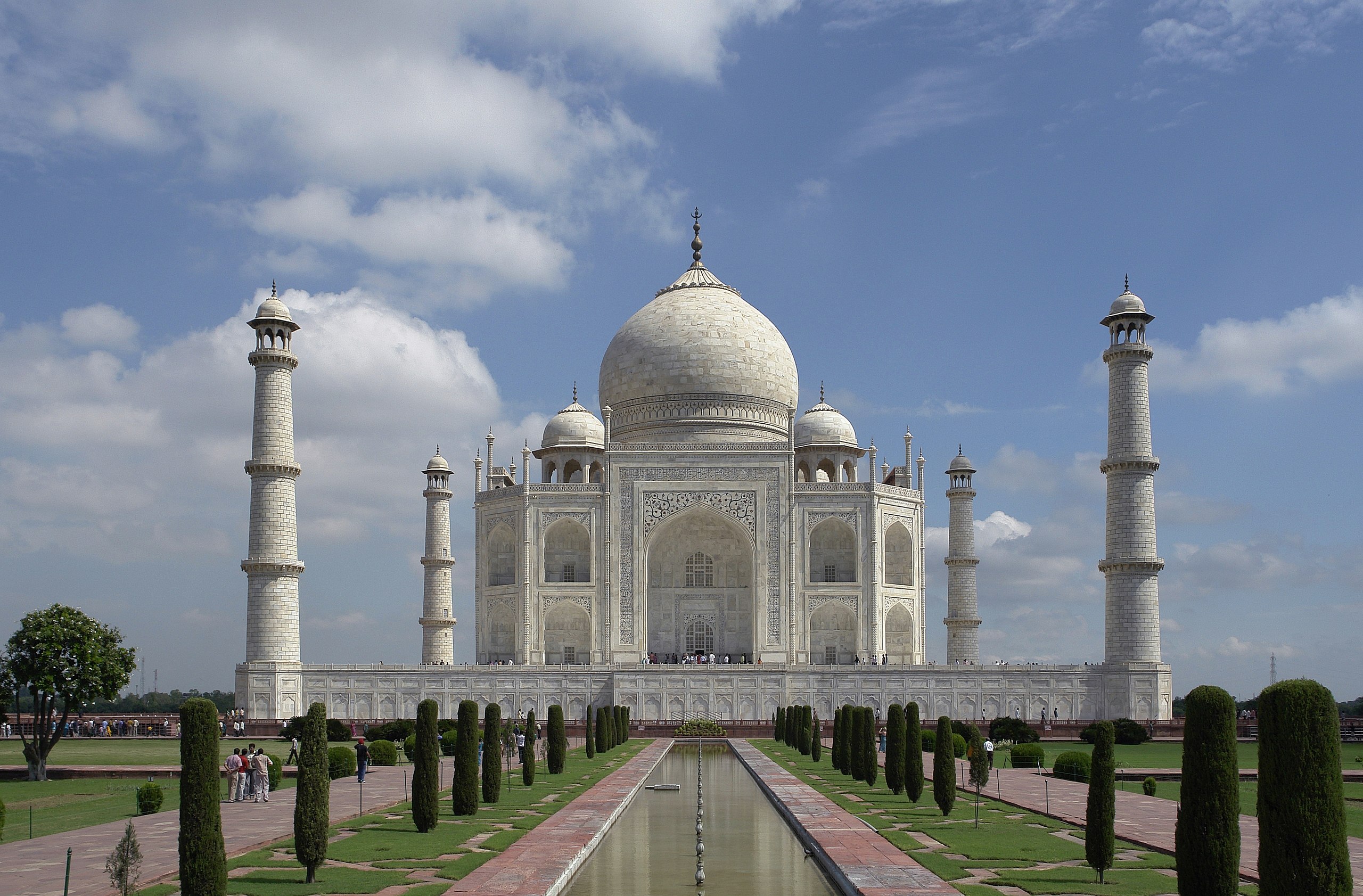
Taj Mahal
Built c. 1632–1653
A white marble mausoleum built by the Mughal emperor Shah Jahan in memory of his beloved wife, Mumtaz Mahal.
- Built by around 20,000 workers
- White marble inlaid with precious and semi-precious stones
- A UNESCO World Heritage Site since 1983
Did you know?
Its four minarets lean slightly outward, so they would fall away from the tomb in an earthquake.
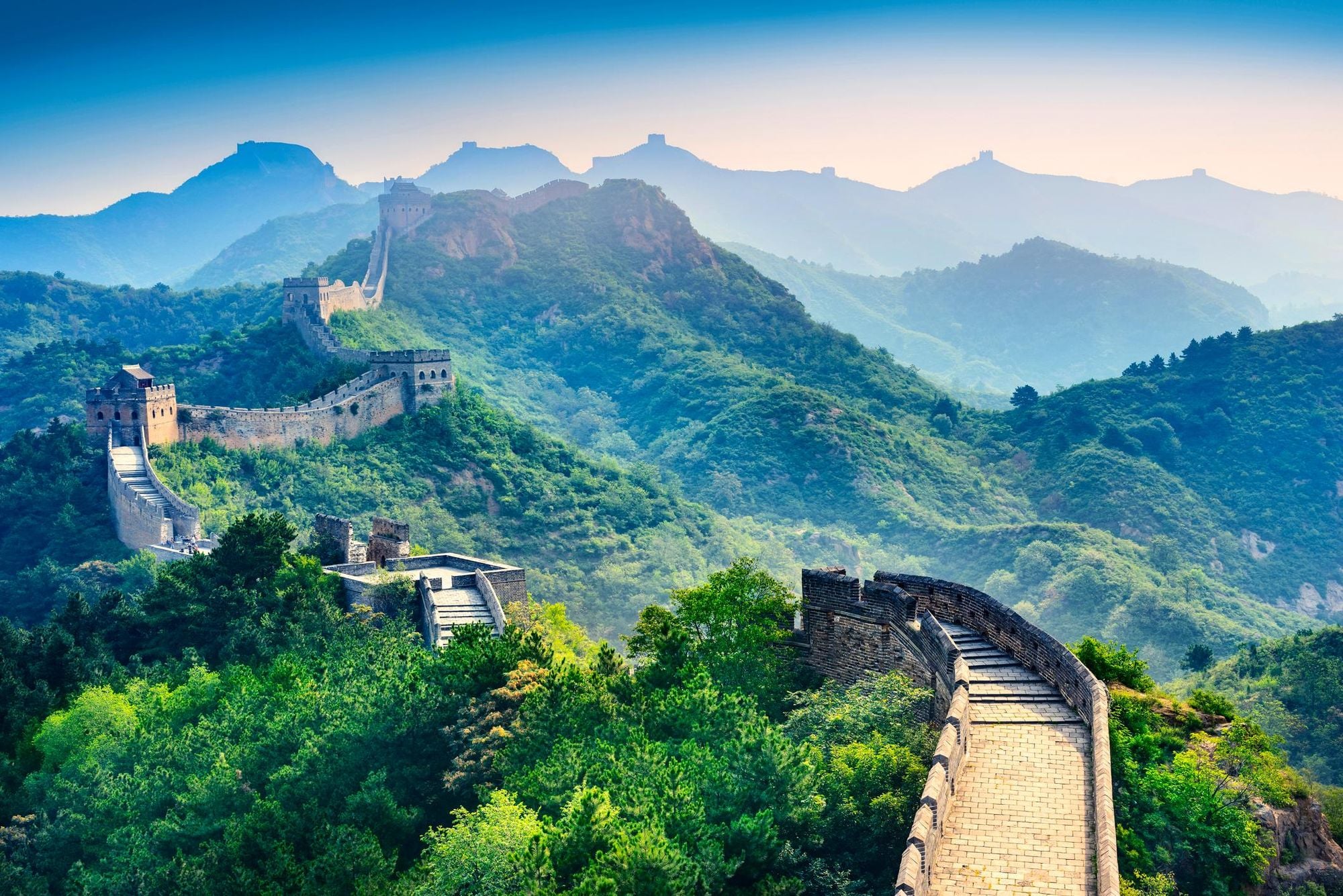 Still standing
长城
Great Wall of China
Built from 7th century BC to AD 1600s
The only wonder to appear on both the medieval and modern lists alongside the Colosseum, snaking across mountains, deserts and grasslands.
- Wide enough in places for soldiers to march five abreast
- Thousands of watchtowers sent smoke and fire signals
- Popular sections include Badaling, Mutianyu and Jinshanling
Did you know?
Some of its mortar was made with sticky rice mixed into lime, which helped it last for centuries.
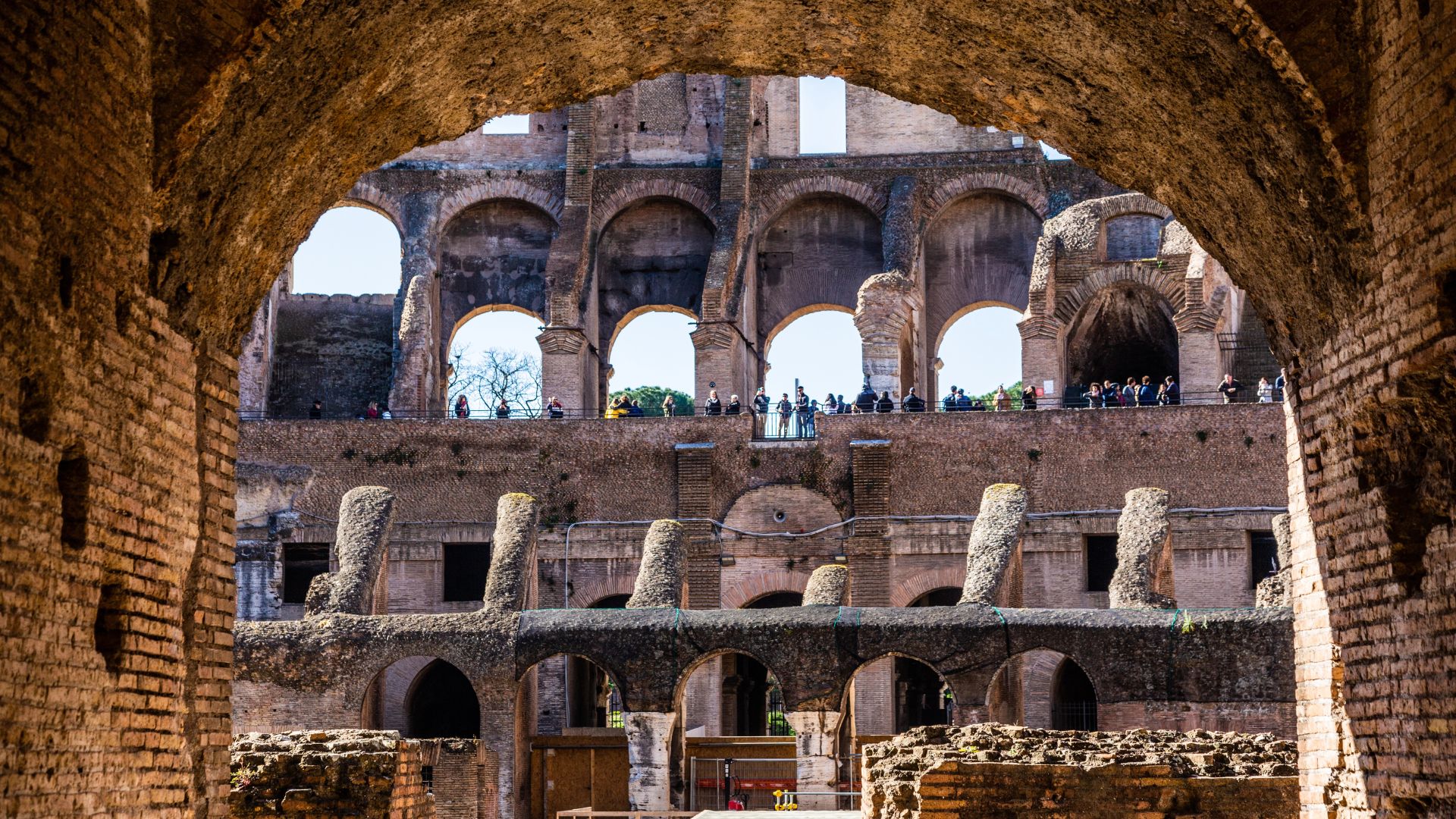 Still standing
Colosseo
Colosseum
Completed AD 80
Nearly 2,000 years old, the Colosseum remains the symbol of Rome and one of the most visited monuments on Earth.
- Around 80 entrances let crowds in and out quickly
- A huge awning (the velarium) shaded spectators
- Damaged by earthquakes and stone robbers over the centuries
Did you know?
Some historians believe the arena could be flooded for staged mini sea battles in its early years.
New Seven Wonders of Nature
The natural follow-up campaign, with the winners announced in November 2011.
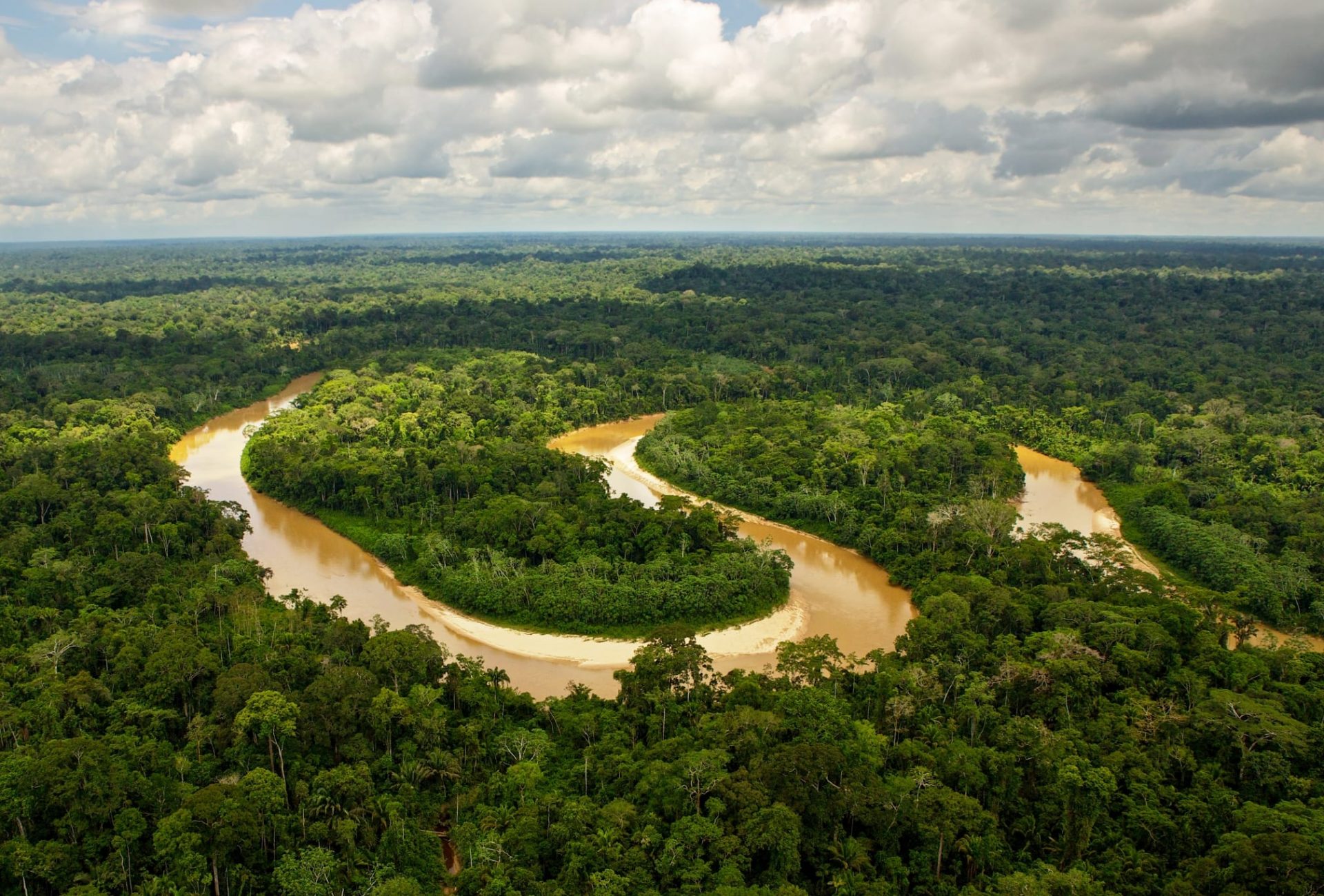 Still standing
Amazônia
Amazon Rainforest & River
Named 2011
The largest tropical rainforest on Earth, crossed by the mightiest river on the planet and home to an astonishing variety of life.
- Covers about 5.5 million km² across nine countries
- Around 60% of it lies in Brazil
- Home to an estimated 390 billion trees
Did you know?
The Amazon River carries about one-fifth of all the fresh water that flows into the world’s oceans.
 Still standing
Vịnh Hạ Long
Ha Long Bay
Named 2011
Emerald waters dotted with around 1,600 limestone islands and pillars, many hiding caves and grottoes.
- Most islands are uninhabited and untouched
- Floating fishing villages rest between the rocks
- A UNESCO World Heritage Site since 1994
Did you know?
Hạ Long means “descending dragon” — legend says a dragon created the islands to defend Vietnam from invaders.
 Still standing
Cataratas del Iguazú
Iguazu Falls
Named 2011
A thundering horseshoe of about 275 waterfalls stretching nearly 3 km along the Iguazu River, surrounded by rainforest.
- The Devil’s Throat drops about 80 m
- Rainbows form in the spray almost every sunny day
- Protected by national parks on both sides of the border
Did you know?
On seeing it, Eleanor Roosevelt is said to have exclaimed, “Poor Niagara!”
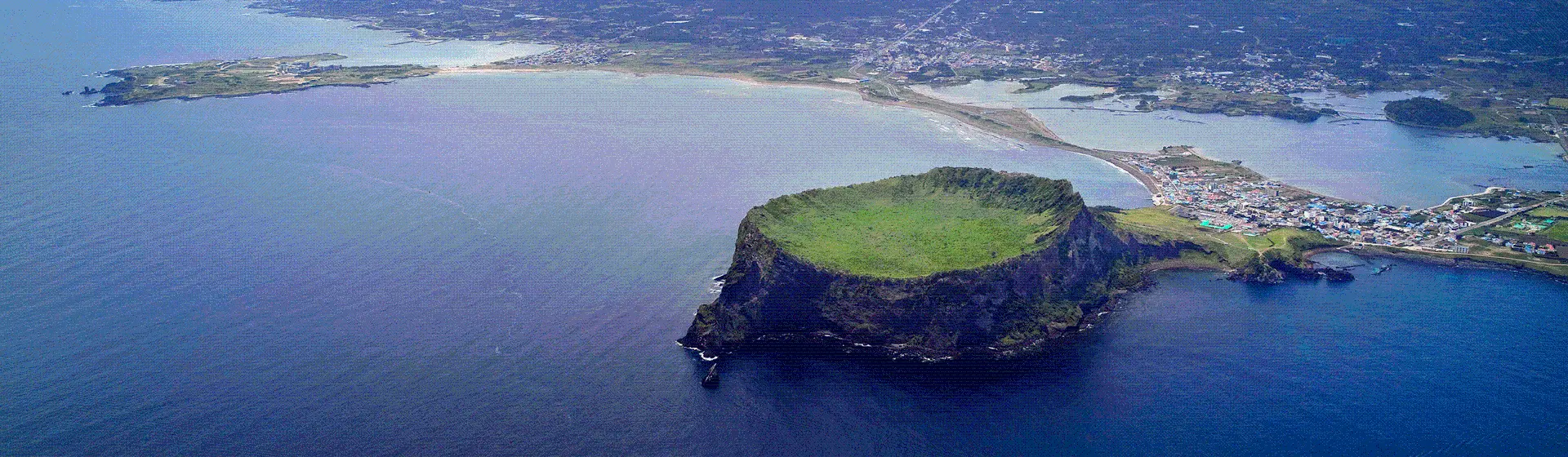 Still standing
제주도
Jeju Island
Named 2011
A volcanic island of lava tubes, craters and waterfalls, crowned by Hallasan, the highest mountain in South Korea.
- Hallasan rises to 1,950 m
- Seongsan Ilchulbong is a crater that rose from the sea
- Home to the famous haenyeo women free-divers
Did you know?
Jeju was the first place in the world to earn all three UNESCO natural titles: World Heritage, Biosphere Reserve and Global Geopark.
 Still standing
Komodo National Park
Named 2011
A group of rugged volcanic islands and rich coral seas, famous as the last wild home of the Komodo dragon.
- Komodo dragons can grow to about 3 m long
- Padar Island’s viewpoint overlooks three curved bays
- A UNESCO World Heritage Site since 1991
Did you know?
The Komodo dragon is the largest living lizard on Earth.
 Still standing
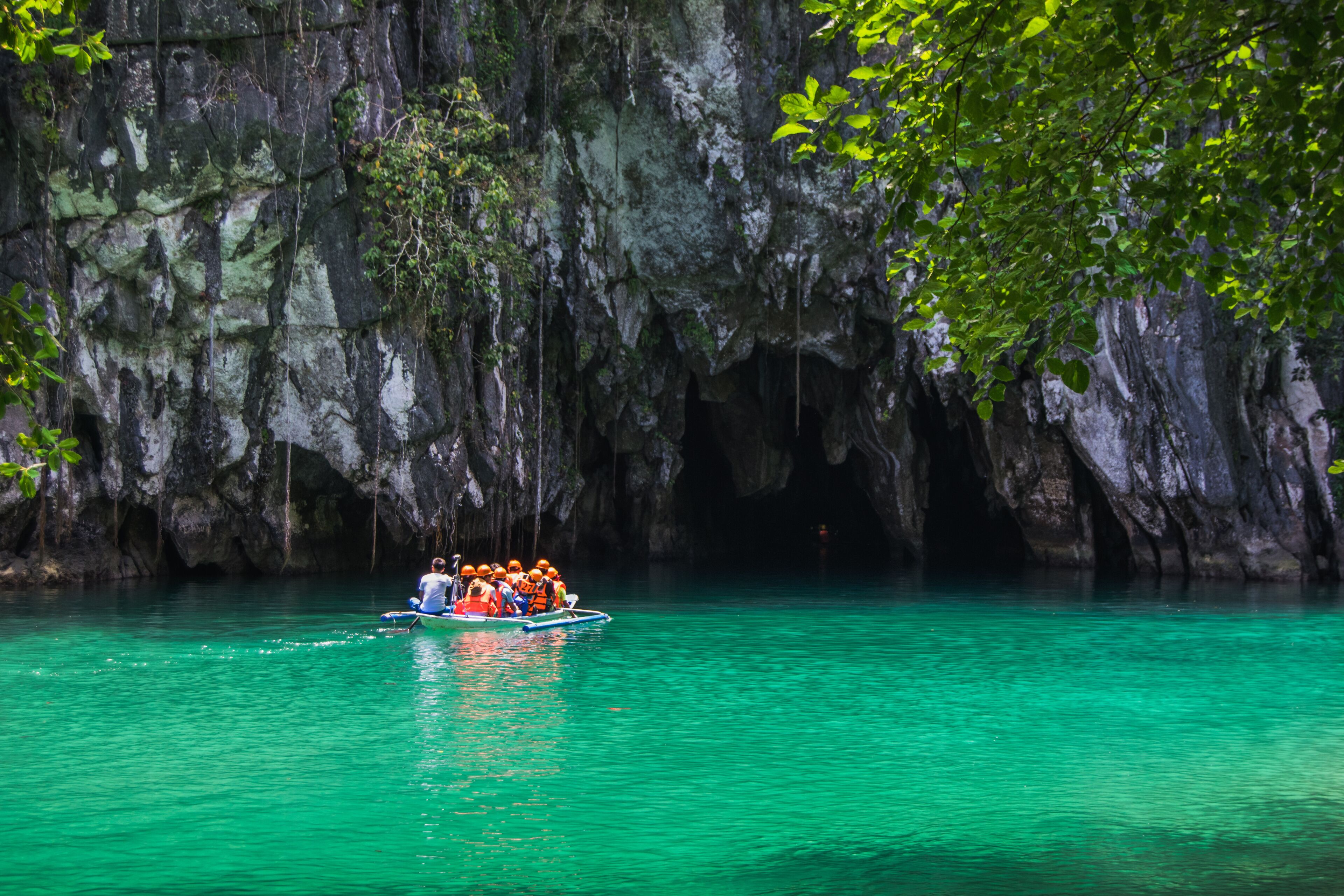
Puerto Princesa Underground River
Named 2011
A river that winds for about 8 km through a vast limestone cave before flowing straight into the sea.
- Explored by paddle boat through huge caverns
- Filled with stalactites, stalagmites and bats
- A UNESCO World Heritage Site since 1999
Did you know?
A fossil of an ancient sea cow, around 20 million years old, was found in the cave’s rock in 2010.
 Still standing
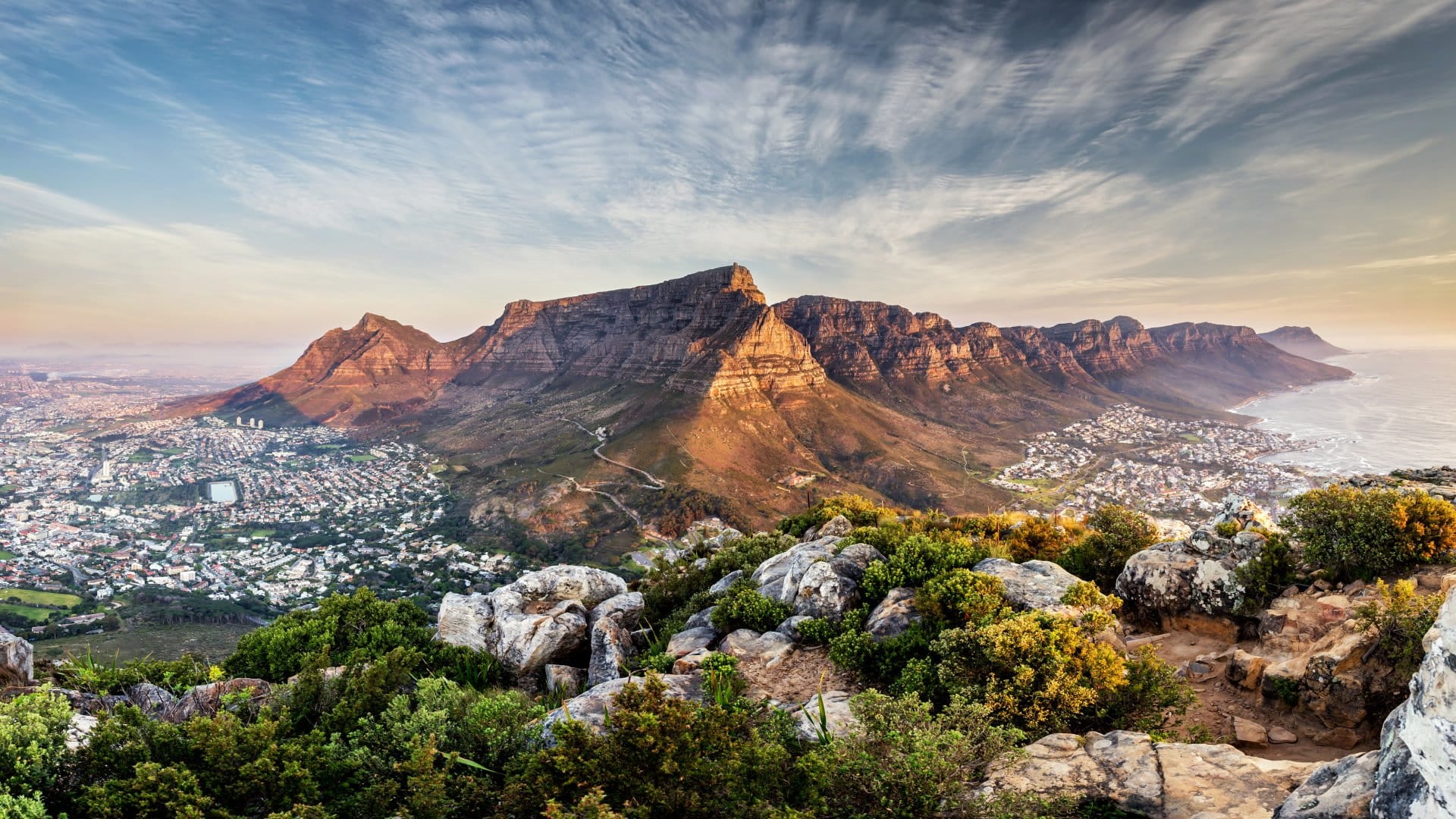
Tafelberg
Table Mountain
Named 2011
A flat-topped mountain towering over Cape Town, often draped in a “tablecloth” of cloud spilling over its edge.
- Highest point: Maclear’s Beacon, 1,086 m
- A cableway has carried visitors to the top since 1929
- Part of the Cape Floral Region, one of the richest plant kingdoms on Earth
Did you know?
It is the only land feature on Earth with a constellation named after it — Mensa, “the Table”.