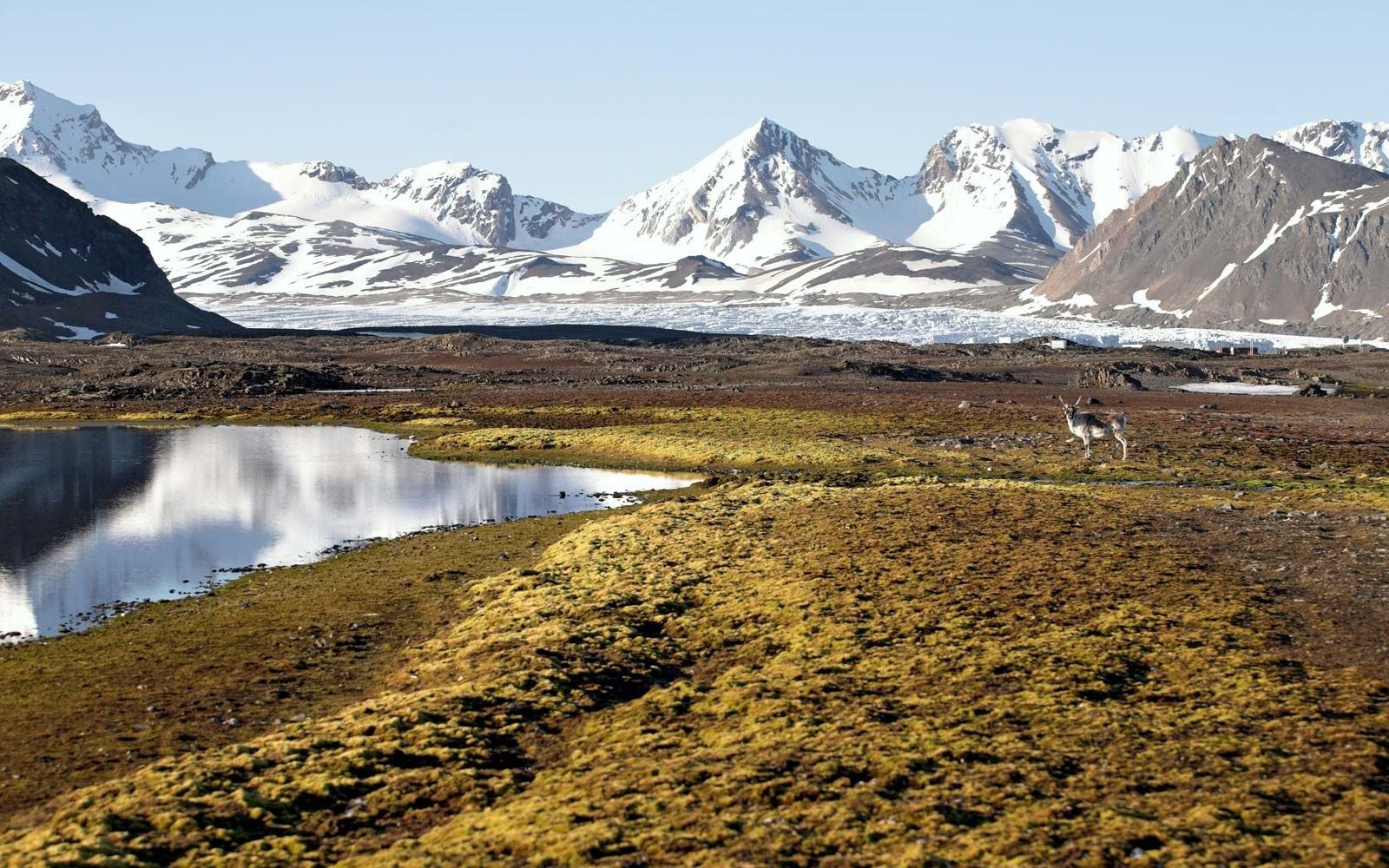
The second-largest desert, spanning the frozen far north across North America, Europe and Asia.
Area
13,900,000 km²
Continent
Arctic
Location
The far north: North America, Europe & Asia
Temperature
Long, dark, freezing winters
Rainfall
Under 250 mm a year
Climate
Polar desert
About the Arctic Polar Desert
The Arctic polar desert covers the frozen lands around the North Pole, across northern Canada, Greenland, Scandinavia and Russia. So little moisture falls that, despite the ice, it counts as a desert. Hardy mosses and lichens cling to bare ground, and animals like polar bears, musk oxen and Arctic foxes endure its long, dark winters.
Did you know?
The frigid air holds so little moisture that it is as dry as many hot deserts.
Highlights
- The second-largest desert on Earth
- As dry as many hot deserts
- Home to polar bears and Arctic foxes
Photo gallery
Life in the Arctic Polar Desert
Animals, birds and plants that have adapted to survive this landscape.
Animals
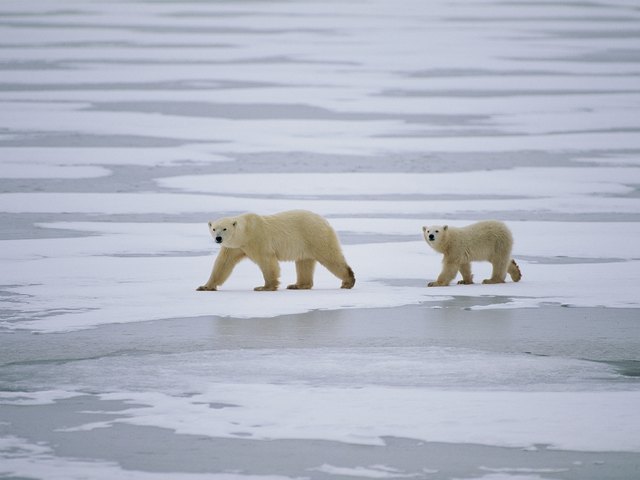
Polar bear
The great white bear that rules the frozen Arctic desert and sea ice.
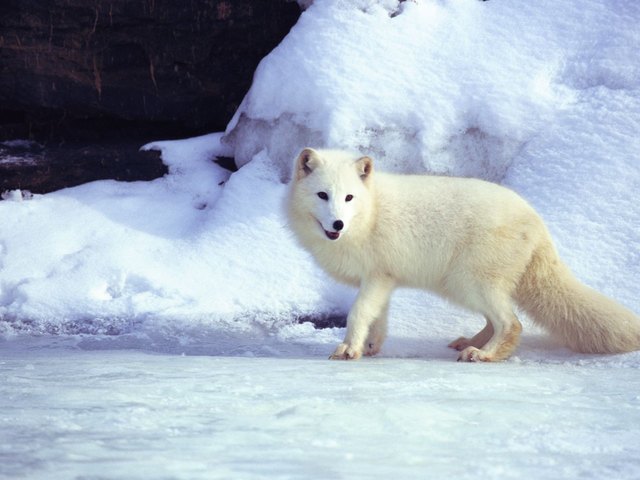
Arctic fox
A small fox whose thick white coat hides it against the snow.
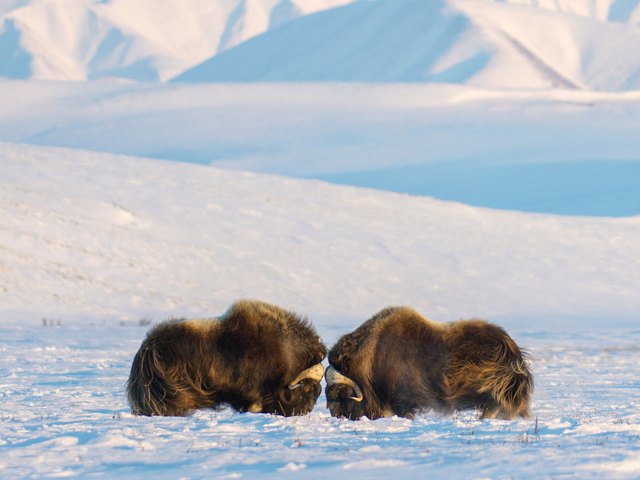
Musk ox
A shaggy Ice-Age survivor wrapped in the warmest wool of any animal.
Birds
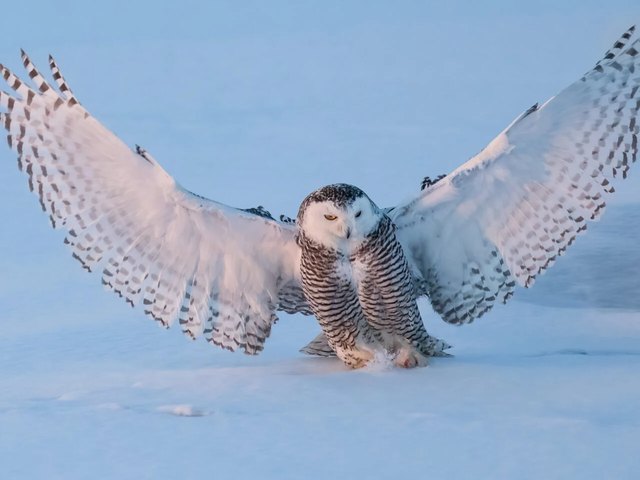
Snowy owl
A white owl of the Arctic tundra that hunts by day in summer.
Trees & plants
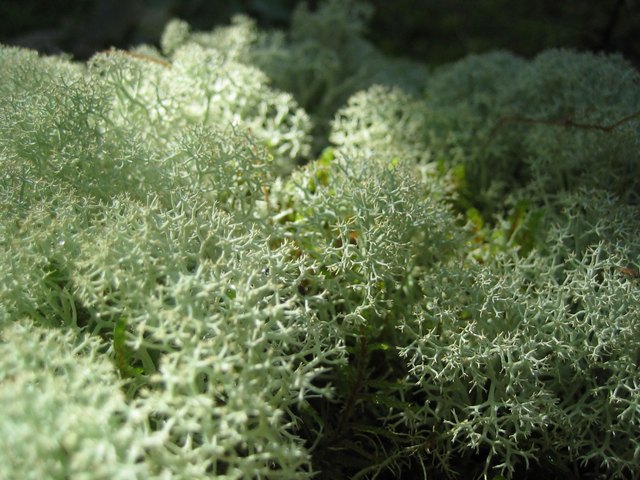
Reindeer lichen
A pale, spongy lichen that carpets the Arctic and feeds caribou.
Day & night in the Arctic Polar Desert
Deserts are famous for their extreme temperature swings. Flip between day and night to feel the difference — these are typical figures for a polar desert.
Midday sun
-20°C
typical daytime high
Here it is cold by day and brutally colder by night. In the long polar winter the sun barely rises and temperatures can plunge below -60°C.
Recorded range for the Arctic Polar Desert: Long, dark, freezing winters