Geuest

Nature · Earth Science

Weather & Climate

The ever-changing sky above us

Back to Nature

Weather is the state of the atmosphere at a given moment — the rain, sun, wind and temperature of the day. Climate is the average of that weather over decades. Both are driven by the Sun heating the Earth unevenly and the endless movement of air and water that tries to even it out.

Weather layer
Troposphere (~0-12 km)
Ozone layer
In the stratosphere
Driving force
Uneven solar heating
Climate vs weather
Decades vs moments

How They Form

The Sun heats the tropics more than the poles, setting air and oceans in motion to redistribute that heat. Rising warm air, sinking cool air, the planet's spin and the water cycle together create winds, clouds, storms and the great climate belts that circle the globe.

Layers Of The Atmosphere

Troposphere (weather)Stratosphere (ozone)MesosphereThermosphereSolar energy

From the weather-filled troposphere up through the stratosphere, mesosphere and beyond — the layers of air that wrap the Earth.

Types & Details

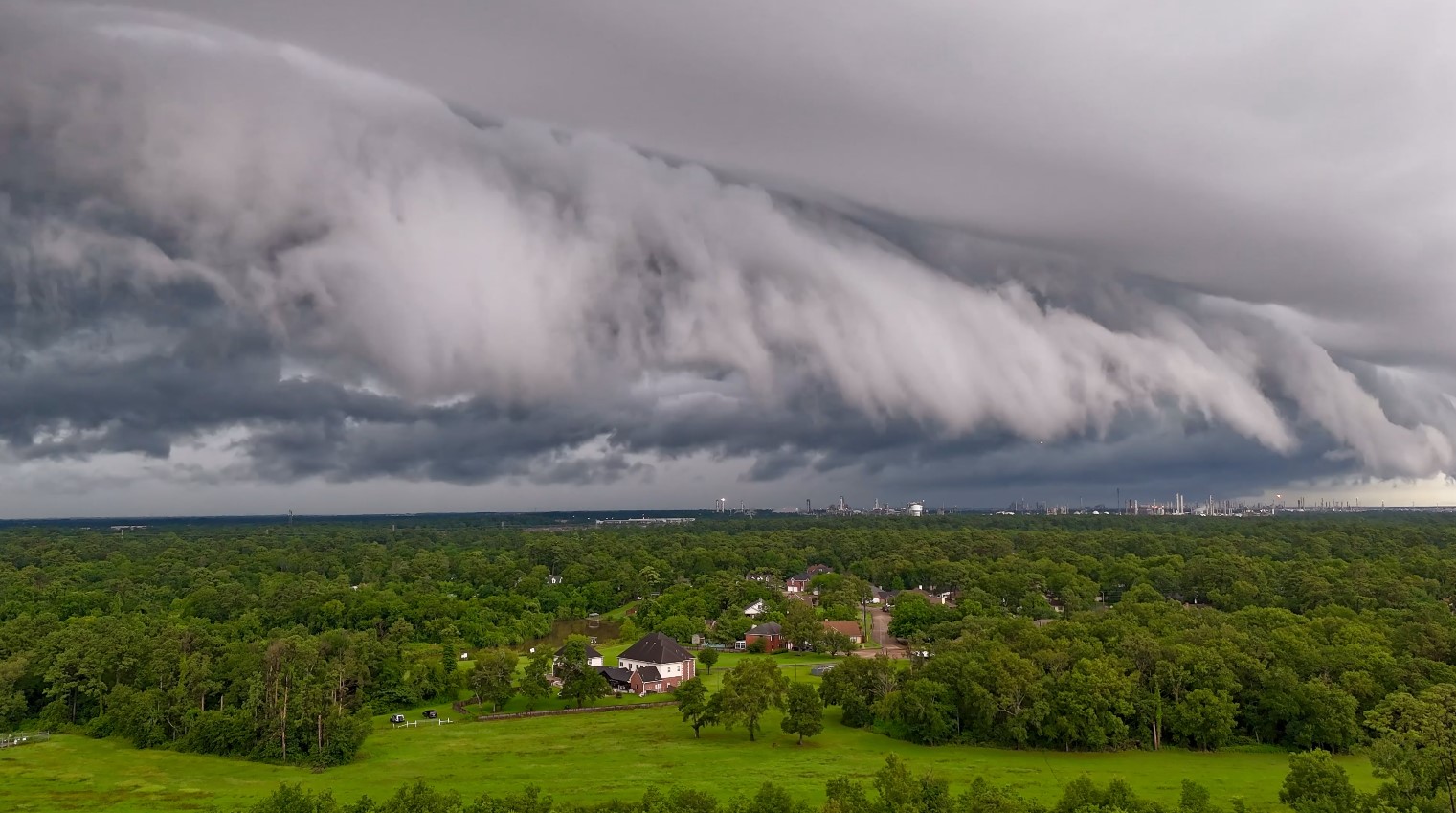
Weather front with contrasting clouds in the sky
1

Air Masses & Fronts

Where warm and cold air collide

Form and fade over days
  • Huge bodies of similar air
  • Meet along boundaries called fronts
  • Bring cloud, rain and storms
  • Steer day-to-day weather

Vast masses of warm or cold air sweep across the globe. Where they meet, the boundary — a front — lifts air to form the clouds and rain of everyday weather.

Example:Mid-latitude weather fronts
Spiral hurricane storm seen from above
2

Cyclones & Hurricanes

Earth's most powerful storms

Last days to a couple of weeks
  • Spin around a calm eye
  • Feed on warm ocean water
  • Bring fierce winds and floods
  • Called typhoons in the Pacific

Over warm tropical seas, rising moist air organises into a giant spinning storm with a calm eye at its centre — capable of devastating coasts with wind and flood.

Example:Atlantic hurricanes
Towering thunderstorm cloud with lightning
3

Thunderstorms

Towering clouds of lightning and rain

Build and break within hours
  • Grow from towering cumulus clouds
  • Produce lightning and thunder
  • Bring heavy rain and hail
  • Can spawn tornadoes

When warm, moist air rockets upward, it builds anvil-topped storm clouds crackling with lightning, unleashing downpours, hail and sometimes violent tornadoes.

Example:Great Plains supercells, USA
Landscape representing a distinct climate zone
4

Climate Zones

The great belts of world climate

Shift slowly over centuries
  • Bands from equator to poles
  • Set by latitude and geography
  • Range from tropical to polar
  • Shape ecosystems and life

Averaged over decades, weather settles into broad belts — tropical, arid, temperate, cold and polar — that determine the plants, animals and people of each region.

Example:Tropical, temperate & polar belts