Geuest

Nature · Earth Science

Oceans & Seas

The vast blue heart of the planet

Back to Nature

The ocean is the continuous body of salt water that covers about 71 percent of Earth's surface and holds 97 percent of its water. Divided into five great oceans, it drives the climate, generates much of the oxygen we breathe and remains the least explored realm on the planet.

Earth covered
~71%
Largest
Pacific Ocean
Deepest
Mariana Trench (~10,935 m)
Holds
97% of Earth's water

How They Form

Earth's oceans filled billions of years ago from water vapour released by volcanoes and delivered by comets and asteroids. Their basins are shaped by plate tectonics: mid-ocean ridges create new seafloor that spreads outward and eventually plunges back into the mantle at deep trenches.

From Shore To Abyss

Continental shelfContinental slopeAbyssal plainDeep-sea trenchSea level

Down from the sunlit continental shelf, over the slope and abyssal plain to the deepest trenches — the hidden shape of the sea floor.

Types & Details

Bright sunlit ocean surface waters
1

The Sunlit Zone

The bright surface layer of life

Sunlit as long as oceans have existed
  • Reaches down to ~200 m
  • Bathed in sunlight
  • Where photosynthesis happens
  • Home to most marine life

The uppermost layer where sunlight penetrates, powering the plankton that feed the entire ocean food web. Nearly all the sea's familiar creatures live here.

Example:Open surface waters worldwide
Dark blue deep twilight ocean water
2

The Twilight Zone

Dim waters between light and dark

A permanent ocean layer
  • From ~200 m to 1,000 m deep
  • Faint, fading light
  • Too dark for photosynthesis
  • Home to bioluminescent life

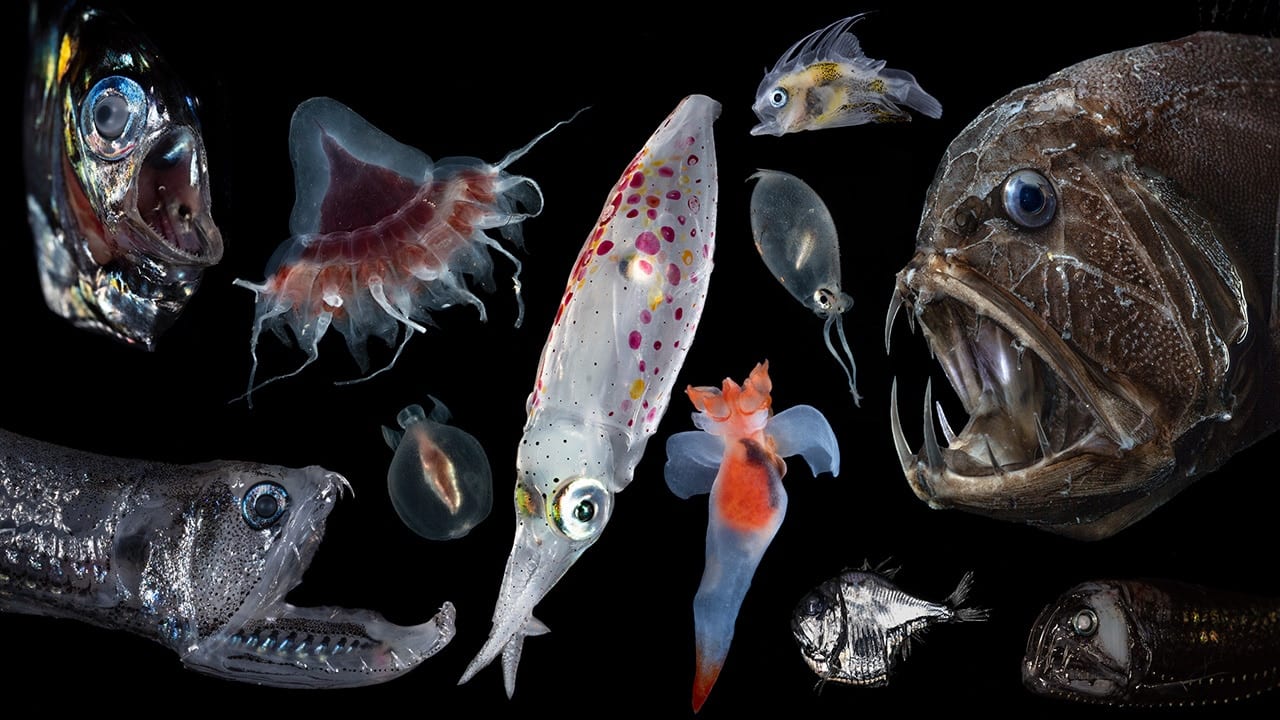
Below the sunlit zone, light fades to a dim blue gloom. Creatures here often make their own light to hunt, hide and communicate in the near-darkness.

Example:Mesopelagic zone worldwide
Shallow productive sea over a continental shelf
3

Shallow Seas & Shelves

Rich waters over the continental shelf

Flooded and drained by changing sea levels
  • Lie over the continental shelf
  • Relatively shallow and productive
  • Support major fisheries
  • Include seas like the North Sea

Where the sea floods the edge of a continent, sunlit shallow water and nutrient-rich seabed create some of the world's richest fishing grounds.

Example:North Sea, Europe
Illustration of a deep dark ocean trench
4

Deep Ocean Trenches

The crushing, lightless abyss

Formed at plate boundaries
  • The deepest places on Earth
  • Form where plates dive down
  • Cold, dark and immense pressure
  • Host bizarre specialised life

At subduction zones the seafloor plunges into narrow trenches kilometres deep. Despite crushing pressure and total darkness, strange life still thrives there.

Example:Mariana Trench, Pacific