Geuest

Nature · Earth Science

Mountains

Earth’s crust folded, faulted and forged skyward

Back to Nature

A mountain is a landform that rises prominently above its surroundings, usually with steep slopes and a defined summit. Born from the slow collision of tectonic plates or the fire of volcanism, mountains shape climate, guide rivers and host unique ecosystems layered by altitude.

Highest
Everest (8,849 m)
Tallest base-to-peak
Mauna Kea (10,210 m)
Longest range
Andes (~7,000 km)
Oldest
Barberton Makhonjwa (~3.6 B yrs)

How They Form

Most mountains are built by tectonic forces acting over millions of years. Where plates collide, rock buckles into folds or snaps along faults; where magma rises, volcanoes stack lava into peaks. Weathering and glaciers then sculpt the raw uplift into ridges, horns and valleys.

Inside a Fold Mountain

Peak (snow line)Folded strataCrustal rootUplift & folding

Compressed rock strata arch into anticlines and dip into synclines, with a deep “root” of crust below and altitude zones above.

Types & Details

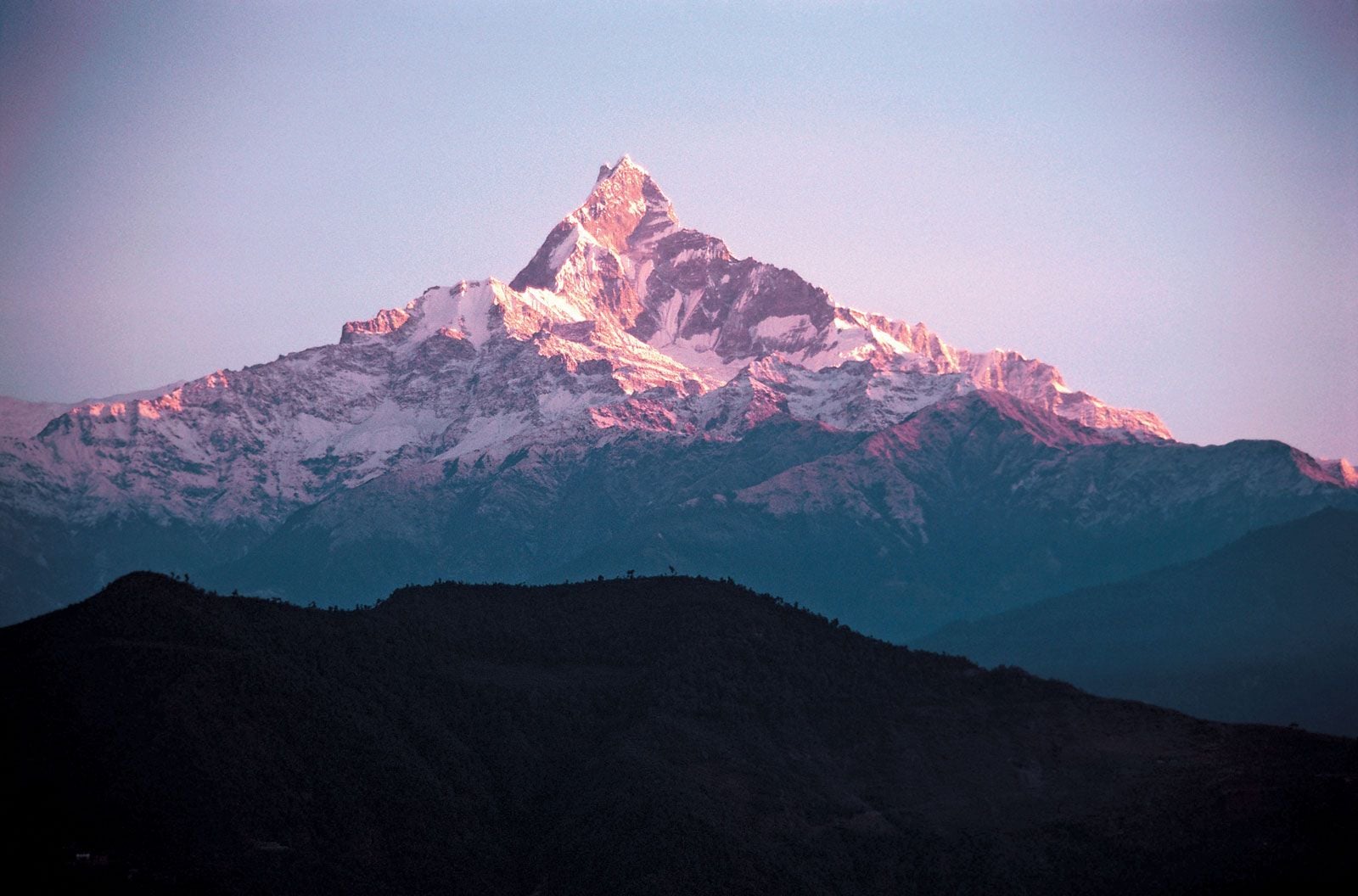
Snow-capped folded mountain range with layered ridges
1

Fold Mountains

Crust crumpled by colliding plates

Young ranges ~10–50 M yrs; older ~300–500 M yrs
  • Formed by compression at plate boundaries
  • Long parallel ridges and valleys
  • Layered, folded sedimentary rock
  • The tallest mountains on Earth

When two plates converge, thick layers of sediment are squeezed and buckled upward into folds. The Himalayas are still rising today as India ploughs into Asia — the classic young fold range.

Example:Himalayas, Asia
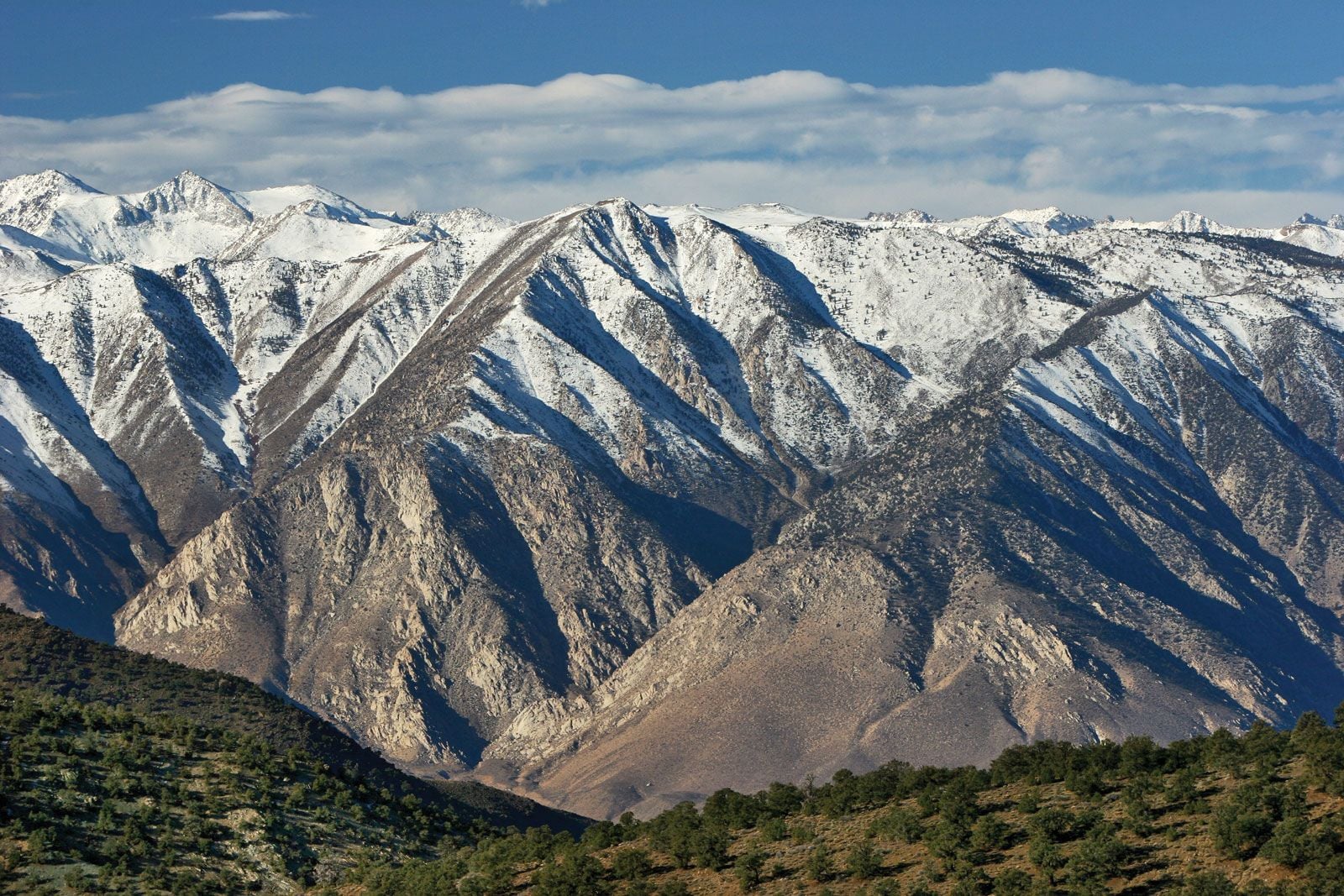
Steep fault-block mountain range rising abruptly from a valley
2

Fault-Block Mountains

Great blocks lifted along fractures

Typically tens of millions of years
  • Formed where crust cracks and blocks tilt
  • One steep face (the fault scarp), one gentle
  • Flat-topped or tilted plateaus
  • Associated with crustal stretching

Tension in the crust breaks it into blocks along faults; some rise as “horsts” while others drop as “grabens”. The result is a dramatic steep scarp on one side and a gentle slope on the other.

Example:Sierra Nevada, USA
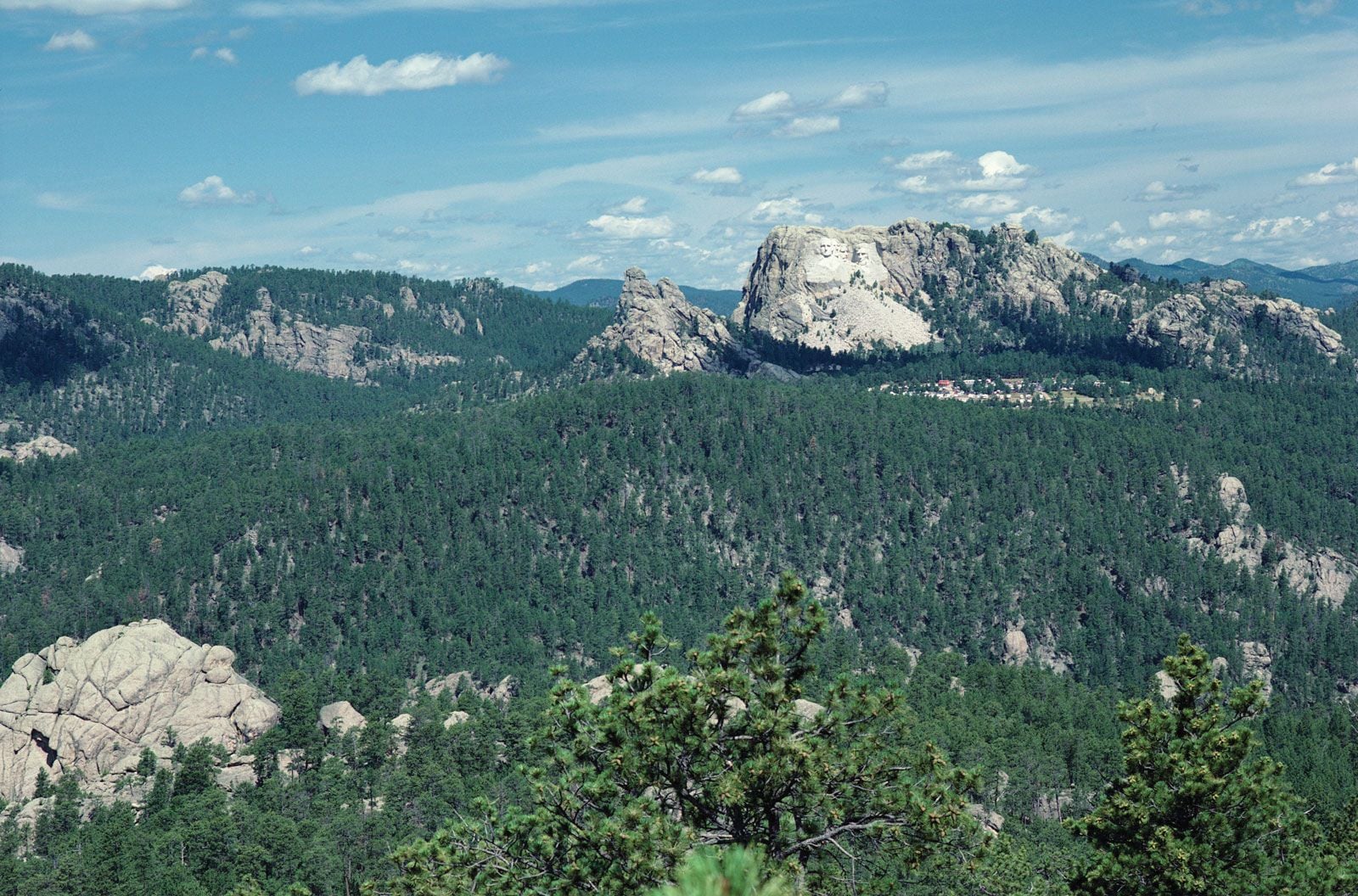
Rounded dome-shaped forested mountains
3

Dome Mountains

Land pushed up into a broad blister

Varies — tens to hundreds of millions of years
  • Rock arched upward by rising magma
  • Rounded, dome-like uplift
  • Erosion exposes older core rocks
  • No surface eruption — magma cooled below

When a large body of magma pushes the overlying rock upward without breaking through, it creates a broad dome. As the softer top erodes, concentric ridges of harder rock are revealed around an ancient core.

Example:Black Hills, USA
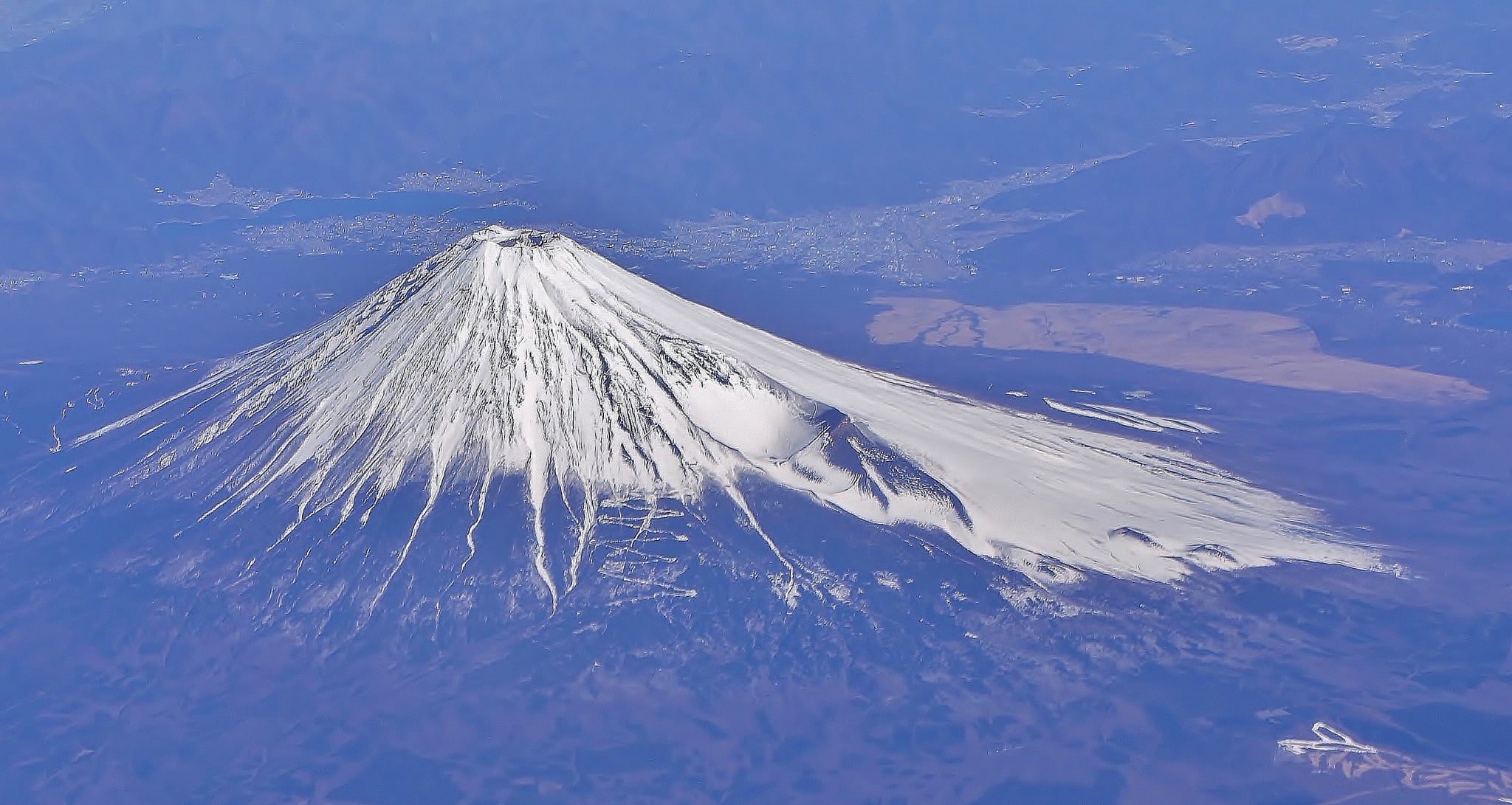
A symmetrical snow-capped volcanic cone
4

Volcanic Mountains

Built grain by grain from erupted rock

Young — thousands to a few million years
  • Formed by accumulated lava and ash
  • Often steep, conical and symmetrical
  • Frequently isolated single peaks
  • May be active, dormant or extinct

Volcanic mountains grow as successive eruptions pile lava and ash around a vent. Many of the world’s most iconic solitary peaks — perfectly conical and snow-crowned — are volcanoes.

Example:Mount Fuji, Japan
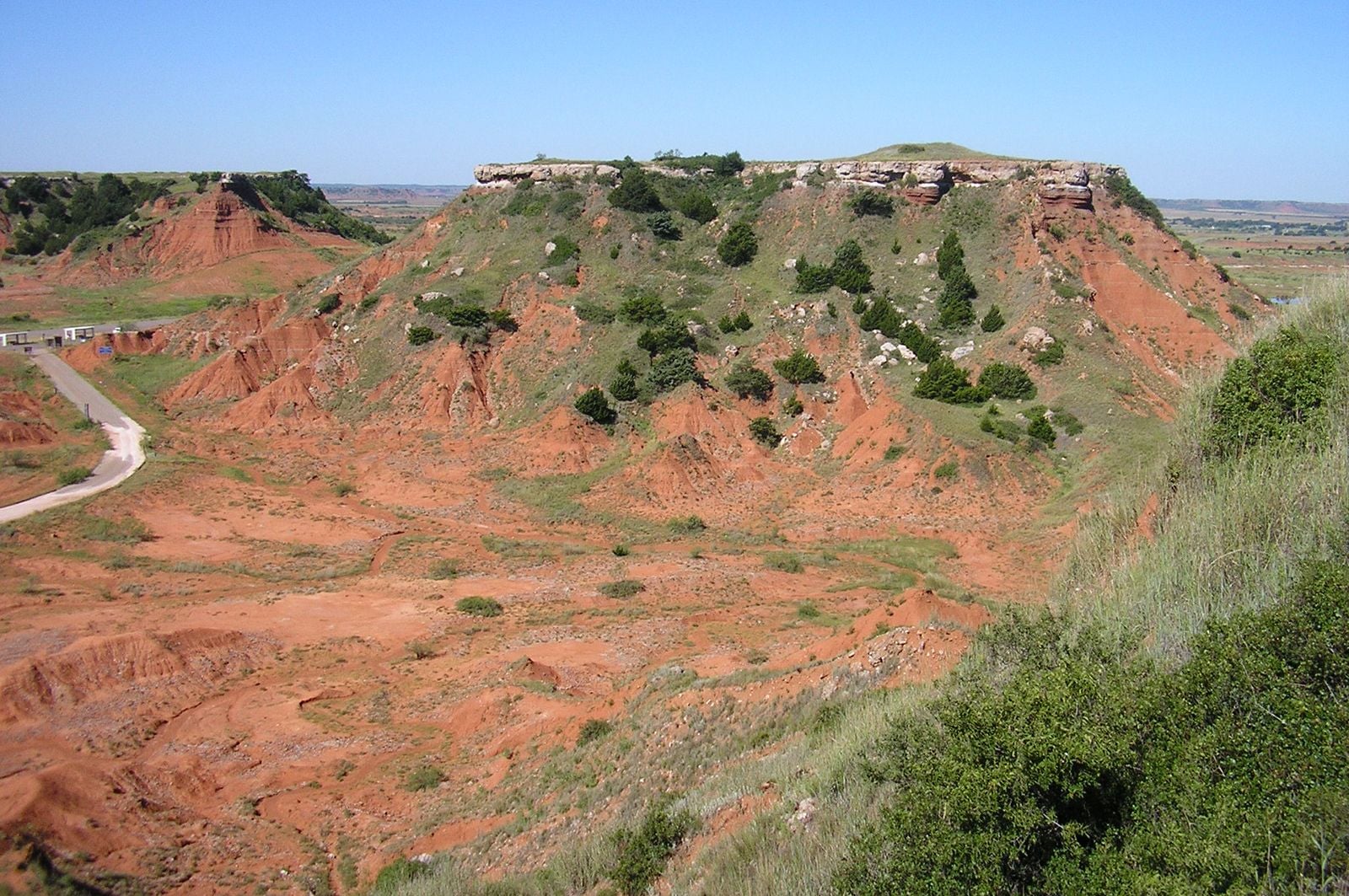
Flat-topped plateau mountains and mesas with steep sides
5

Plateau (Erosion) Mountains

Highlands carved by water and time

Underlying rock often very ancient
  • Formed by erosion of uplifted plateaus
  • Flat summits with deep dissecting valleys
  • Steep-sided mesas and buttes
  • Also called residual mountains

Rather than being pushed up as peaks, these highlands are what remains after rivers dissect a raised plateau. Resistant flat-topped remnants stand as mesas and buttes above eroded valleys.

Example:Deccan Plateau highlands, India