Geuest

Nature · Earth Science

Mangroves & Swamps

Forests that root in water

Back to Nature

Mangroves and swamps are wetland forests — places where trees grow with their roots in water for much or all of the year. Straddling the boundary of land and sea, or drowning inland basins, these waterlogged forests teem with life, guard coastlines from storms, and store carbon at rates few other ecosystems can match.

Largest mangrove
Sundarbans (~10,000 km²)
Carbon storage
Up to 4× a rainforest
Coastal defence
Cut wave energy sharply
Grow in
Waterlogged ground

How They Form

Where sediment collects in sheltered, waterlogged ground — along tropical coasts, in river backwaters or in poorly drained basins — specially adapted trees take hold. Mangroves tolerate salt and tides with stilt roots and breathing roots; freshwater swamp trees endure months of flooding.

Life in a Mangrove Forest

Salt-tolerant canopyProp / stilt rootsTidal salt waterRoots trap mud & sediment

Stilt and breathing roots anchor trees in tidal mud, trapping sediment and sheltering a nursery of marine life.

Types & Details

Mangrove trees with tangled stilt roots in tidal water
1

Mangrove Forests

Salt-tolerant trees of the tidal coast

Colonise new mudflats within decades
  • Grow in salty, tidal water
  • Tangled stilt and prop roots
  • Breathing roots poke above the mud
  • Nurseries for fish and shellfish

Mangroves are the only trees that thrive in salt water, gripping tidal mud with arching stilt roots and drawing air through snorkel-like roots. Their root maze shelters countless young fish.

Example:Sundarbans, India & Bangladesh
A flooded freshwater swamp forest with reflected trees
2

Freshwater Swamps

Flooded forests of the lowlands

Persist for thousands of years
  • Forests flooded by fresh water
  • Trees with buttressed or knobby roots
  • Slow, still, tannin-stained water
  • Rich in birds and reptiles

Freshwater swamps are forests that stand in still or slow-moving water for much of the year. Cypress and other specialists grow flared trunks and “knees” to survive the flooding.

Example:Everglades cypress, USA
An open grassy marsh wetland with reeds and water
3

Marshes

Treeless wetlands of grass and reed

Form quickly in wet lowlands
  • Dominated by grasses and reeds
  • No trees — open, sunlit water
  • Fresh, brackish or salt varieties
  • Superb bird habitat

Marshes are wetlands ruled by soft-stemmed plants — reeds, rushes and grasses — rather than trees. Salt marshes fringe estuaries, while freshwater marshes teem with waterfowl.

Example:Camargue marshes, France
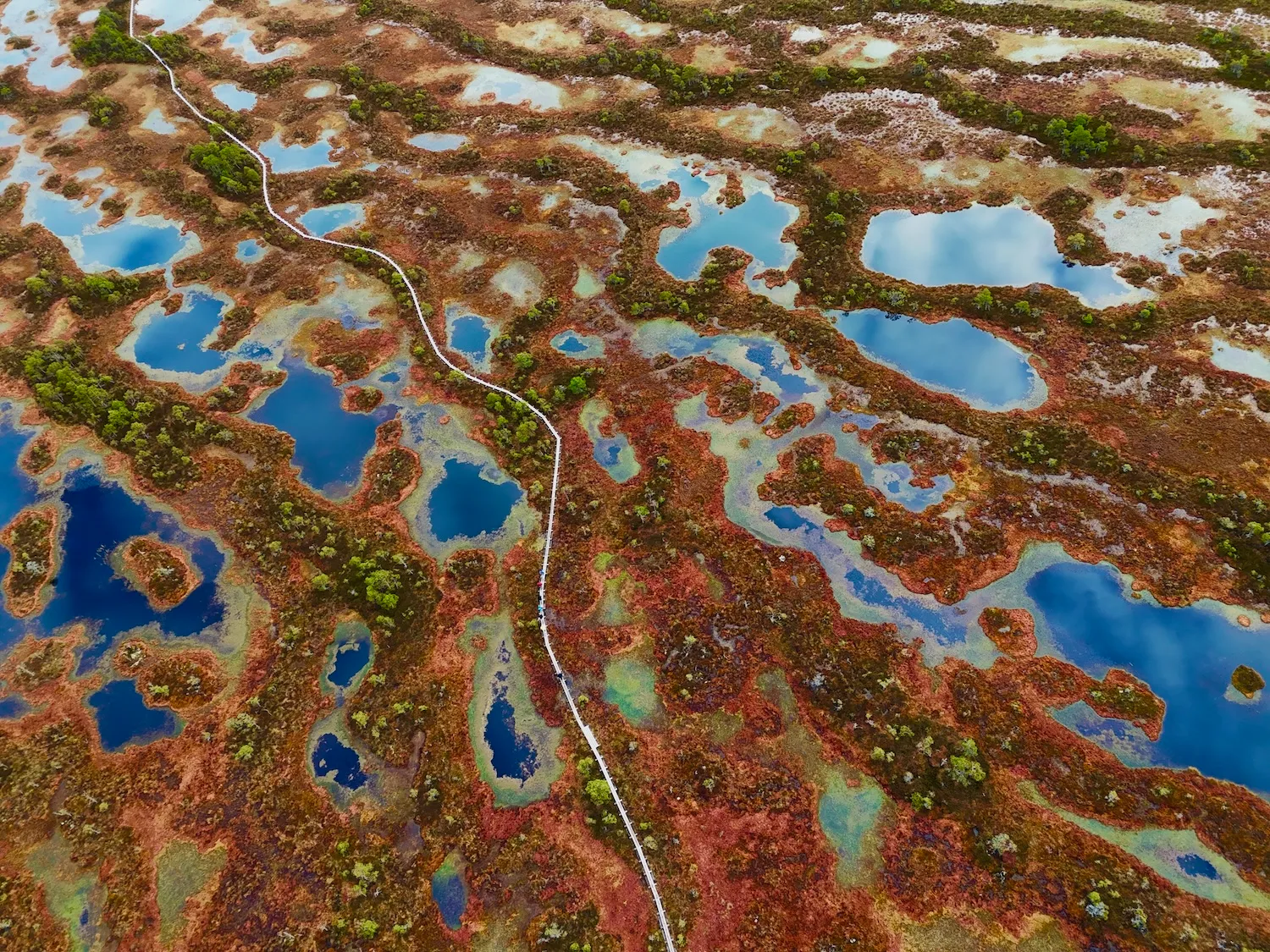
A waterlogged peat bog with mosses and dark pools
4

Peat Bogs & Fens

Waterlogged stores of ancient carbon

Build peat over millennia
  • Waterlogged, acidic ground
  • Slow decay builds deep peat
  • Bogs fed by rain, fens by groundwater
  • Vast natural carbon stores

In cool, waterlogged ground, dead plants decay so slowly they pile up as peat. Bogs and fens lock away immense stores of carbon and preserve pollen — and sometimes bodies — for millennia.

Example:Flow Country, Scotland