Geuest

Nature · Earth Science

Glaciers

Rivers of ice that reshape whole continents

Back to Nature

A glacier is a huge, slow-moving mass of ice that forms on land where more snow falls each year than melts. Over centuries the snow compacts into dense ice that begins to flow under its own weight, grinding valleys, transporting rock and storing about three quarters of the world's fresh water.

Ice on Earth
~10% of land area
Fresh water held
~69% of the world's total
Largest
Lambert Glacier, Antarctica
Longest (non-polar)
Siachen / Fedchenko

How They Form

Snow accumulates in a high 'zone of accumulation', is buried, and slowly recrystallises into firn and then solid glacial ice. Once thick enough, gravity makes the ice creep downhill toward a lower 'zone of ablation' where it melts or calves. The glacier survives as long as accumulation balances loss.

Zones Of A Valley Glacier

Accumulation zone (snow)Ablation zone (melting)Snow lineTerminal moraineCrevasses

Snow gathers and turns to ice in the accumulation zone, flows downhill, then wastes away in the ablation zone — dumping rock as moraine.

Types & Details

A valley glacier flowing between steep mountains
1

Valley (Alpine) Glaciers

Tongues of ice flowing down mountains

Many thousands of years old
  • Confined within mountain valleys
  • Flow downhill like frozen rivers
  • Carve U-shaped valleys
  • Fed by mountain snowfields

Born in high mountain hollows, these glaciers flow down existing valleys, widening and deepening them into the classic U-shape and leaving behind hanging valleys and moraines.

Example:Aletsch Glacier, Switzerland
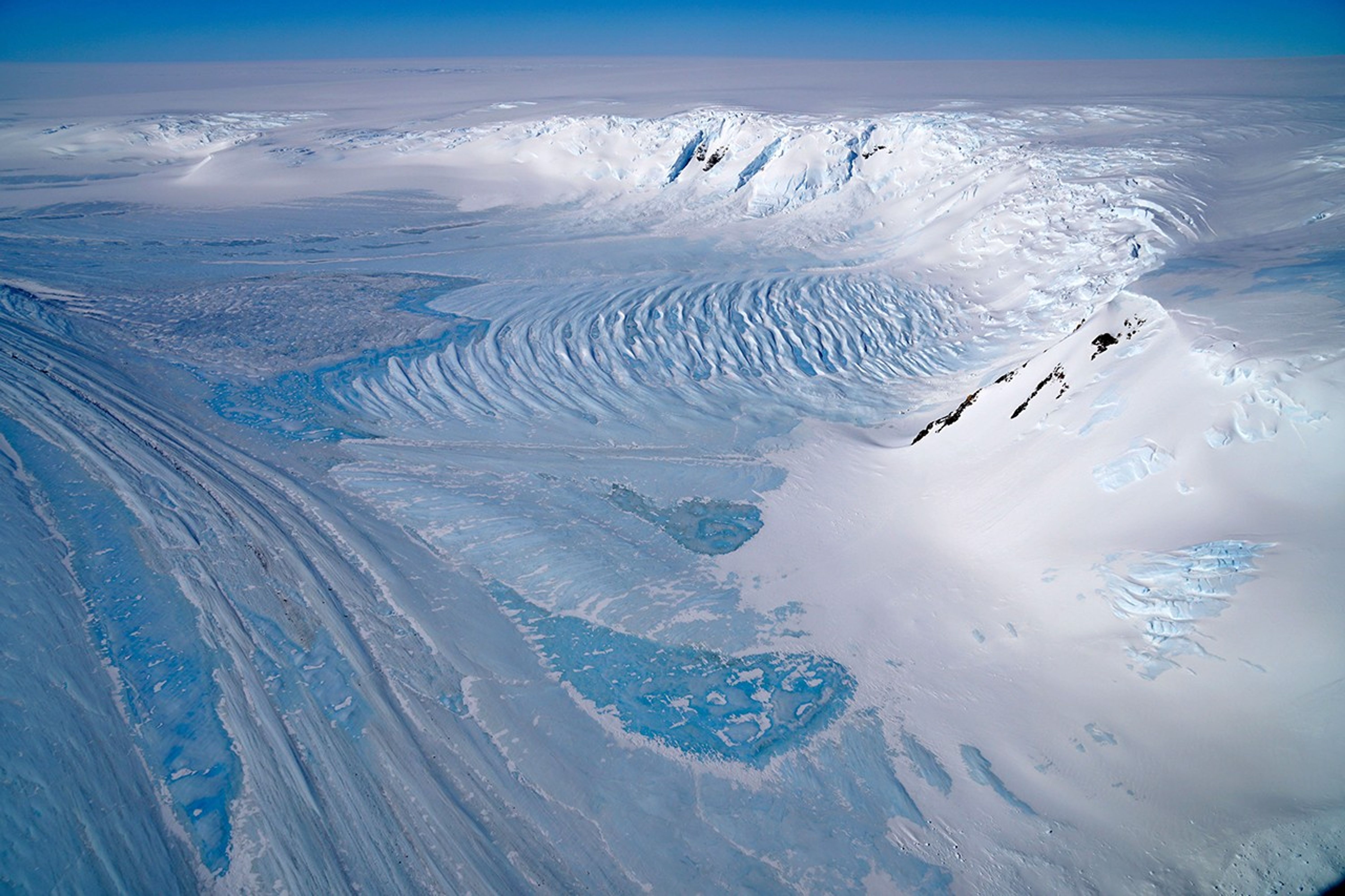
Vast flat white ice sheet stretching to the horizon
2

Ice Sheets

Continent-burying domes of ice

Hundreds of thousands to millions of years
  • Cover more than 50,000 km²
  • Bury entire landscapes
  • Flow outward from a central dome
  • Hold most of Earth's ice

The largest glaciers of all, ice sheets smother whole continents. Only Antarctica and Greenland have them today, together storing the vast majority of Earth's fresh water.

Example:Antarctic Ice Sheet
A glacier calving icebergs into the sea
3

Tidewater Glaciers

Glaciers that calve into the sea

Continuously renewed by mountain ice
  • Flow down to the ocean
  • Break off, or 'calve', into icebergs
  • Create dramatic ice cliffs
  • Feed fjords and cold bays

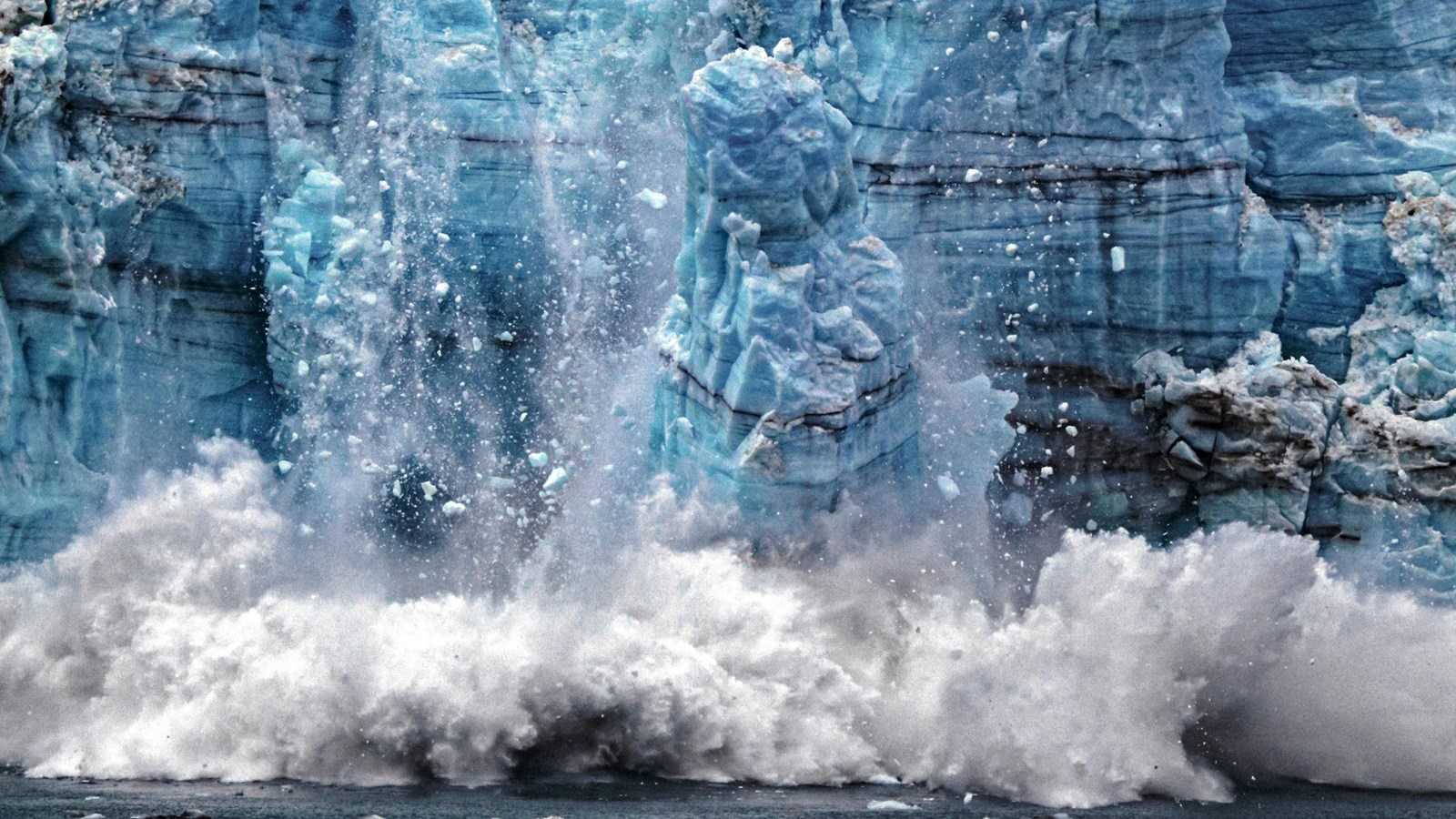
Where a glacier reaches the sea, chunks break away in thunderous calving events to form icebergs. These glaciers carve the deep fjords found in Norway, Alaska and Patagonia.

Example:Perito Moreno Glacier, Argentina
A small glacier in a bowl-shaped mountain hollow
4

Cirque Glaciers

Small glaciers in mountain hollows

Thousands of years, often shrinking today
  • Sit in bowl-shaped hollows
  • The birthplace of larger glaciers
  • Carve armchair-shaped cirques
  • Leave tarn lakes when they melt

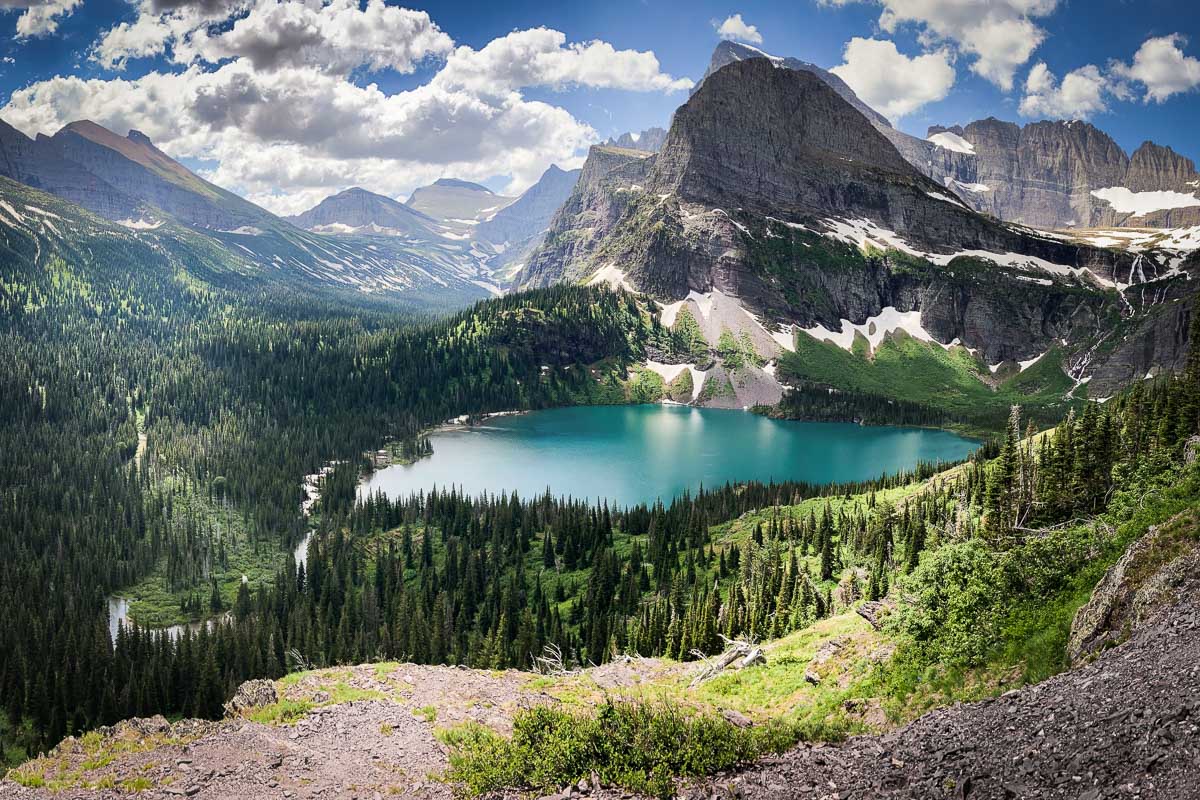
Nestled in high rocky hollows called cirques, these compact glaciers grind out steep-walled basins. When they melt, a small round tarn lake is often left behind.

Example:Cirque glaciers of the Rockies