Geuest

Nature · Earth Science

Deserts

Landscapes shaped by the absence of water

Back to Nature

A desert is any region that receives very little precipitation — usually under 250 mm of rain a year — so that few plants and animals can survive. Deserts are not always hot: they are defined by dryness, not temperature, and cover roughly a third of Earth's land surface, from scorching sand seas to freezing polar plains.

Largest
Antarctic Polar Desert (~14M km²)
Largest hot
Sahara (~9.2M km²)
Driest
Atacama, Chile
Defined by
< 250 mm rain / year

How They Form

Most deserts form where descending dry air suppresses rainfall (the subtropical belts near 30° latitude), in rain shadows behind tall mountains, deep in continental interiors far from the sea, or along cold ocean currents. With little moisture to bind it, the land is sculpted by wind and rare flash floods into dunes, rocky plains and carved rock.

Anatomy Of A Sand Dune

Prevailing windGentle windward slopeSteep slip faceCrestdune migrates

Wind pushes sand up the gentle windward slope; it avalanches down the steep slip face, marching the whole dune slowly downwind.

Types & Details

Golden sand dunes under a clear sky in a hot desert
1

Subtropical (Hot) Deserts

Scorching sand seas beneath sinking air

Tied to atmospheric circulation over millions of years
  • Extreme daytime heat, cold nights
  • Very low, erratic rainfall
  • Dunes, rocky hamada and gravel plains
  • Found near 30° north and south

Formed under the descending dry air of the subtropical high-pressure belts, these are the classic hot deserts. Clear skies mean blistering days and surprisingly cold nights as heat escapes.

Example:Sahara Desert, North Africa
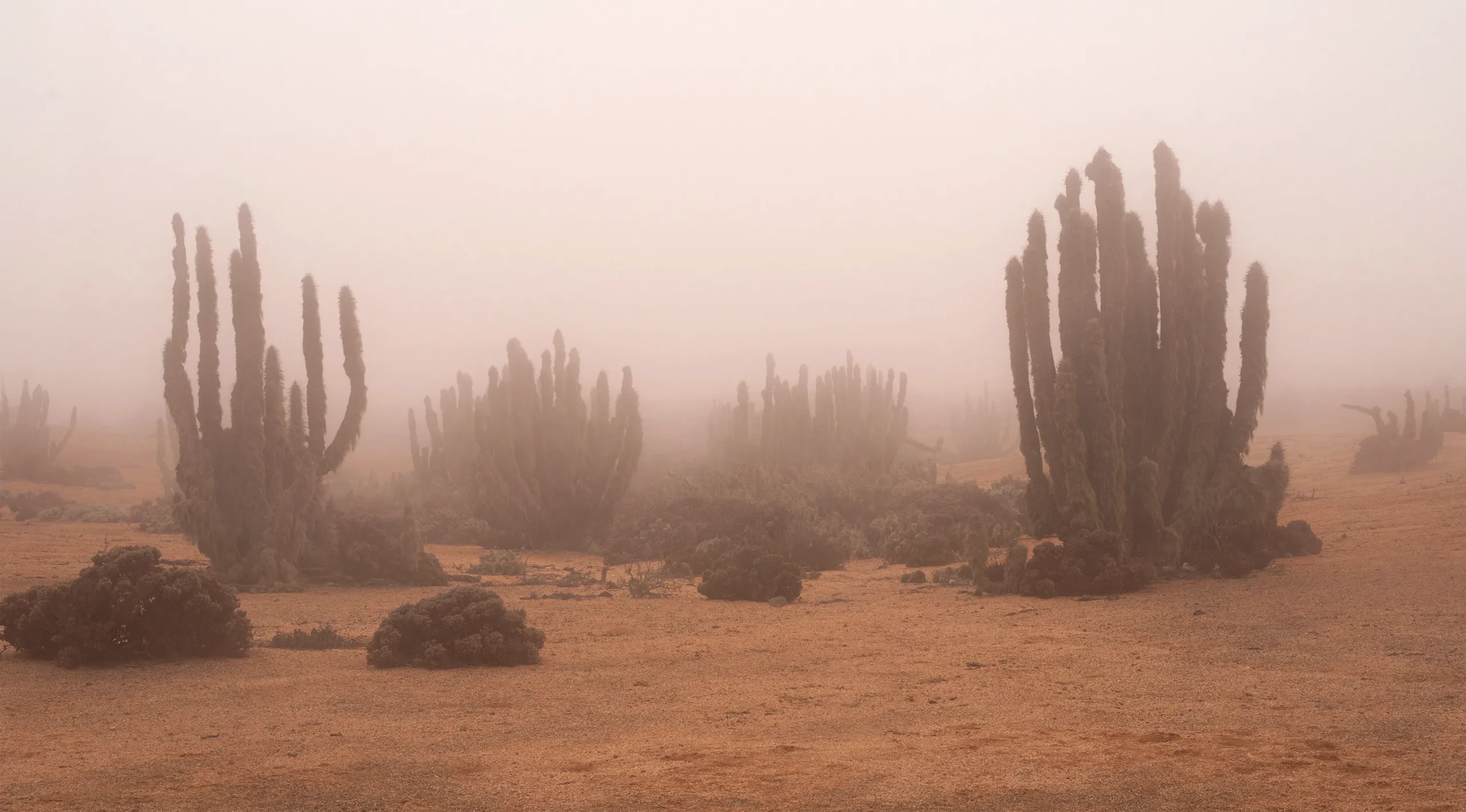
Barren coastal desert with fog near the ocean
2

Coastal Deserts

Bone-dry shores beside cold seas

Sustained by persistent cold ocean currents
  • Cool, foggy and extremely arid
  • Lie beside cold ocean currents
  • Fog is a key moisture source for life
  • Rain may not fall for years

Cold currents chill the air offshore so it holds little moisture, leaving the coast parched even beside the ocean. Coastal fog rolls in and sustains specialised plants and animals.

Example:Atacama Desert, Chile
Dry desert basin behind distant mountains
3

Rain-Shadow Deserts

Dry lands in the lee of mountains

As old as the mountain ranges that block the rain
  • Sit downwind of tall mountains
  • Air loses moisture climbing the range
  • Dry, sinking air on the far side
  • Sharp climate contrast across the peaks

When moist air is forced up a mountain range it drops its rain on the windward side, then descends warm and dry on the far side, leaving a desert in the mountain's shadow.

Example:Mojave Desert, USA
Frozen polar desert of ice and bare rock
4

Polar (Cold) Deserts

Frozen deserts of ice and rock

Persist through long geological cold periods
  • Bitterly cold, almost no liquid water
  • Precipitation falls as sparse snow
  • Bare rock, ice and dry valleys
  • The largest deserts on Earth

Deserts are defined by dryness, not heat — and the poles are extremely dry. Antarctica's interior receives less moisture than the Sahara, making it the largest desert of all.

Example:Antarctic Polar Desert