Geuest

Nature · Earth Science

Deltas & Estuaries

Where rivers surrender their load to the sea

Back to Nature

At the very end of a river’s journey, where fresh water meets the sea, the current slows and drops the sediment it has carried for hundreds of kilometres. The result is a delta or an estuary — flat, fertile, water-laced landscapes that are among the richest ecosystems and most densely populated regions on Earth.

Largest
Ganges–Brahmaputra (~105,000 km²)
Classic shape
Nile (arcuate/fan)
Fastest growing
Yellow River, China
Built by
Deposited sediment

How They Form

As a river enters still ocean or lake water, it loses the energy to carry sediment, which settles out and builds new land. Where deposition outpaces waves and tides, a delta grows seaward in branching distributaries; where tides are strong and the valley is drowned, a funnel-shaped estuary forms instead.

How a Delta Builds Seaward

River carrying sedimentChannel splits (distributaries)Delta plain (new land)Sediment plume in sea

A river splits into distributaries and drops its load in layered beds, building new land out into the sea.

Types & Details

A fan-shaped arcuate river delta seen from above
1

Arcuate Deltas

The classic fan-shaped delta

Build over thousands of years
  • Broad, curved, fan-like outline
  • Many branching distributaries
  • Balance of river and wave energy
  • Very fertile farmland

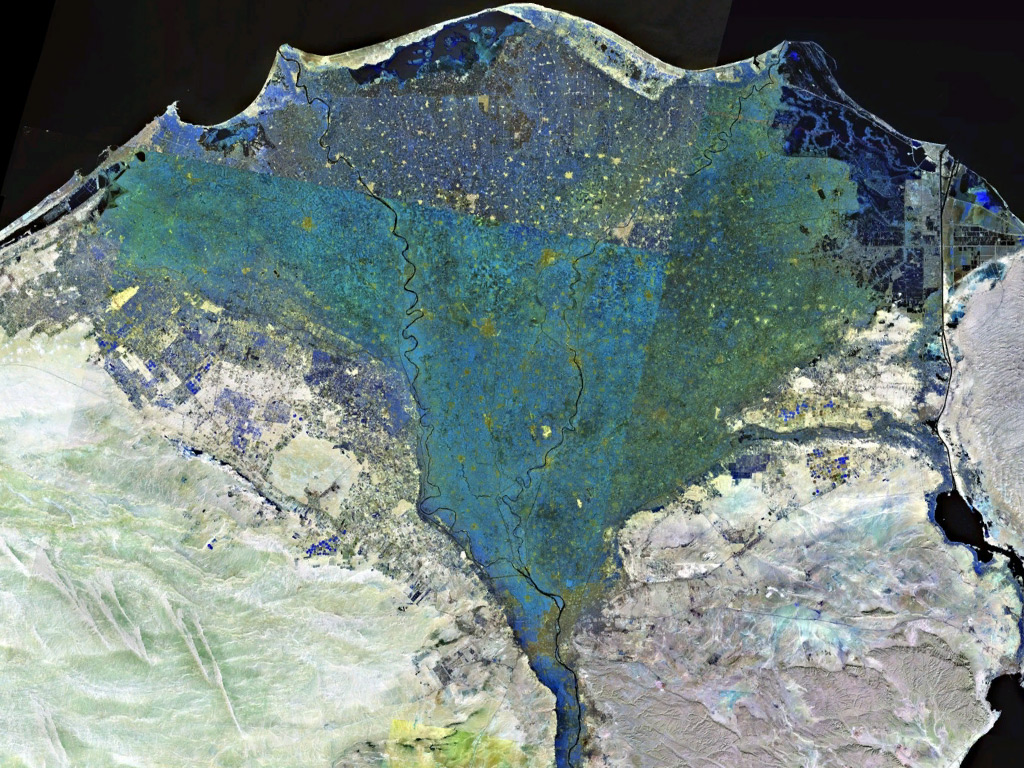
The textbook delta: a smooth, fanned arc of land where the river fans into many channels. The Nile Delta gave the landform its name, from the Greek letter Δ.

Example:Nile Delta, Egypt
A bird’s-foot delta with long fingers of land reaching into the sea
2

Bird’s-Foot Deltas

Long fingers of sediment

Grow where rivers dominate the sea
  • Few long, projecting distributaries
  • Shaped like a bird’s foot from above
  • Form where waves are weak
  • River energy outpaces the sea

Where a sediment-heavy river overwhelms weak waves and tides, it builds long, narrow fingers of land stretching far out to sea — the unmistakable bird’s-foot of the Mississippi.

Example:Mississippi Delta, USA
A broad funnel-shaped estuary with mudflats at low tide
3

Estuaries

Drowned river mouths ruled by tides

Formed as seas rose after the ice age
  • Funnel-shaped, tide-dominated mouths
  • Mixing of fresh and salt water
  • Rich mudflats and salt marshes
  • Vital nurseries for fish and birds

Where strong tides prevent a delta from forming, the sea floods the river valley into a broad estuary. The daily mixing of fresh and salt water makes estuaries astonishingly productive nurseries.

Example:Thames Estuary, England
A pointed cuspate delta trimmed into a tooth shape by waves
4

Cuspate & Lake Deltas

Pointed and inland deltas

Shaped by waves or quiet lakes
  • Cuspate: tooth-shaped, wave-trimmed
  • Lake deltas build into calm lakes
  • Symmetrical, pointed outlines
  • Sediment reworked by waves

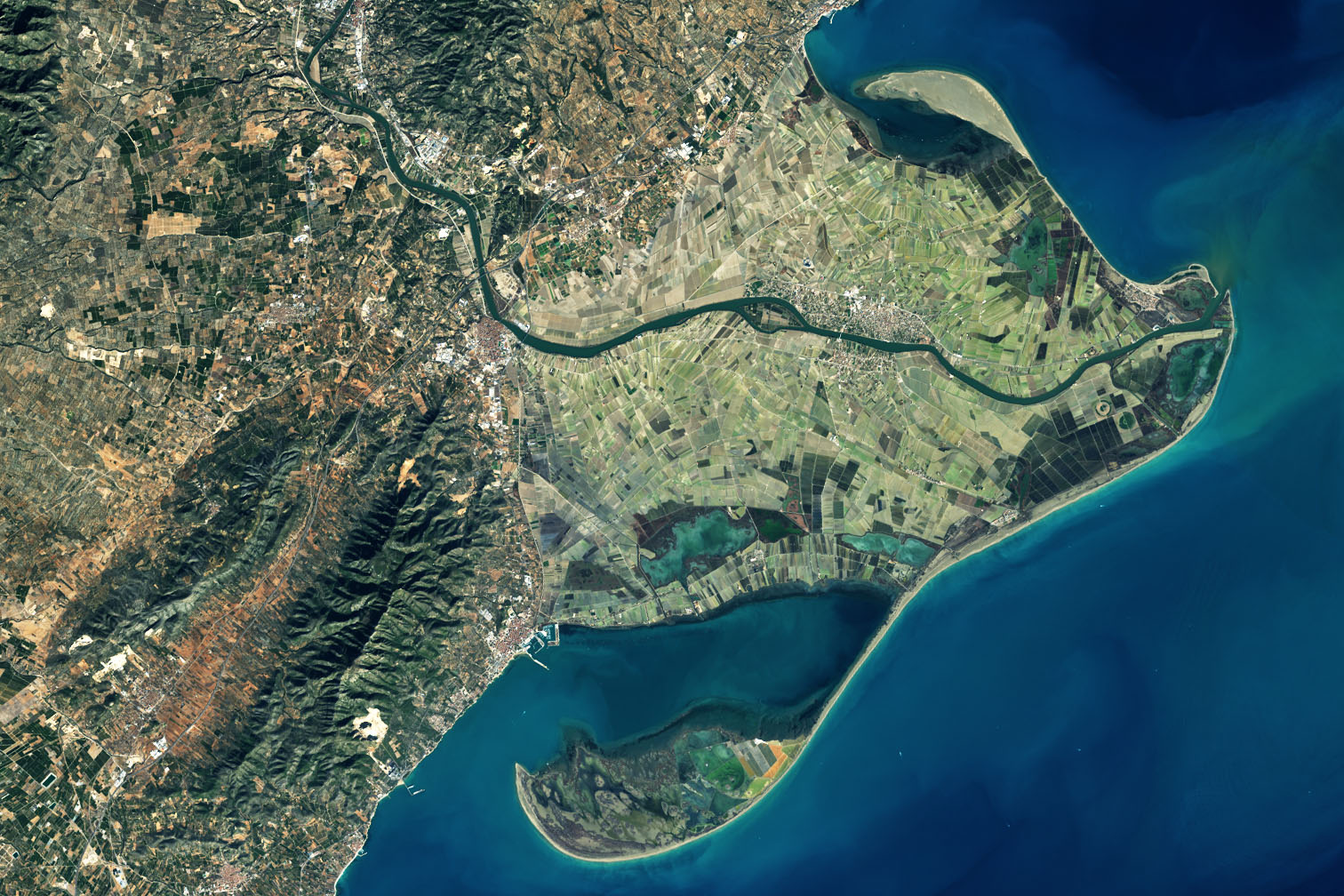
Where waves attack a delta evenly from both sides, they trim it into a pointed, tooth-like cuspate form. Rivers entering calm lakes build small, neat deltas of their own.

Example:Ebro Delta, Spain