Geuest

Nature · Earth Science

Coral Reefs

The rainforests of the sea

Back to Nature

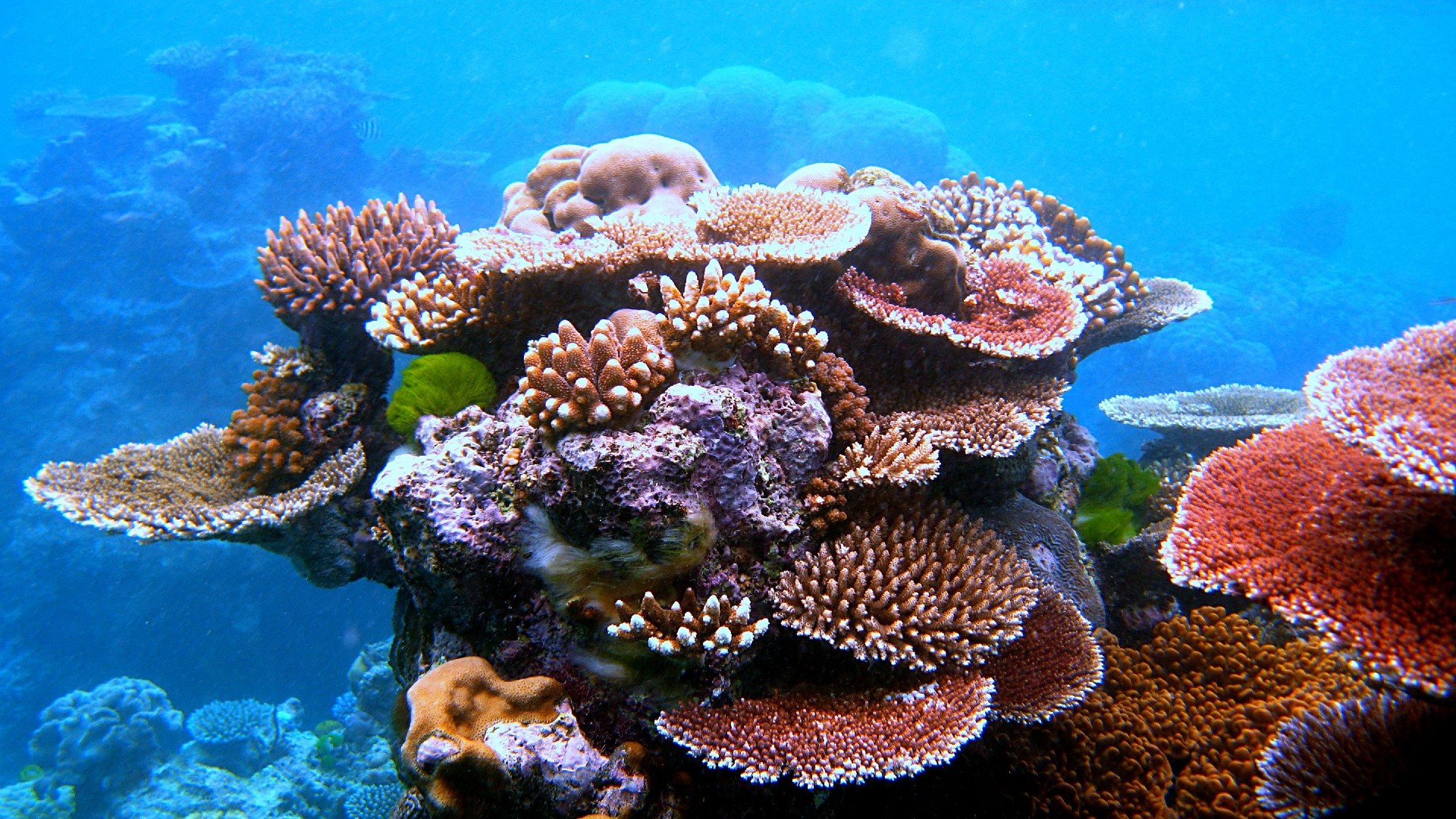
A coral reef is a living underwater structure built by colonies of tiny animals called coral polyps. Though they cover less than one percent of the ocean floor, reefs shelter about a quarter of all marine species, making them the most biodiverse habitats in the sea.

Largest
Great Barrier Reef (~2,300 km)
Ocean floor covered
< 1%
Marine species sheltered
~25%
Built by
Coral polyps + algae

How They Form

Coral polyps secrete hard calcium-carbonate skeletons that cement together and build up over centuries into vast reefs. They rely on a partnership with tiny algae living in their tissues, which need clear, warm, sunlit water — which is why reefs thrive in shallow tropical seas.

Zones Of A Coral Reef

Lagoon (reef flat)Reef crestFore-reef slope → deepSea level

From the shallow reef flat down the reef crest and steep fore-reef slope into the deep — each zone home to different life.

Types & Details

Colourful fringing coral reef near the shore
1

Fringing Reefs

Reefs hugging the shore

Grow over centuries
  • Grow directly from the coast
  • The most common reef type
  • Separated from land by a shallow lagoon
  • Easy to reach from shore

Fringing reefs grow outward straight from the shoreline, forming a shallow platform of coral just offshore — the reef most snorkellers first meet.

Example:Ningaloo Reef, Australia
Aerial view of a long barrier coral reef
2

Barrier Reefs

Great walls parallel to the coast

Built over many thousands of years
  • Lie far from shore
  • Separated by a deep lagoon
  • Form long, massive barriers
  • The largest reef structures

Barrier reefs run parallel to the coast but far out, separated from land by a wide, deep lagoon. The Great Barrier Reef is so vast it is visible from space.

Example:Great Barrier Reef, Australia
Ring-shaped coral atoll around a lagoon
3

Atolls

Coral rings around a lagoon

Take thousands of years to form
  • Ring-shaped coral reefs
  • Enclose a central lagoon
  • Grow atop sunken volcanoes
  • Found in the open ocean

As a volcanic island slowly sinks, its fringing reef keeps growing upward, eventually leaving a ring of coral encircling a lagoon where the island once stood.

Example:Bikini Atoll, Marshall Islands
Small isolated patch of coral reef on the seabed
4

Patch Reefs

Isolated coral gardens

Develop over decades to centuries
  • Small, isolated reef outcrops
  • Grow within lagoons
  • Dot the seafloor between reefs
  • Rich pockets of biodiversity

Patch reefs are compact, standalone mounds of coral rising from the seabed within a lagoon or shelf, each a self-contained oasis of marine life.

Example:Patch reefs of the Florida Keys