Geuest

Nature · Earth Science

Springs, Groundwater & Aquifers

The hidden ocean beneath our feet

Back to Nature

Far more fresh water lies hidden underground than in all the world’s rivers and lakes combined. Soaking into the ground and stored in porous rock, this groundwater feeds springs, wells and wetlands, sustains rivers through droughts, and supplies drinking water to billions of people.

Share of fresh liquid water
About 30%
Largest aquifer
Great Artesian Basin
Deepest wells
Over 1 km down
Stored in
Porous rock & sediment

How They Form

Rain and snowmelt seep down through soil and rock until they reach a zone where every pore is full of water — the water table. Water collects in permeable layers called aquifers, moving slowly through the rock and emerging naturally as springs wherever the water table meets the surface.

The Water Beneath the Ground

Rain rechargeWater tableSaturated zone (aquifer)Impermeable layerWell

Rain infiltrates to the water table and fills an aquifer between rock layers, feeding wells and springs.

Types & Details

A cross-section view of the water table below ground
1

The Water Table

The top of the saturated zone

Rises and falls with the seasons
  • Boundary of fully saturated rock
  • Rises in wet seasons, falls in dry
  • Wells must reach below it
  • Meets the surface at springs

The water table marks where the ground becomes fully saturated. It rises after rains and drops in droughts — and wherever it meets the land surface, water seeps out as springs, seeps or wetlands.

Example:Shallow valley wells
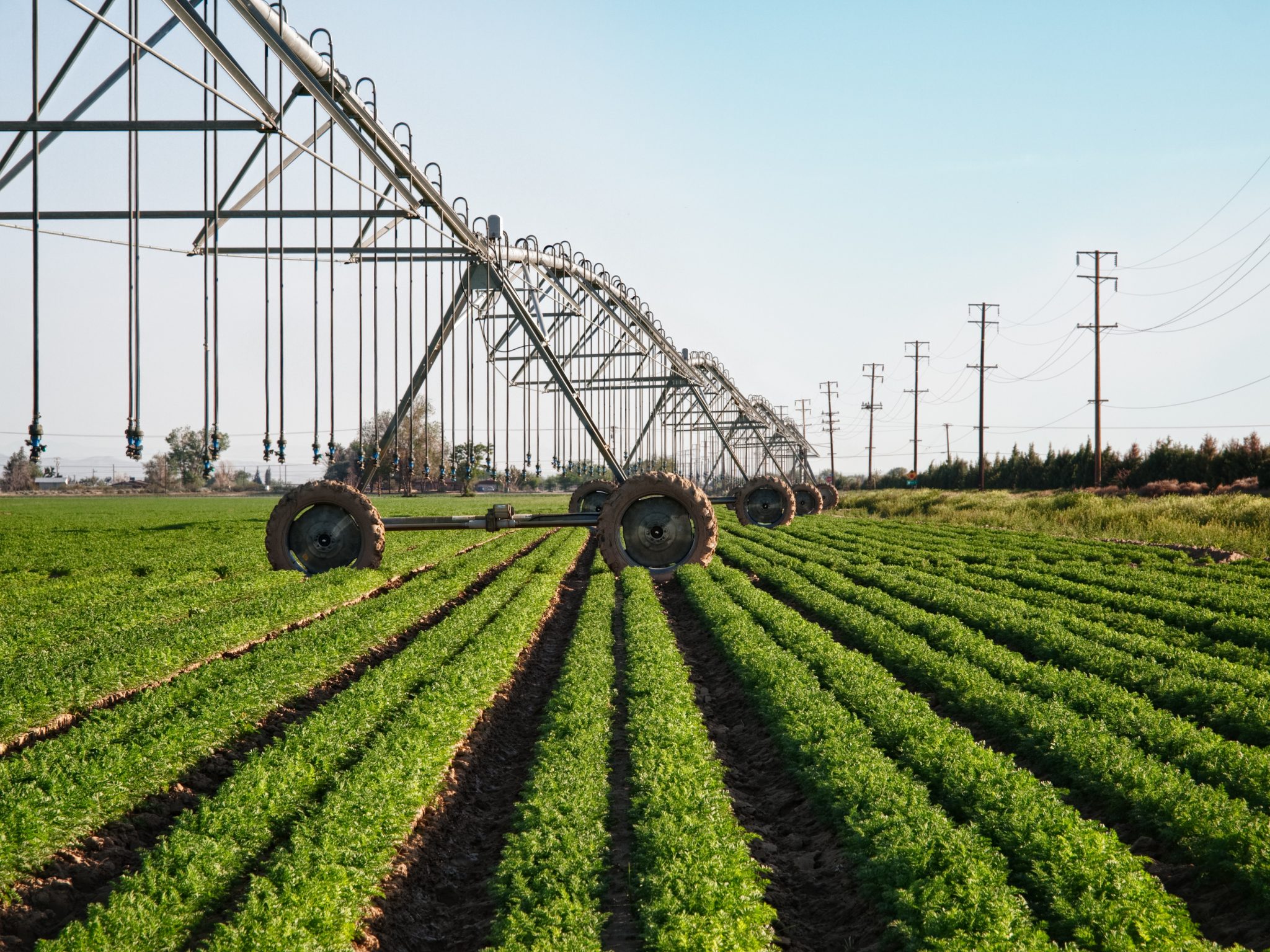
A well pumping water from an underground aquifer
2

Aquifers

Rock that holds and yields water

Water may be thousands of years old
  • Permeable rock storing groundwater
  • Sandstone and gravel make good ones
  • Recharged slowly by rainfall
  • Supply wells and irrigation

An aquifer is a body of permeable rock or sediment that stores and transmits water. Some hold “fossil water” that fell as rain millennia ago, recharged far slower than we pump it out.

Example:Ogallala Aquifer, USA
Clear water flowing from a natural spring
3

Springs & Artesian Wells

Where groundwater returns to daylight

Some have flowed for millennia
  • Natural outflow of groundwater
  • Artesian water rises under pressure
  • Feed streams and oases
  • Often crystal clear and cool

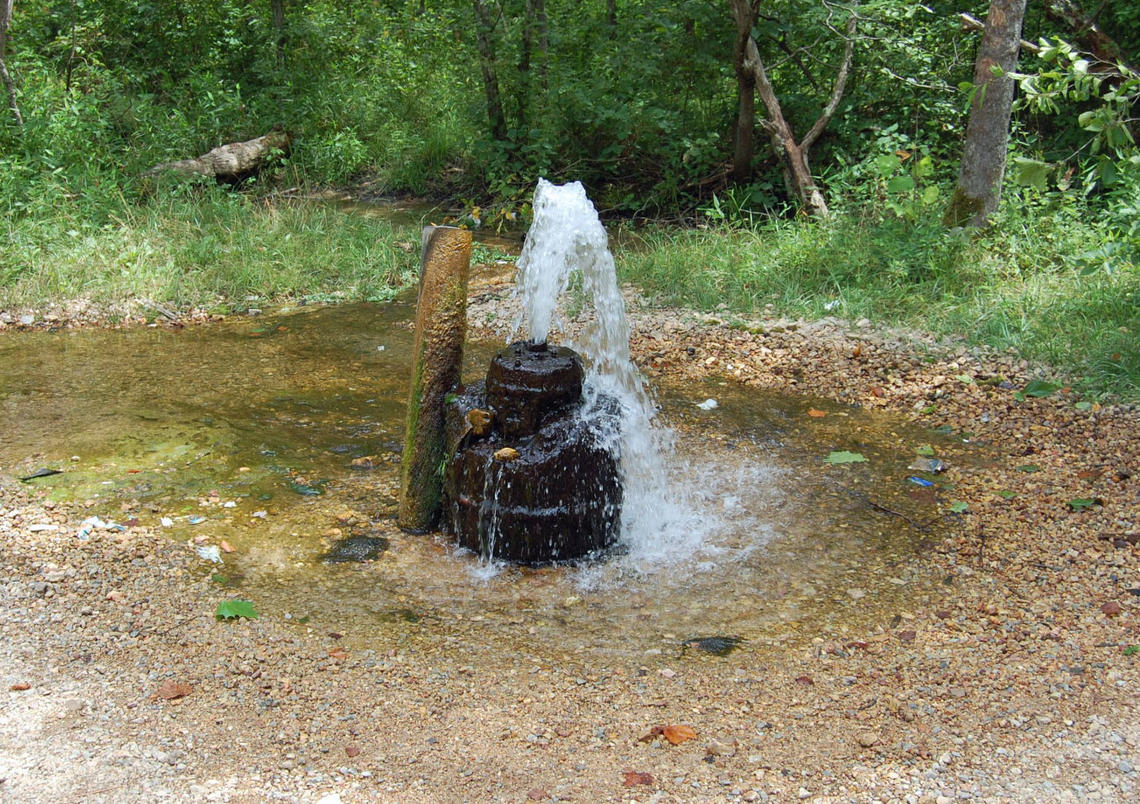
A spring is where groundwater emerges on its own. In an artesian system, water is trapped under pressure between rock layers and gushes upward when tapped — no pump needed.

Example:Silver Springs, Florida
A deep clear karst spring or cenote in limestone
4

Karst & Cave Springs

Water sculpting soluble rock

Systems develop over long ages
  • Form in limestone and other soluble rock
  • Underground rivers and sinkholes
  • Powerful resurgence springs
  • Vulnerable to pollution

Where groundwater dissolves limestone, it carves caves, sinkholes and underground rivers. These karst systems can burst back to the surface as powerful springs after journeys through the dark.

Example:Cenotes, Yucatán, Mexico