Western Asia
Jordan
The top 5 natural landmarks of Jordan — real photos, locations and fascinating facts for every wonder.
 Asia
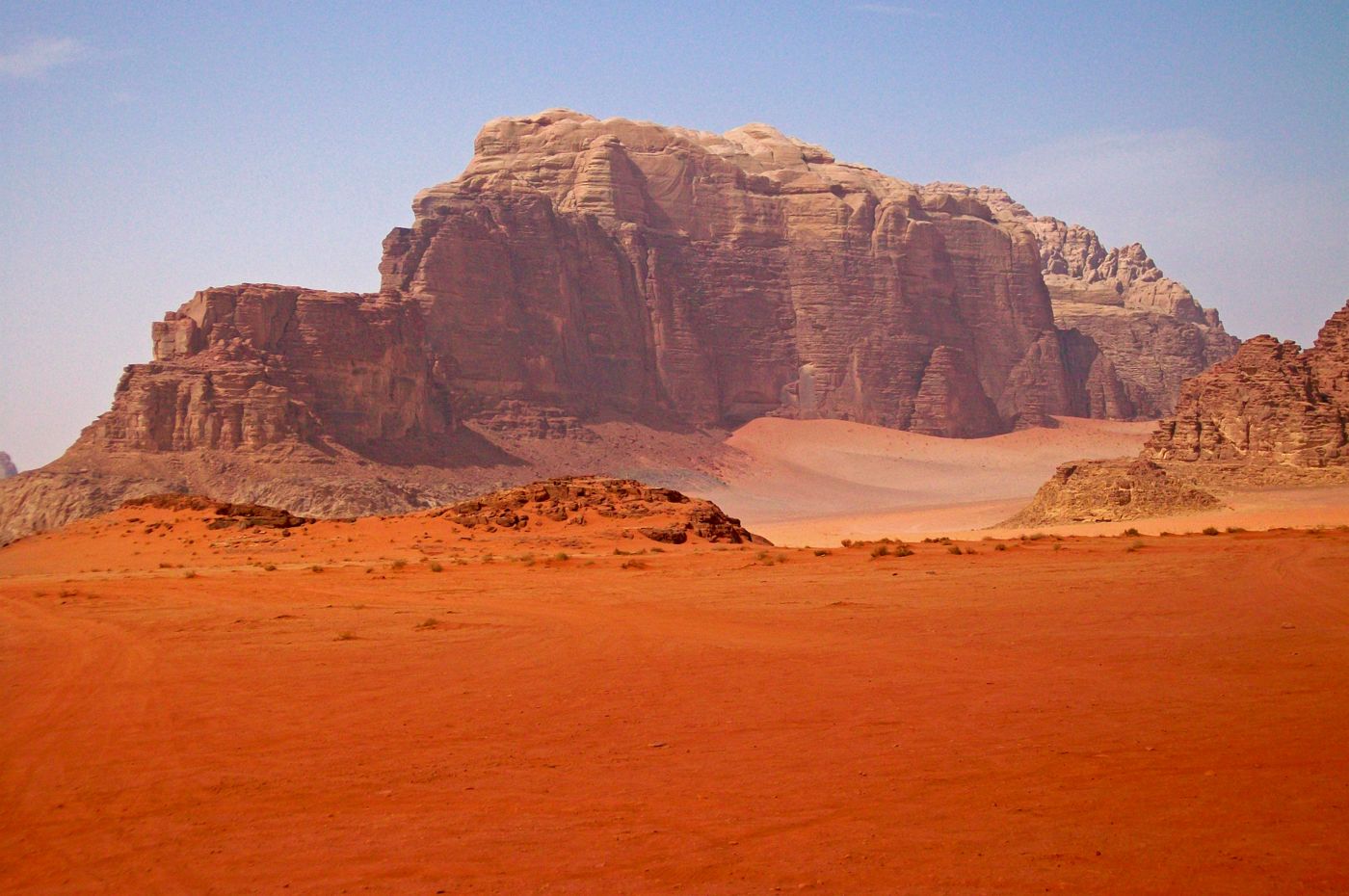 Deserts
Wadi Rum
southern Jordan
Wadi Rum (Arabic: وادي رم Wādī Ramm, also Wādī al-Ramm, known also as the Valley of the Moon or Red mountains, is a valley cut into the sandstone and granite rock in southern Jordan, near the border with Saudi Arabia and about 60 km to the east of the city of Aqaba. With an area of 720 km2 it is the largest wadi in Jordan.
Did you know?
A desert of towering sandstone massifs and red sand, the 'Valley of the Moon'.
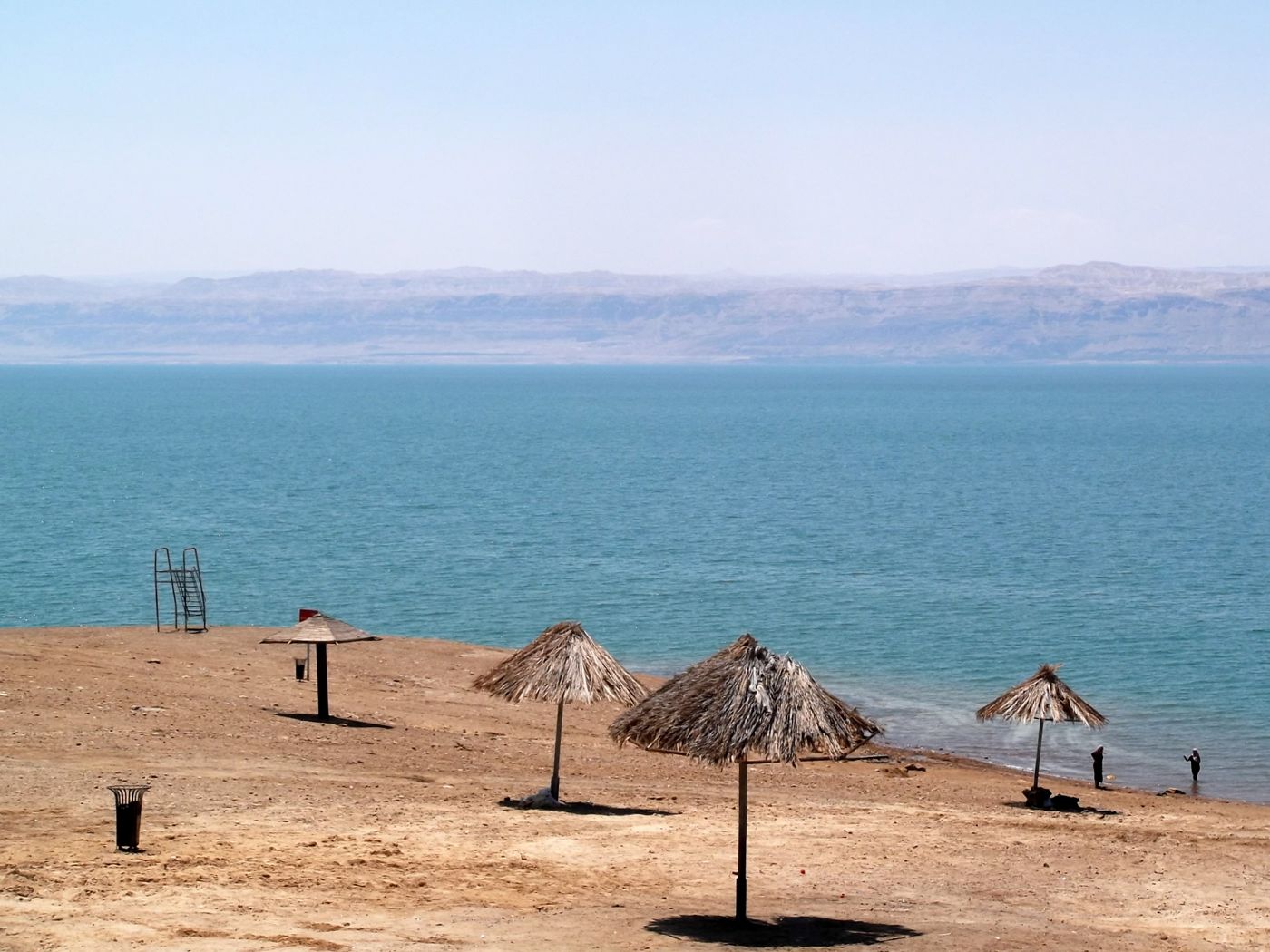 Lakes
Dead Sea
western Jordan
The Dead Sea, also known by other names, is a landlocked salt lake bordered by Jordan to the east, the West Bank to the west and Israel to the southwest. It lies in the endorheic basin of the Jordan Rift Valley, and its main tributary is the Jordan River.
Did you know?
The lowest point on land, so salty bathers float effortlessly.
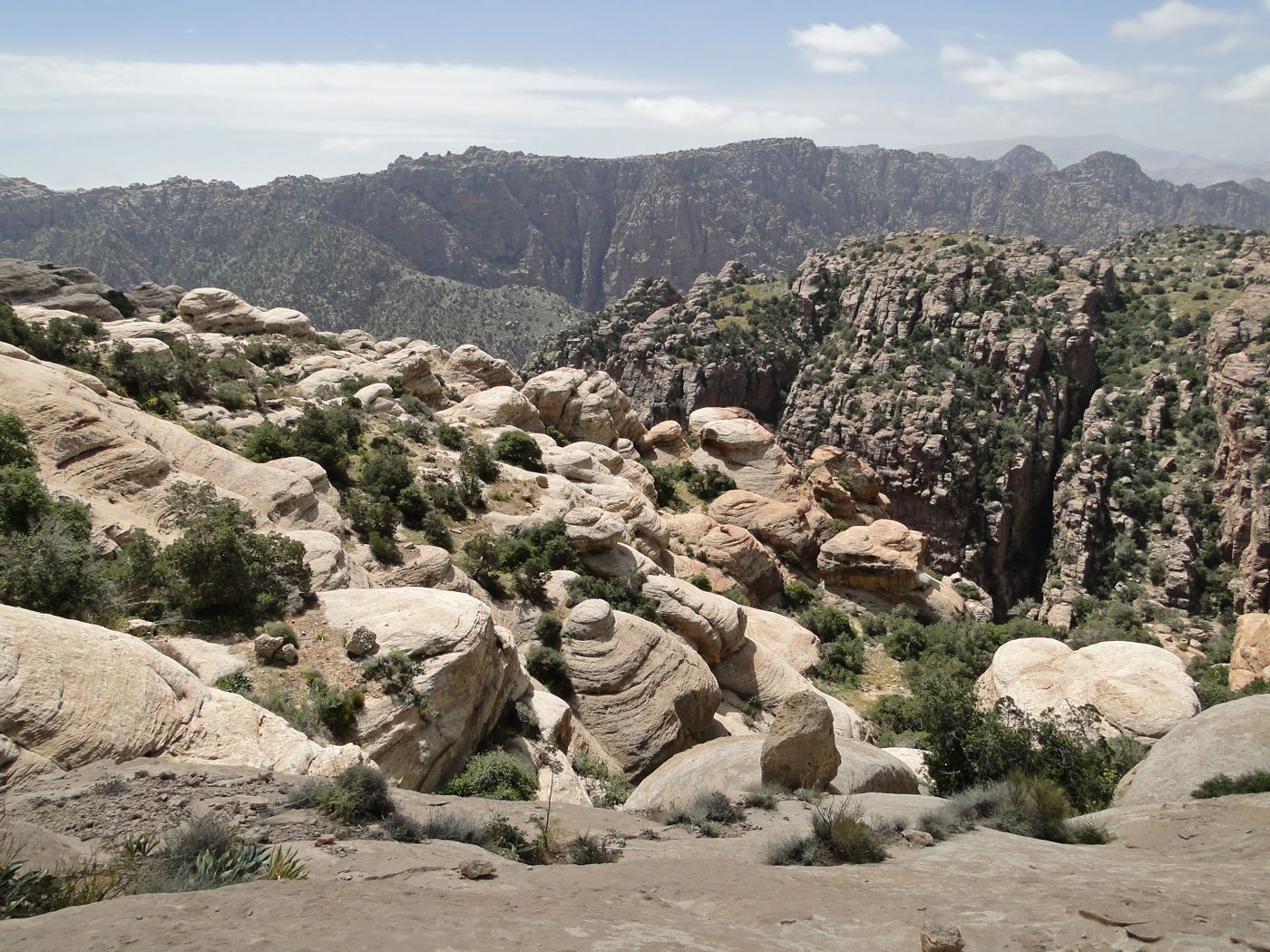 Mountains
Dana Biosphere Reserve
west-central Jordan
The Dana Biosphere Reserve is Jordan's largest nature reserve, located in south-central Jordan. Dana Biosphere Reserve was founded in 1989 in the area in and around the Dana village and Wadi Dana comprising 308 square kilometres (119 sq mi).
Did you know?
Jordan's largest reserve, spanning highlands to desert sands.
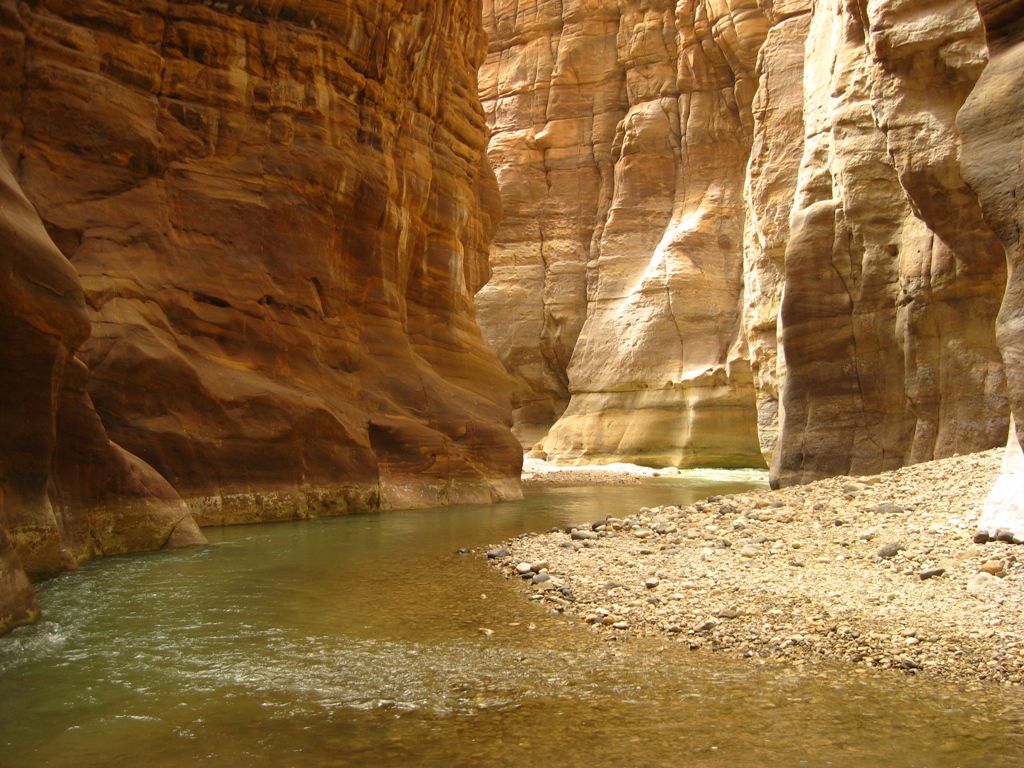 Canyons
Wadi Mujib
near the Dead Sea
The Wadi Mujib, is a river in Jordan. The river empties into the Dead Sea circa 420 metres (1,380 ft) below sea level.
Did you know?
A dramatic river canyon reaching the lowest nature reserve on Earth.
 Coral Reefs
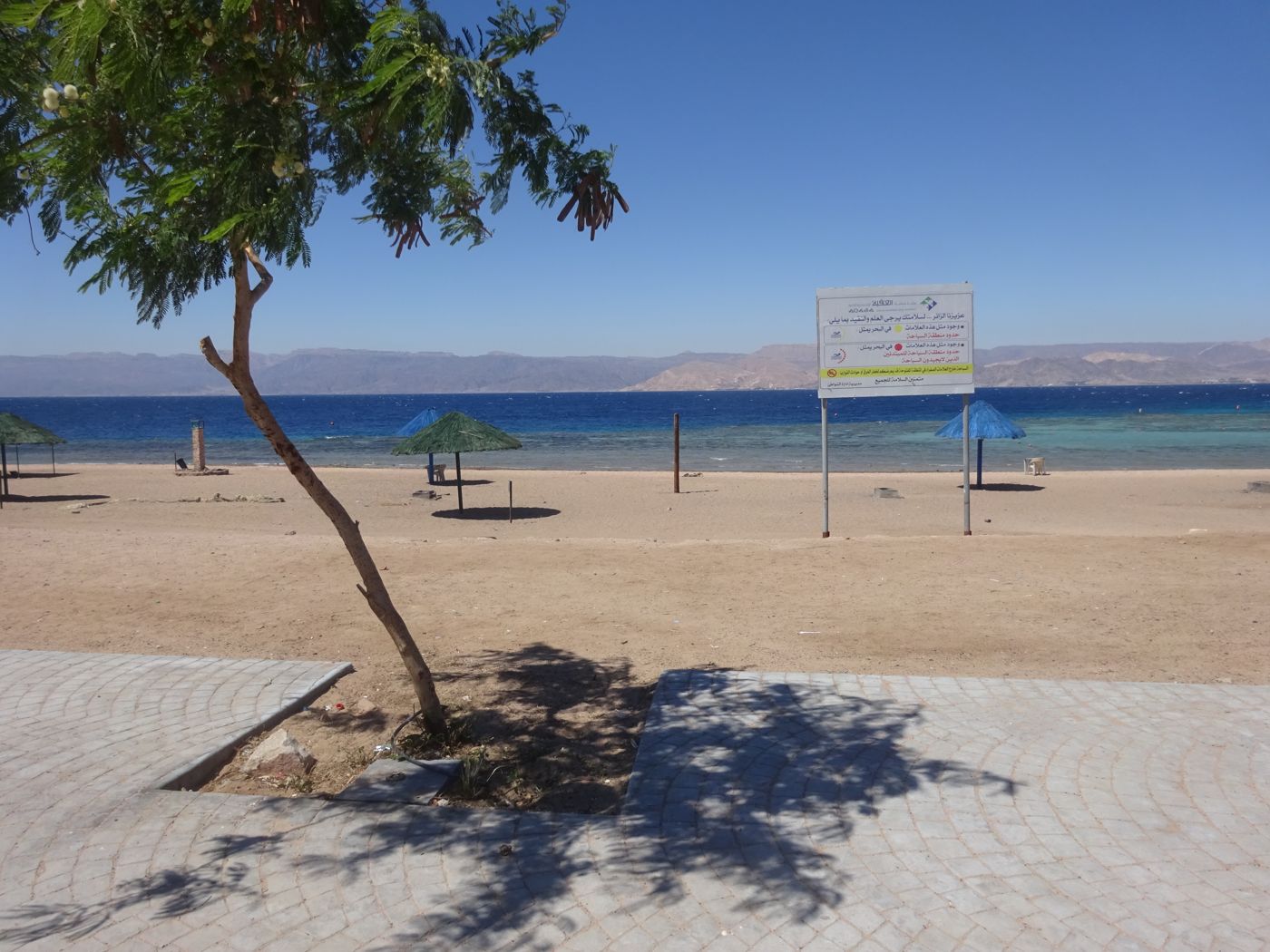
Gulf of Aqaba
southern Jordan
The Gulf of Aqaba or Gulf of Eilat is a large gulf at the northern tip of the Red Sea, southeast of the Sinai Peninsula, and west of the Arabian Peninsula. Its coastline is divided among four countries: Egypt, Israel, Jordan, and Saudi Arabia.
Did you know?
Jordan's short Red Sea coast fringed by vivid coral reefs.