Eastern Asia
North Korea
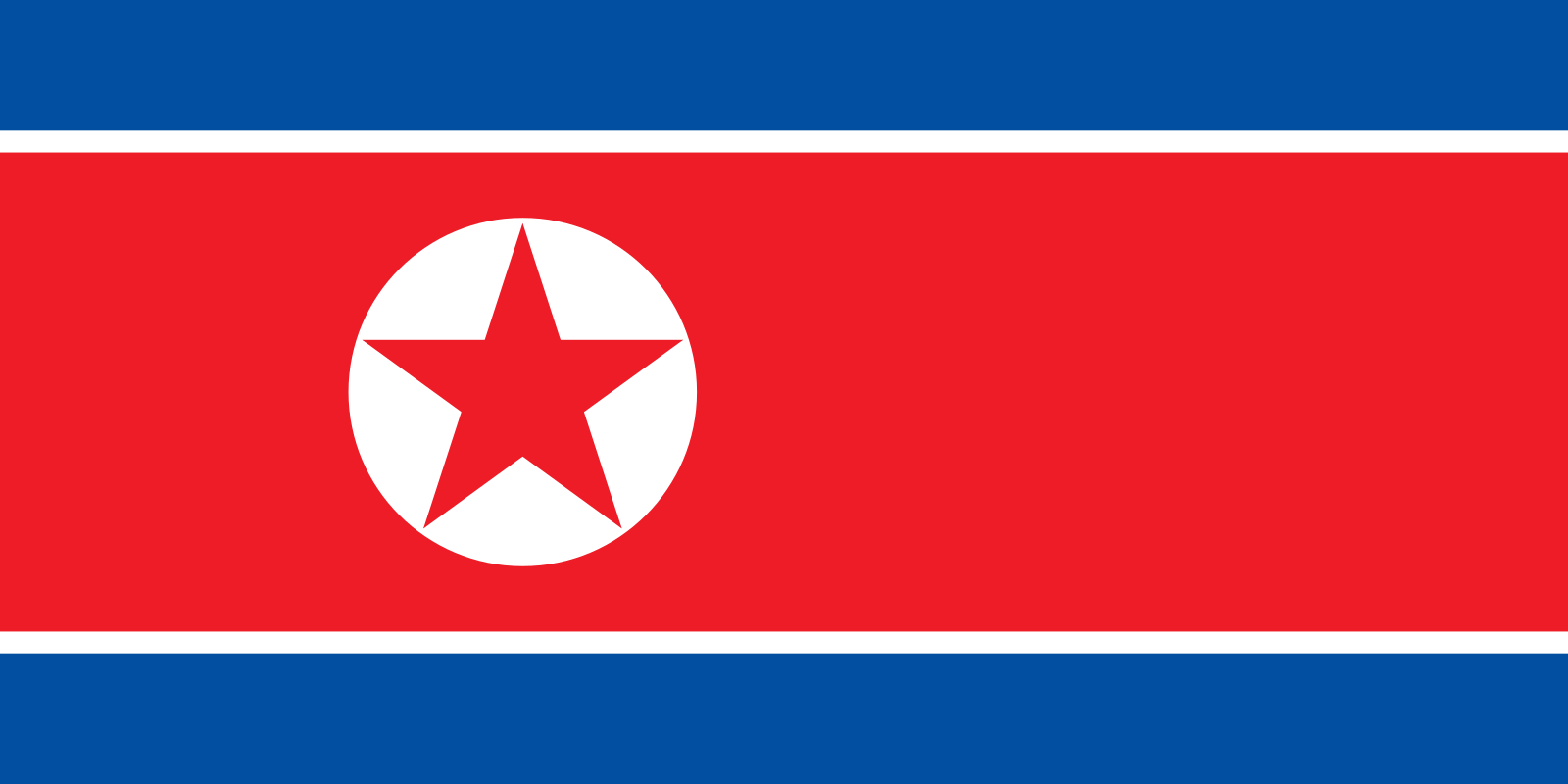
A broad red central band bordered by narrow white stripes and wider blue stripes at the top and bottom, with a red star in a white disc near the hoist. It was adopted when the Democratic People’s Republic of Korea was established in 1948.
Adopted
1948
Proportion
1:2
Colours
3
Colours & their meaning
Red
Officially associated with the revolutionary spirit and patriotism.
White
Officially associated with purity and the Korean nation.
Blue
Officially associated with sovereignty, peace and friendship.
Symbols & emblems
Red star
Represents socialism and the revolutionary tradition of the state.
White disc
Forms the field for the star and echoes the traditional Korean association with the color white.
Did you know?
Before 1948, Korea used the Taegukgi; North Korea replaced it with an entirely different state flag after partition.