South-Eastern Asia
Food of Cambodia
The 5 most iconic national dishes of Cambodia — real photos, key ingredients and tasty facts behind every plate.
 Asia
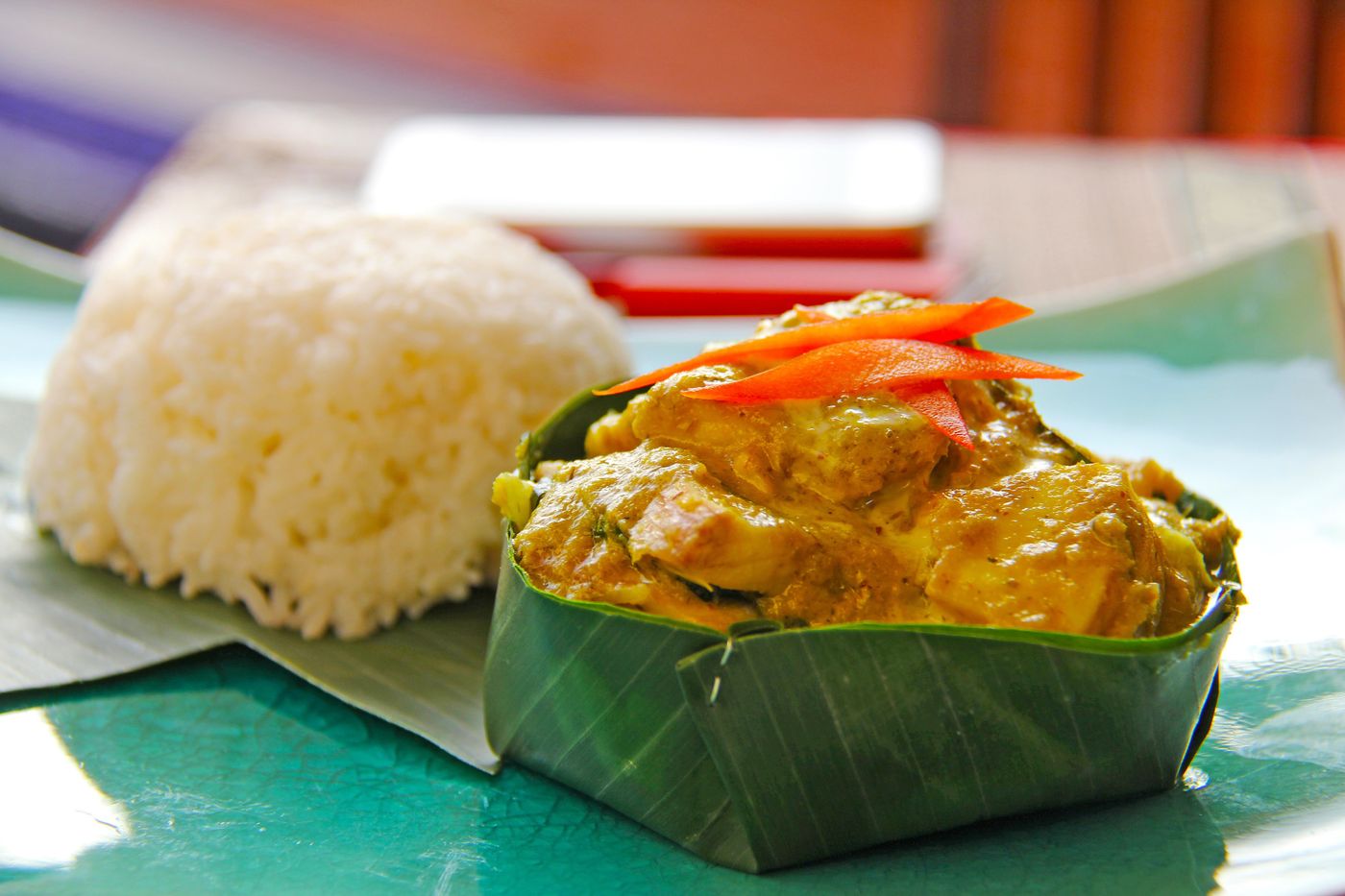
Fish amok
Cambodia’s best-known classic, this is a fragrant fish curry steamed into a soft custard-like mousse, often served in a banana-leaf cup. It tastes rich, herbal and gently spicy rather than fiery.
Did you know?
It is widely regarded as one of Cambodia’s national dishes and is especially associated with royal and celebratory cooking.
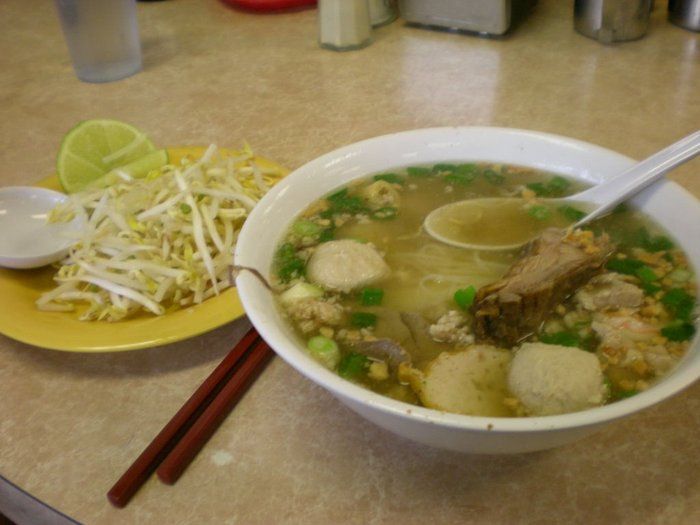
Kuyteav
A beloved Cambodian rice noodle soup, typically eaten for breakfast, with a clear savory broth and a generous garnish of herbs, bean sprouts and lime. It is light, aromatic and deeply comforting.
Did you know?
The dish reflects Chinese influence and is one of the most common breakfast foods sold by street vendors across Cambodia.

Num pang
This Cambodian baguette sandwich is filled with meats, pâté, pickled vegetables and sauces for a crisp, tangy, savory bite. It is a hugely popular street food and snack.
Did you know?
Its bread tradition comes from the French colonial period, but the fillings and seasonings are distinctly Cambodian.
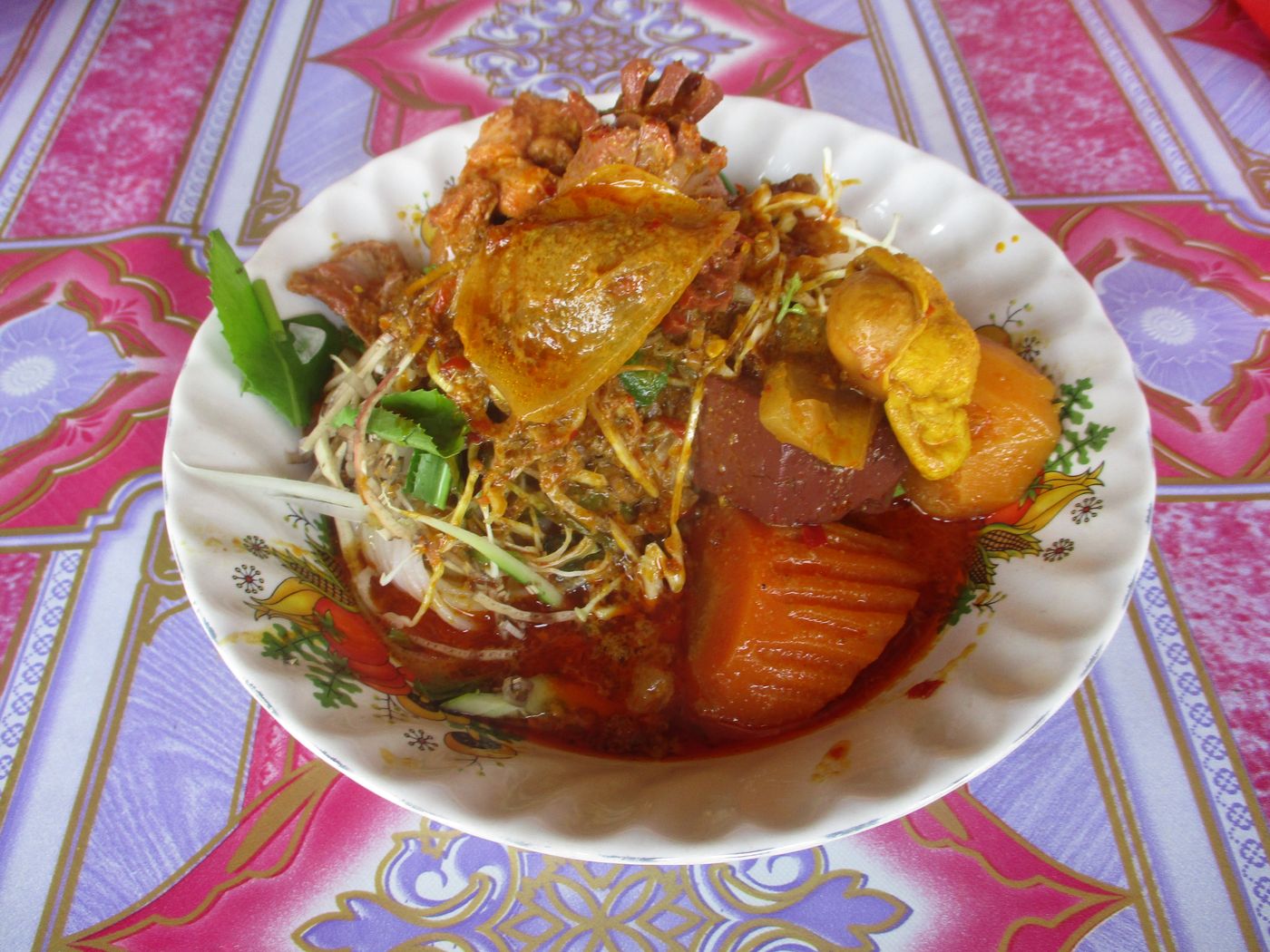
Nom banh chok
Often called Khmer noodles, this dish features fresh rice noodles topped with a greenish fish gravy and heaps of raw vegetables and herbs. It tastes fresh, light and brightly aromatic.
Did you know?
It is so strongly associated with Khmer identity that it is often informally referred to as ‘Khmer noodles’.
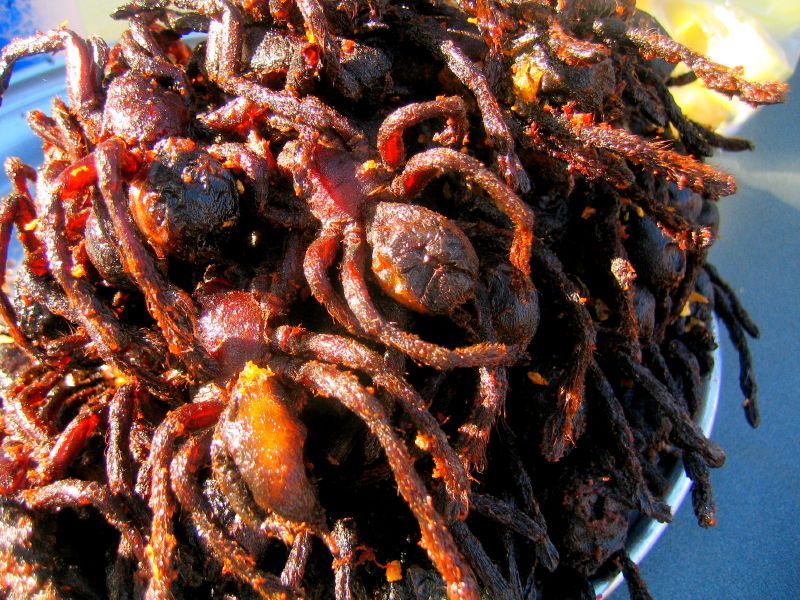
A-ping
This unusual Cambodian delicacy consists of seasoned deep-fried tarantulas, crisp on the outside and soft inside. The taste is often described as nutty and savory.
Did you know?
A-ping became especially associated with the town of Skuon and gained wider fame during periods of food scarcity in the late 20th century.